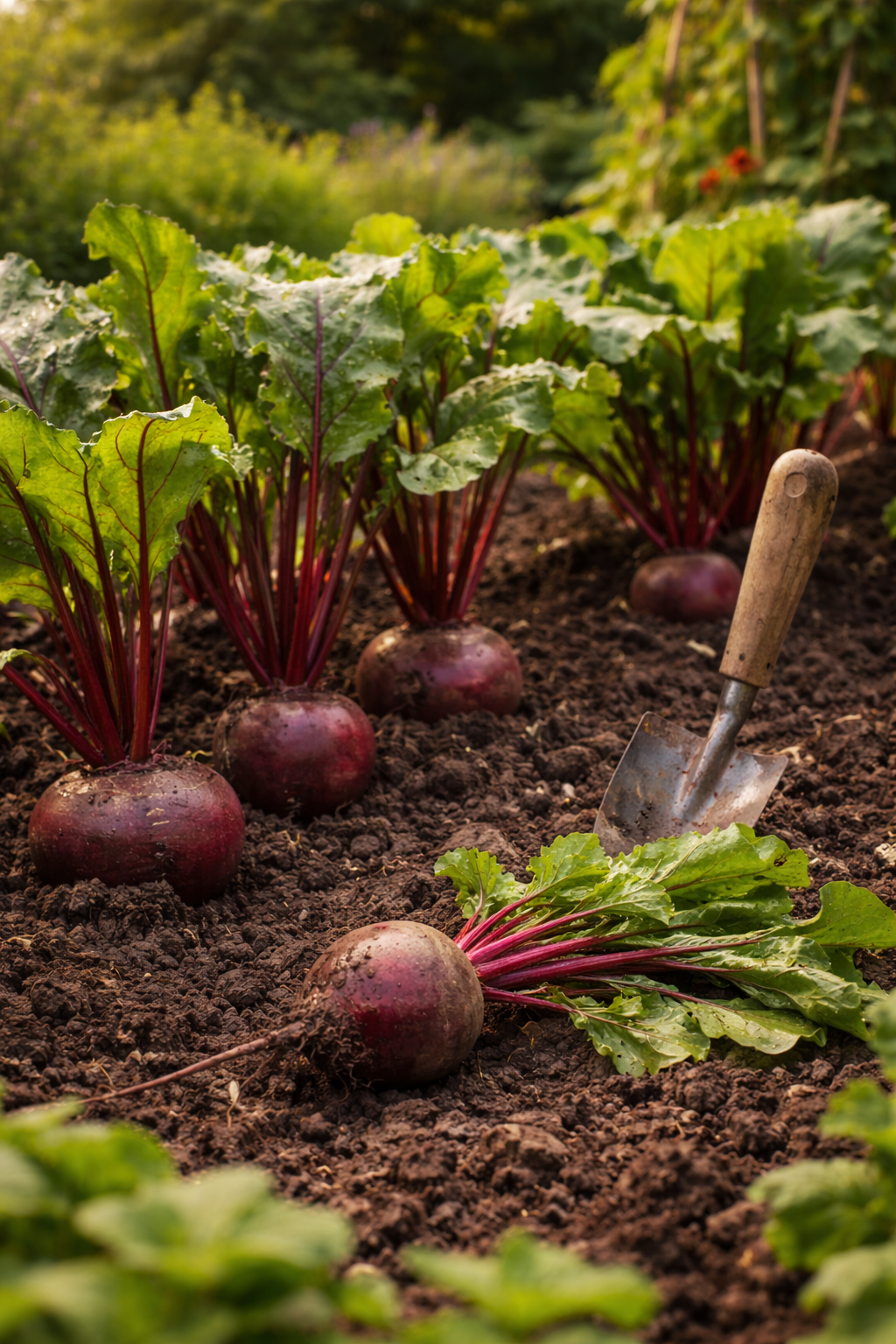
| Beetroot is one of those vegetables that quietly proves a point. It does not shout about itself. It does not sprawl like courgettes or climb like beans. It sits in the soil, half-hidden, modest in scale. Yet when pulled from the ground — leaves still intact, colour staining your fingers — it feels deeply satisfying. There is something grounding about beetroot. It grows steadily, tolerates a degree of imperfection, and rewards attention without demanding theatrics. For beginner growers, beetroot is often described as “easy.” That is broadly true, but only if you understand what it prefers and what it resents. Like most crops, it is not difficult — it is specific. |
| Soil and Structure Beetroot thrives in fertile, balanced soil. Excess nitrogen encourages lush leaf growth but stunts root development. Above all, it values consistency: soil that holds moisture evenly and drains steadily, preventing waterlogging. Heavy clay can be improved with compost and kept loose. Very sandy soil benefits from added organic matter, which helps retain moisture. The goal is a crumbly texture—soil that enables the growing root to expand unimpeded. A common misconception is that beetroot needs soil as finely prepared as for carrots. It does not. It tolerates mild irregularities. Stones may slightly distort the shape, but the flavour persists. Appearance matters less than steady growth. Adding compost before sowing is usually enough. Beyond that, use restraint. Sowing and Timing Beetroot prefers cool, moderate conditions. Sow in early spring once the soil warms slightly, and again in midsummer for later harvests. It can’t handle extreme heat; roots become woody. A beetroot “seed” is a cluster, so several seedlings sprout together. Thin them; crowding blocks root growth. Beginners often hesitate to remove healthy plants. Sow seeds directly in prepared soil or deep containers. Spacing matters more than straight rows. Planning now prevents disappointment later. Beetroot germinates slowly. Unlike radishes, it takes its time. Be patient. Watering and Growth Beetroot needs steady moisture. Irregular watering makes roots tough and woody. It’s less thirsty than cucumbers but still avoids extremes. Early on, the plant concentrates on leaf growth. It is tempting to think nothing is happening below the surface. In reality, the root quietly develops. A sudden drought at this stage can disrupt development. Lightly mulch seedlings to keep soil moist. In containers, watch for quick drying. The rule is simple: consistent care yields tenderness; erratic watering brings stress. Thinning and Use Thinning is not wasteful. Young leaves are edible and flavorful, making thinning part of the harvest. Harvest roots at any stage. Small beetroot are sweet and tender. Larger ones have more flavour but get tough if dry too long. The belief that beetroot must reach a certain size before harvest is widespread. In truth, adaptability is its strength. Early picking allows succession and reduces the risk of woodiness. Beetroot keeps well in cool ground if the soil is workable. This naturally extends harvests. Leaves and Dual Purpose The leaves are valuable too. Edible and similar to chard, harvesting a few does not harm the plant and yields twice as much. Beetroot is more than a root. It gives leaves, colour, and flavour. This expands beetroot’s value, especially in small gardens. Pests and Problems Beetroot is tough. Young plants may see leaf miner or slug damage, but usually avoid major loss. Bolting occurs after early sowing if cold is followed by sudden warmth. Sow at proper times to reduce this. Fungal problems are rare unless spacing is too tight. Ensure airflow, as with most crops. Beetroot responds best to good timing, not elaborate intervention. Succession and Continuity Perhaps the greatest strength of beetroot is its suitability for succession sowing. Rather than planting a large quantity at once, sowing smaller batches every few weeks ensures a continuous harvest. This rhythm reduces the glutes and waste. It also fits the broader philosophy of manageable ambition in vegetable growing. A beginner who sows little and often forms a lasting habit. A Gentle Correct. There is a tendency to treat beetroot either as a pickled garnish or a trendy salad addition. In doing so, its versatility is underrated. Roast, grate raw, blend into soup, or boil beetroot—it adapts to whatever you do. Cool weather deepens sweetness, but its flavour stays subtle. It is not exotic; it is dependable. And reliability is underrated in vegetable gardening. Closing Reflections Growing beetroot teaches subtle lessons. Those roots develop unseen and require patience. That thinninThinning improves strength, not waste. Moisture consistency matters more than complex feeding. Harvesting can be flexible, not fixed. It does not demand perfect soil or elaborate structures. It asks for preparation, spacing, and steady care. For beginners, it provides both instruction and reward without drama. When you lift beetroot from the ground, soil clinging to it, it reminds you: the best crops often grow quietly beneath the surface. |
| About our writing & imagery Most articles reflect our real gardening experience and reflection. Some use AI in drafting or research, but never for voice or authority. Featured images may show our photos, original AI-generated visuals, or, where stated, credited images shared by others. All content is shaped and edited by Earthly Comforts, expressing our own views. |

