| A 5-Part Series |
| A curated exploration of Europe’s most iconic, curious, and ecologically important insects |
| Part Four Flies, Roaches & Overlooked Species: Necessary and Unloved |
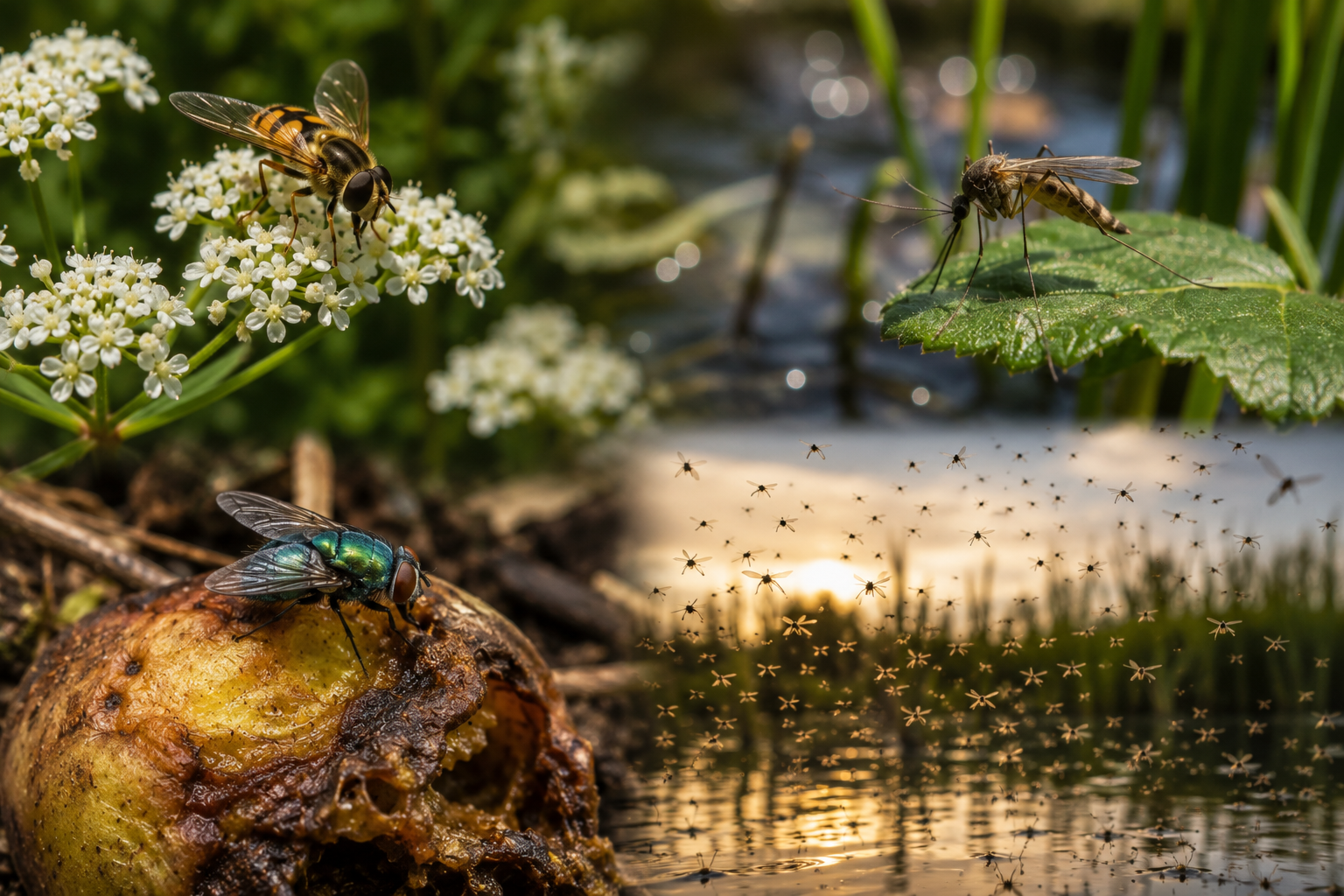
| Every landscape has its favourites. Butterflies attract admiration. Bees are celebrated for their pollination. Ladybirds appear on greetings cards and children’s books. Even dragonflies enjoy a certain prestige, admired for their beauty and remarkable flight. Then there are the insects that receive no such affection. Flies, midges, gnats and cockroaches rarely inspire enthusiasm. Most people notice them only when they become inconvenient. A fly in the kitchen, mosquitoes on a warm evening or a cloud of midges near water can quickly shape our opinion of an entire group of insects. Yet this tendency to judge wildlife by how it affects us often distorts our view of its importance. As gardeners, we occasionally fall into the same trap. We celebrate species that help pollinate our flowers or control pests, while paying far less attention to the countless organisms that perform less glamorous roles. Nature, however, is remarkably indifferent to popularity. Ecological value is not determined by public approval. In fact, some of the most essential species in European ecosystems are among the least appreciated. One of the clearest examples is the humble fly. For many people, flies are simply associated with waste. Yet that association exists for a reason. They are among nature’s most efficient recyclers. Across Europe, blowflies, houseflies and countless related species help break down organic material with extraordinary speed. Fallen animals, decaying vegetation and other forms of waste are rapidly processed, preventing nutrients from becoming locked away indefinitely. It is not a pleasant subject, perhaps, but it is an important one. Landscapes constantly produce organic waste. Leaves fall. Plants die. Animals perish. Without decomposition, ecosystems would gradually become overwhelmed by their own accumulation. The speed with which flies locate and utilise these resources is part of what keeps natural systems functioning. Gardeners observe similar principles whenever a compost heap begins to heat up. Material that appears useless gradually transforms into something valuable. Decomposition is often viewed negatively because it represents decline, yet without it, there could be no renewal. Flies simply occupy one of the earliest and most effective stages of that process. Their contribution becomes particularly obvious when considering how quickly nature responds when something dies. What may appear chaotic is often an extraordinarily organised recycling system already springing into action. Hoverflies offer another example of how appearances can be misleading. Many species resemble wasps so closely that people assume they can sting. In reality, hoverflies are entirely harmless. Their resemblance to wasps is a form of protection, discouraging predators from taking an interest. Once gardeners learn to recognise them, hoverflies often become frequent visitors to flowers throughout the growing season. They are excellent pollinators, moving steadily between blooms and contributing to the reproduction of countless plants. Yet their usefulness extends beyond pollination. Many hoverfly larvae are voracious predators of aphids. While gardeners often focus on ladybirds as natural aphid controllers, hoverflies frequently provide equally valuable assistance. The difference is that most people simply fail to notice them. This highlights a recurring theme in ecology. The species receiving the greatest attention are not always the ones doing the most work. Entire systems often depend upon organisms that remain largely invisible to public awareness. Mosquitoes provide perhaps the most controversial example of this principle. Few insects generate such universal irritation. Their ability to locate human beings with remarkable efficiency has done little to improve their reputation. Yet mosquitoes occupy an important position within many food chains. Their larvae support aquatic ecosystems, while adults provide food for birds, bats, amphibians and numerous other predators. Remove mosquitoes entirely, and the consequences would extend far beyond the immediate relief people experience when spending summer evenings outdoors. This does not mean gardeners need to enjoy being bitten. It simply means recognising that ecological importance and personal convenience are not always aligned. Nature is full of organisms that serve vital functions while simultaneously testing our patience. Across Europe, wetlands provide a useful reminder of this balance. Areas rich in insect life often support astonishing numbers of birds, amphibians and other wildlife. The very insects that some people find irritating help sustain entire ecosystems. Their abundance represents productivity rather than failure. The same principle applies to midges and gnats. During certain times of year, large swarms may emerge around rivers, lakes and ponds. To human observers, these gatherings can appear excessive or even problematic. To fish, birds and countless other predators, however, they represent a seasonal feast. Many freshwater systems depend upon these sudden bursts of insect activity. Nutrients move from water into the wider landscape through the bodies of emerging insects, supporting food webs that extend far beyond the water’s edge. What appears to be a nuisance is often part of a much larger ecological exchange. As gardeners, we sometimes encounter a similar phenomenon around ponds. A newly established wildlife pond may initially attract insects in noticeable numbers. Yet before long, dragonflies, birds and amphibians begin to appear as well. One group supports another, creating connections that are easy to overlook when focusing on individual species. Even cockroaches deserve a more balanced reputation than they usually receive. The word itself tends to provoke an immediate reaction, largely because people associate cockroaches with indoor infestations. Yet most of Europe’s native cockroach species live outdoors, quietly inhabiting woodland environments where they feed upon leaf litter and decaying organic matter. These native species perform valuable recycling functions and are rarely encountered by the general public. Unfortunately, their reputation has become inseparable from a handful of non-native species that thrive alongside human habitation. This illustrates another challenge in how we perceive wildlife. We often judge entire groups based on a few highly visible examples. A similar pattern can be seen with wasps, spiders, and numerous other creatures that face broad reputational problems despite the ecological benefits many species provide. The reality is usually more nuanced. Nature tends not to neatly divide organisms into good and bad categories. Most species simply occupy particular roles within larger systems. Whether we appreciate them often depends more upon our perspective than their actual ecological function. For gardeners, this understanding can be surprisingly liberating. It encourages a shift away from viewing every insect through the lens of utility. Not every species needs to pollinate flowers or control pests in order to justify its existence. Some contribute through decomposition. Others provide food for predators. Some simply form part of the intricate web of relationships that keep ecosystems resilient. A healthy landscape is rarely built upon a few star performers. Instead, it emerges from countless interactions involving organisms that most people never notice. Perhaps that is the real lesson offered by flies, hoverflies, midges, gnats and other overlooked insects. They remind us that ecological importance is often disconnected from popularity. The creatures we admire are only part of the story. Beneath the surface lies a much larger cast of characters carrying out tasks that are every bit as essential. The next time a hoverfly pauses above a flower or a cloud of insects dances above a pond on a summer evening, it may be worth looking a little closer. What initially appears insignificant may in fact represent one of nature’s most effective systems at work. Europe’s landscapes have always depended upon these overlooked species. They recycle waste, transfer nutrients, support food chains and connect ecosystems in ways that are easy to miss. They may never become as celebrated as butterflies or bees, but their importance remains undiminished. Nature, after all, has never concerned itself with popularity contests. |
| About our writing & imagery Most articles reflect our real gardening experience and reflection. Some use AI in drafting or research, but never for voice or authority. Featured images may show our photos, original AI-generated visuals, or, where stated, credited images shared by others. All content is shaped and edited by Earthly Comforts, expressing our own views. |

