
| Sanguisorba The Plant That Knows When to Arrive |
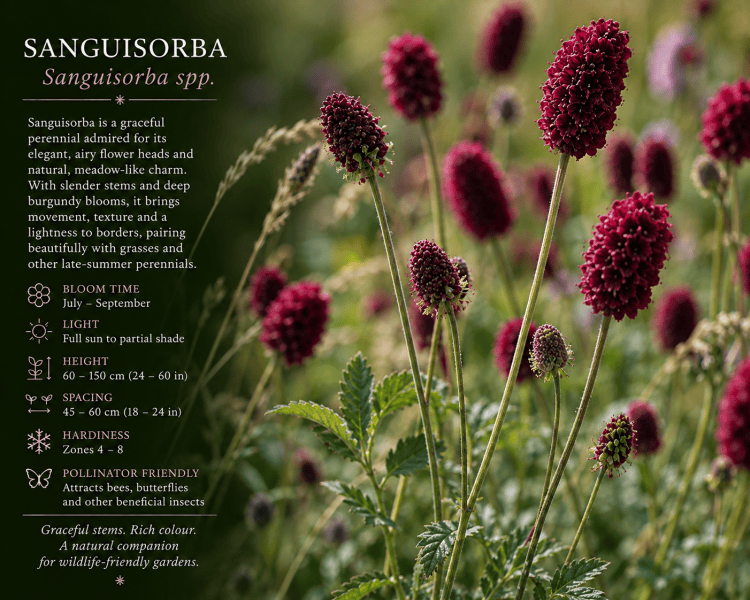
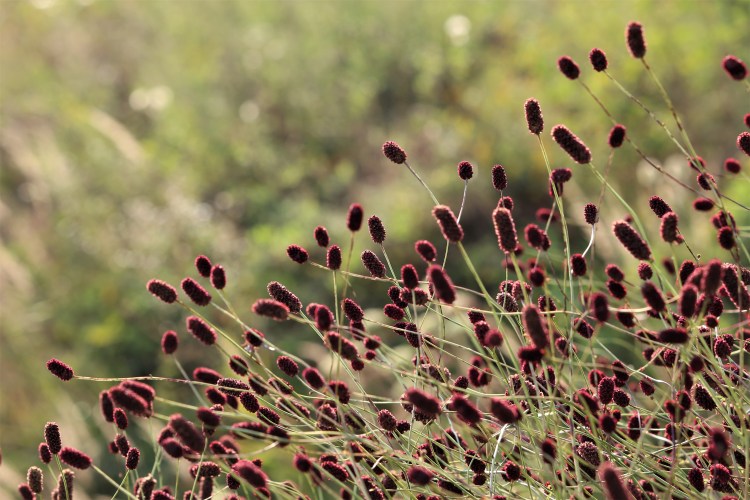
| By late summer, there is usually a moment when a border begins to look slightly tired of itself. The great rush of June has gone, some of the earlier perennials are beginning to collapse into their neighbours, and the gardener is increasingly tempted to wander around with secateurs restoring a little order. It isn’t autumn, certainly, but you can sense that the garden has moved on. The light is different, the grasses are beginning to matter more, and suddenly plants that were almost invisible a few weeks earlier start making sense. Sanguisorba is one of them. For much of the year, burnet is remarkably easy to overlook. Then its slender stems rise through the surrounding planting and small flower heads appear at their tips, often deep red, burgundy, pink or soft white depending upon the variety. Nothing particularly extravagant about them. In fact, taken individually, the flowers can look rather insignificant. The pleasure comes from seeing the plant as a whole, because Sanguisorba isn’t really about individual flowers. It is about what happens to a border when those flowers begin moving above it. A slight breeze is enough. The stems sway independently, disappear behind neighbouring plants and then reappear somewhere else. From a distance, the flower heads can seem almost detached from the plants beneath them, little punctuation marks suspended above the border. It is one of those effects that photographs struggle to capture because what makes the plant interesting is precisely what a photograph removes: movement. That makes Sanguisorba particularly useful amongst grasses and other late-season perennials. It doesn’t form a great visual wall or demand an empty patch of soil around itself. Instead, it threads through other plants. Some varieties remain relatively compact while others become surprisingly tall, so choosing the right one matters, but the best combinations tend to have a looseness about them. Give it plants to move amongst rather than placing it alone like an exhibit, and it becomes considerably more interesting. It also prefers conditions that don’t become desperately dry. Most Sanguisorba appreciate moisture-retentive soil, although established plants are generally more accommodating than the label might suggest. Like so many perennials, the difference between thriving and merely surviving often comes down to what happens beneath the soil rather than how much sun reaches the flowers. Decent soil with organic matter and some retained moisture will usually produce a far better plant than repeatedly watering something struggling in impoverished ground. With tall plants, there’s a temptation to assume they need staking. Sometimes they do, of course. A summer storm has little respect for horticultural aesthetics. But automatically tying every tall stem to a cane can rather defeat the purpose of plants such as Sanguisorba. Movement isn’t a defect to be corrected; it is part of the reason for growing them. If a plant is continually collapsing, it may be telling us more about its position, the richness of the soil or the variety we’ve chosen than about the quality of our staking. Gardening can become unnecessarily obsessed with keeping everything upright. Nature doesn’t. Grasses lean, branches bend, and flower stems move. A border in which every plant stands rigidly to attention may be tidy, but it can also feel strangely lifeless. There is a difference between a plant flopping hopelessly across a path and one responding naturally to the weather. Learning when to intervene — and when to leave something alone — is one of those gardening skills that never appears particularly impressive but probably takes years to acquire. Sanguisorba also understands something about timing. Had those same flowers appeared during the extravagance of early summer, we might barely notice them. Against peonies, roses, lupins and all the other plants competing for attention, their little bottlebrush heads could easily become background noise. Instead, wide varieties reach their best as the garden begins to quieten. Suddenly their restraint becomes an advantage. They catch lower light, mingle with ripening grasses, and give height to borders just as other plants begin to retreat. Perhaps gardeners could learn something from that. We spend enormous effort trying to make everything happen at once. We want borders overflowing in June, every gap filled and every plant performing at precisely the moment when the garden is expected to look its best. Yet a garden that peaks once has an awfully long decline ahead. The plants I increasingly appreciate are those prepared to wait. Sanguisorba doesn’t need to dominate the summer. It arrives when there is room to notice it, moves when the wind asks it to and stays light enough for the rest of the garden to remain visible through it. Sometimes knowing when to appear is every bit as important as knowing how. |
| About our writing & imagery Most articles reflect our real gardening experience and reflection. Some use AI in drafting or research, but never for voice or authority. Featured images may show our photos, original AI-generated visuals or, where stated, credited images shared by others. All content is shaped and edited by Earthly Comforts, expressing our own views. |

