
A gardener’s honest take on the leaf vacuum vs rake debate — plus petrol vs battery blowers — and why the traditional tools still win for speed, control, and clean finishes.
Wildlife-Safe Garden Clearances

Learn how to tidy your garden responsibly — protecting hedgehogs, birds, and insects with wildlife-safe garden clearance methods that work in harmony with nature.
Mulching & Composting for a Living Ecosystem
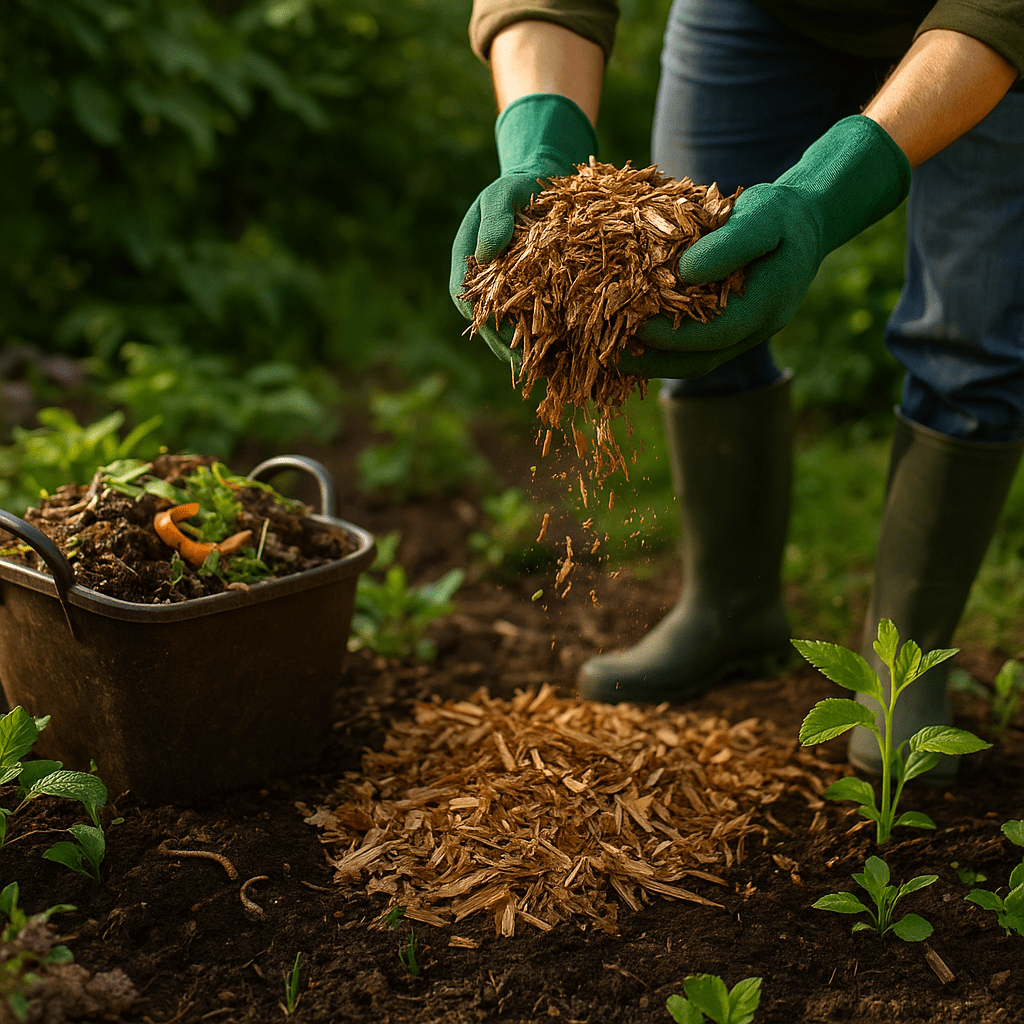
Discover how mulching and composting work together to build soil health, support biodiversity, and create a thriving, self-sustaining garden ecosystem.
Soil Health & Garden Biodiversity

Discover how nurturing healthy soil naturally boosts garden biodiversity — creating balance, resilience, and thriving life above and below ground.
Winter Gardens for Wildlife

Learn how to support birds, insects, and mammals in winter with natural food, shelter, and safe spaces — keeping your garden alive year-round.
 Earthly Comforts