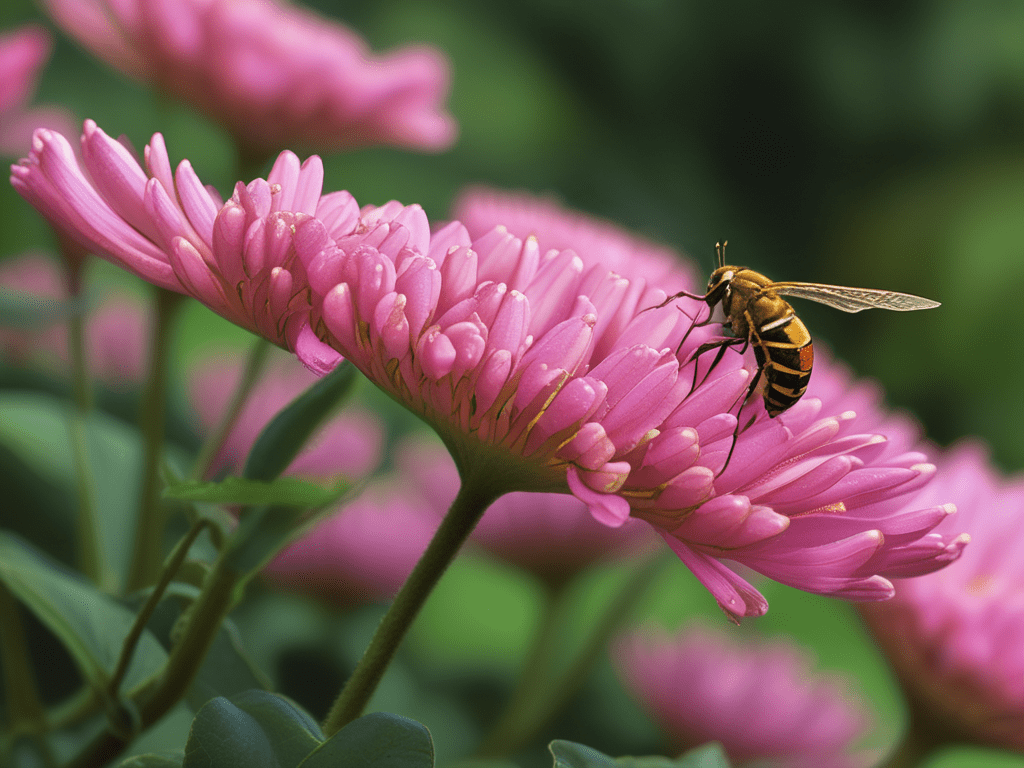
| How can we encourage more insects to visit our gardens? Despite people’s negative attitudes towards insects, they are highly beneficial for maintaining the balance of a healthy garden. I have written before about how you can encourage wildlife in your garden, including butterflies, bees, birds, hedgehogs, other mammals, and so on, but never specifically about insects. When people, including gardeners, think of visiting insects, they instantly conjure images of the pollinators and the good insects and don’t always want to know about the bad ones. They will promote the positive impact of the bees and butterflies in their gardens and on their plants, flowers, and vegetables but prefer to only marginally acknowledge the presence of some of the other more suspicious crawlies as they often refer to them. Ask people what their favourite insects are; usually, the answers are pretty typical – dragonflies, bumblebees, ladybirds, butterflies, hoverflies and occasionally moths. Ask them what they consider annoying pests and the answers come back as spiders, ants, moths, wasps, mosquitos, flies, cockroaches, bed bugs and fleas. They are favourited based usually on colour, and they are loathed based on annoyance. Most people dislike insects, and it doesn’t matter if they are gardeners or non-gardeners voicing an opinion, so it was a pleasant surprise to be asked by a gardener how to encourage more insects in your gardens. Healthy gardens, green spaces, and allotments need a vast biodiversity of species. These will help pollinate and encourage flowers to bloom and blossom, allowing plants to reproduce. They will also help ensure that a garden has an army of valuable cleaners, recyclers, sanitisers, decomposers, and predators, which also become part of the enormous chain of food other species need to survive. We should not use herbicides, pesticides or other cides in our gardens but should encourage a natural to-and-for balance of wildlife in our green spaces. We all need to learn to care for the insects in our lives, good and bad. I know that some insects considered harmful and extreme pests, like wasps, mosquitoes, fleas, cockroaches, and spiders, don’t do much to promote the good side of their nature. However, despite this, they are still highly beneficial and required to keep the balance of the environment going. You can’t just have the good; we need the bad, too. We are losing way too many species globally every year. Insects are declining at an appalling rate! Many once-abundant species are now becoming rare or extinct. So, every little thing we can do to work towards recovering our insect populations is never a wasted experience or drain upon our time and energy. Just consider this thought for a moment – it can take upwards of a quarter of a million insects to take a bird chick to adulthood. Without insects, the world would lose most bird and amphibian species in six months. People must remember what roles insects play, not just as a valued food source but also as responsible for keeping things ticking over. If you put your thinking hat on, research your area and determine if you can make a difference for our insects… Chance are, you can. |
| Points of Note: 1] Creating log piles, bug hotels, hedgehog havens, dead hedges, compost heaps, leafy twig piles, amphibian rockeries, and even a pond can go a long way toward bringing a vibrant array of wildlife to your garden. Imagine the joy of spotting nesting birds, frogs, toads, slowworms, and foraging hedgehogs in your own backyard! These habitat styles will encourage more beetles, woodlice, worms, slugs, centipedes, and millipedes, as well as nesting birds, frogs, toads, slowworms, and foraging hedgehogs. 2] When you grow plants that insects love to visit frequently, feed and forage on – lavender, buddleias, wildflowers, yarrow, nettles, marigold, nasturtium, chives, dill, coneflower, fennel, sunflower, crocus, honeysuckle, foxgloves, bugloss, hawthorn, hellebore, forget me nots, geraniums, hibiscus, mint, wisteria, hollyhocks, and many others, you’re not just creating a beautiful garden. You’re also fostering a balanced insect formula, where both beneficial and potentially destructive insects coexist. 3] Your garden can be a sanctuary for insects and other wildlife. If you can, allow a portion of your garden to grow wild and don’t feel obligated to cut it down throughout the year. Just let it be. By doing so, you’re not just creating a beautiful space, but also contributing to the preservation of biodiversity. The insects will appreciate your generosity, and so will the environment. 4] Creating a natural compost heap instead of a structured pile will also go a long way. The difference is that one is monitored and turned on regularly to produce a workable material for the garden. At the same time, the other is allowed to rot slowly and decompose and has no expectations to perform in any other way aside from being home to many different insect species. This approach may take longer, but it’s a sustainable way to support diverse wildlife in the long run. 5] Consider having hedges in your garden, living hedges as opposed to the dead hedging I mentioned earlier, or if you already have them, looking after them and growing them in such a way that you nurture their growth. In the last decade, the government has made more agricultural moves in the UK to allow farmers to reintroduce natural hedging to their lands. At a time when l was growing up as a teenager in this country, l used to see more hedging on fields. Land developers and farmers began destroying hedges so they could sow more crops, increase their profit, or build more houses; however, it was noted that hedges played a critical part in the natural habitat for insects, and with the demise of the hedges, insects started to decline rapidly. Hedges are not just green boundaries in your garden. They are vibrant ecosystems, serving as homes to a diverse range of species – mammals, rodents, birds, reptiles, amphibians, and insects. By nurturing hedges in your garden, you’re not just adding to the beauty of your landscape. You’re also providing a safe haven for these creatures. They can take time to develop, but there are ways of making the process smoother, and it all depends on what you plan to create your hedge with. You can make solid or mixed hedges – blackthorn, hawthorn, beech, yew, holly, firethorn, bay laurel, cherry, box, dogwood, etc. You could even mix things up by interlacing different species into the prime grower – like honeysuckle, jasmine, clematis, bramble, elder, etc. 6] As mentioned above, you could also consider creating a pond, a bathing area, or even a small rock pool that would encourage small flying insects and water surface beetle species—like dragonflies and water beetles. You might also be able to further encourage snakes and bats alongside the toads, frogs, and, if lucky, even newts. This area can also serve as a watering bay. |
 Earthly Comforts
We have wasps living in our front yard. I hope they are as valuable as bees.
LikeLiked by 1 person
Well to a degree they are, but not fully sadly and best not if they decide to swarm you and Molly.
LikeLiked by 1 person
Thanks Rory, they haven’t bothered us yet.
LikeLiked by 1 person