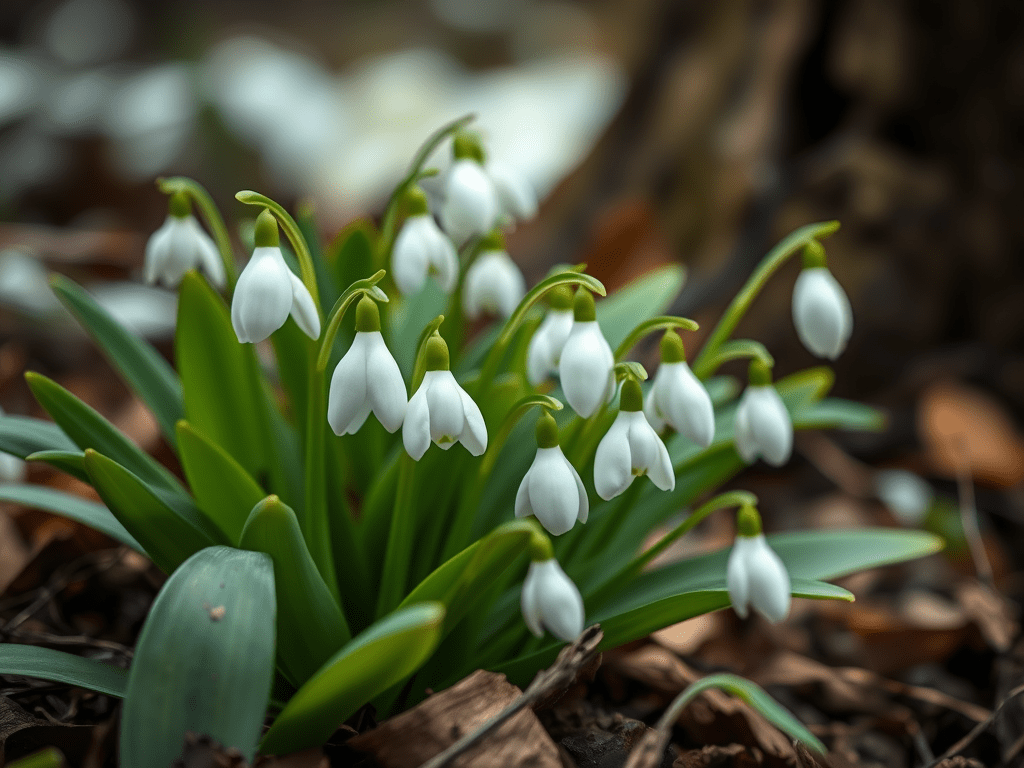
| Snowdrops Galanthus |
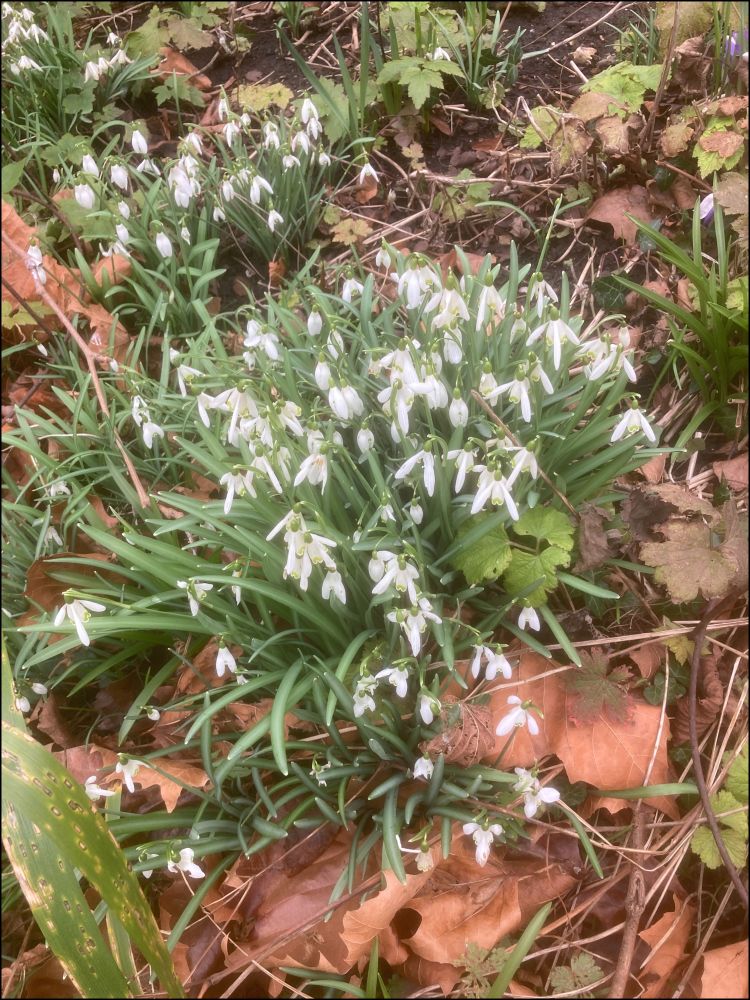
| Snowdrops Cluster |
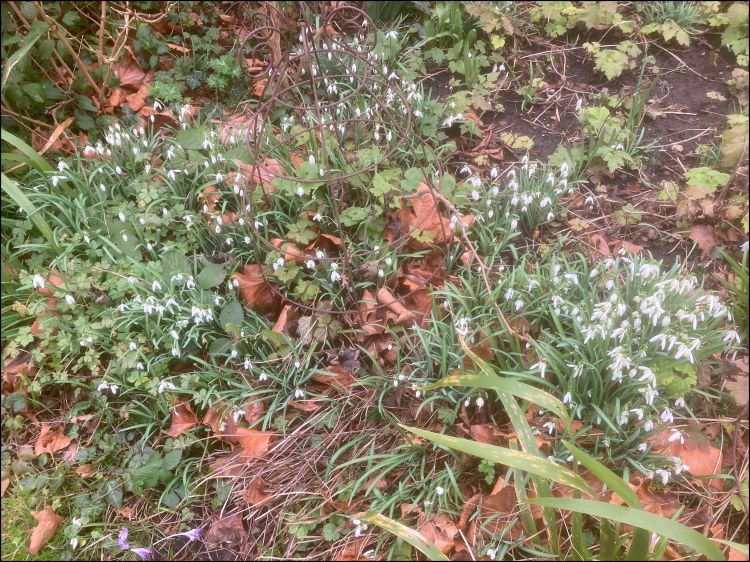
| Snowdrop Clusters |
| Snowdrops — A Quiet Introduction Snowdrops (Galanthus) are among the first flowers to bloom in the UK each year. Often appearing in January, sometimes pushing through frost or even light snow, they signal a subtle shift in the season. The air may still be sharp, and the soil cold, yet their white bells hang calmly above the ground, suggesting that winter is already loosening its hold. They thrive in woodlands, gardens, and along riverbanks, particularly where soil is moist yet well-drained. Beneath deciduous trees, they perform especially well, taking advantage of early sunlight before branches leaf out. In established settings, they spread gradually into gentle drifts, forming pale carpets that soften the winter landscape without overwhelming it. Although strongly associated with British gardens, snowdrops are not native to the UK. They were likely introduced from mainland Europe during the 16th or 17th century and have since naturalised in many areas. Over time, they multiply by bulb division, returning reliably each year when conditions suit them. Given patience and stability, a small planting can expand into a generous clump that feels entirely at home. Snowdrops favour humus-rich soil and light shade, though “shade” can be misleading. What they truly benefit from is winter light — the open, unobstructed brightness that filters through bare branches. Heavy evergreen cover or poorly drained ground can restrict their growth. Where soil structure is improved with leaf mould and left relatively undisturbed, they settle contentedly. There is more diversity within Galanthus than many realise. The common Galanthus nivalis remains the most widespread and dependable form. Yet, numerous cultivars exist, distinguished by subtle differences in marking, size, or petal shape and named varieties such as ‘S. Arnott’s or the double-flowered ‘Flore Pleno’ are long-established favourites. Dedicated collectors — known as galanthophiles — seek out rarer forms, and in some cases bulbs have sold for considerable sums at auction. The fascination is not entirely modern. During the Victorian period, snowdrops enjoyed notable popularity, with grand estates planting them in sweeping woodland displays. Today, many historic gardens open in late winter specifically for snowdrop viewings, inviting visitors to experience these quiet expanses when little else is in flower. Beyond their horticultural appeal, snowdrops are woven into British folklore and symbolism. Their early arrival has long connected them with hope, renewal, and purity. Yet they also carry more reflective associations. Found frequently in churchyards and old estates, they have sometimes been linked to melancholy or superstition. A lingering belief holds that bringing them indoors invites bad luck, though others see them as a simple reassurance that spring is approaching. Snowdrops are toxic if ingested, containing alkaloids that can cause illness in humans and animals. Interestingly, one of these compounds — galantamine — has been used in medical research and treatment for Alzheimer’s disease. It is a reminder that even the most delicate plants hold complex properties beneath their surface. Their flowering period is brief, lasting only a few weeks. Yet they leave a lasting impression, perhaps because they appear when colour is scarce and the year still feels dormant. They do not dominate a garden; they mark a moment within it. Snowdrops return each winter with quiet consistency. They ask for little more than suitable soil and a measure of patience. In exchange, they offer a steady reminder that the garden is already beginning again. |


Snowdrops are such beautiful and delicate flowers! Thank you for sharing information about them, Rory.
LikeLiked by 1 person
Pleasure Eugenia, and yes they are indeed a true welcome of colour so early in the year 🙂
LikeLiked by 1 person
😊
LikeLiked by 1 person
Beautiful flowers.
LikeLiked by 1 person
I have a friend who loves snowdrops and when she moved from Illinois to Tennessee she discovered that they wouldn’t grow there. She misses her snowdrops very much – couldn’t get them to grow in Tennessee.
LikeLiked by 1 person
That’s a shame, l wonder why they don’t grow there, is that the climate that causes that?
LikeLiked by 1 person
Today is April 3rd – Hope all goes well. and yes, a climate thing.
LikeLiked by 1 person
Thank you Grace, in at 8am, operated on and out by 11.30am, home by 2.30pm after stop for lunch and eat again, asleep in bed by 3.30pm and now here l am 7.06pm awake [ish but drowsy complete with clear eye shield typing thanks to you], will probably be back in bed by 9pm after some food,
Operation successful apparently 🙂
LikeLiked by 1 person
YAY YAY – HAPPY DANCE!
LikeLiked by 1 person
🙂 Night Grace, going back to bed 🙂 Enjoy your afternoon and many thanks for positive vibes and well wishes, greatly appreciated 🙂
LikeLiked by 1 person