
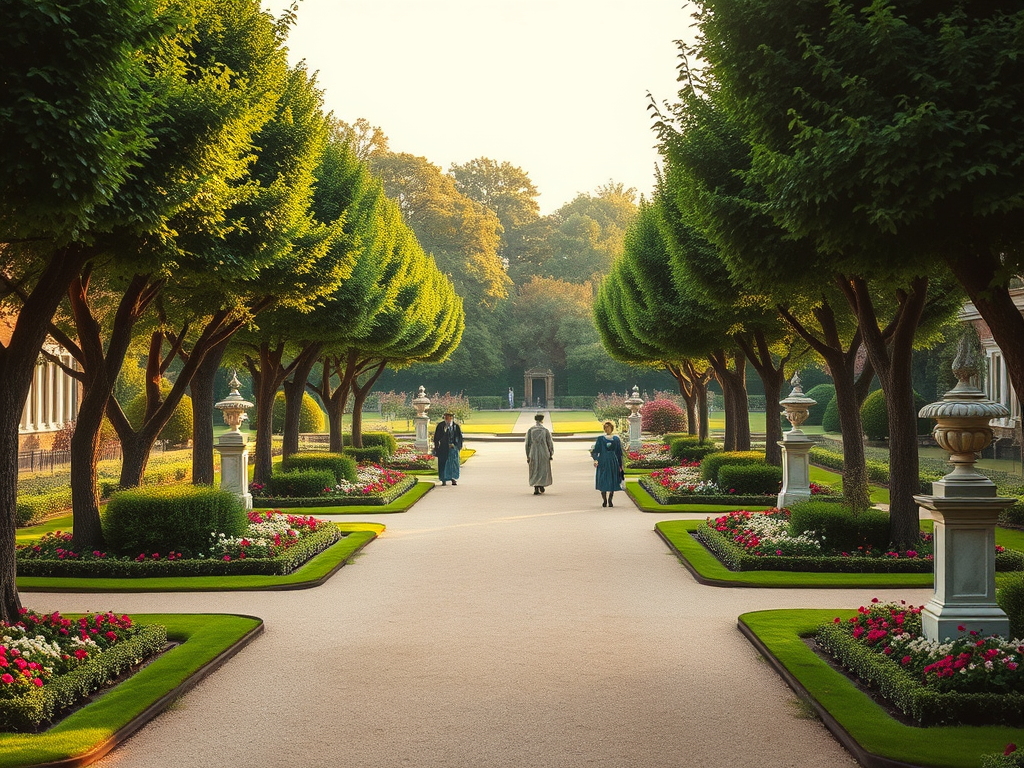
| Pleasure gardens in the Regency period (early 1800s) were more than just public entertainment spaces—they were vibrant hubs of social interaction, akin to the theme parks or outdoor social clubs of their time. These beautifully landscaped areas, often with winding paths, fountains, flowers, and decorative lighting, especially gas lamps once that became popular, were where people came together to see and be seen. People went there to see and be seen. You could stroll through the gardens, listen to live music (think orchestras or solo performers), watch fireworks, have refreshments, and catch theatrical performances or dancing. It was one of the few places where people from different social classes might mingle more freely, though there were still rules of etiquette and class distinctions. Vauxhall Gardens in London was one of the most famous examples. It had everything from tightrope walkers to romantic grottoes—basically, it was a hotspot for entertainment and flirtation. For many Regency folks, especially the fashionable set, pleasure gardens were a chance to step out of the rigid structure of everyday society and enjoy a little leisure, glamour, and even some scandal. Sure! Botanical gardens are unique places where various plants are grown, studied, and displayed to the public. They’re like living museums for plants. You’ll usually find different gardens within them—like tropical greenhouses, desert plant areas, or themed gardens based on specific regions or plant types, such as the Japanese garden with its cherry blossoms or the succulent garden with its array of cacti. Botanical gardens are beautiful and peaceful spots but also centres of learning and research. They play a crucial role in conservation, research, and education. Scientists study plants there, work to protect endangered species, and teach people about nature and the environment. Many also offer workshops, tours, and events to get the community involved, making them a perfect place for those curious about the natural world. Overall, they’re a mix of beauty, science, and learning—great for a relaxing stroll or getting inspired by nature. |
 Earthly Comforts
One thought on “Exploring Pleasure Gardens of the Regency Era”