
| Border Forsythia Forsythia × intermedia |

| I work with forsythia in many gardens, and I love its vibrancy and energetic colour; let me tell you a bit about it. |


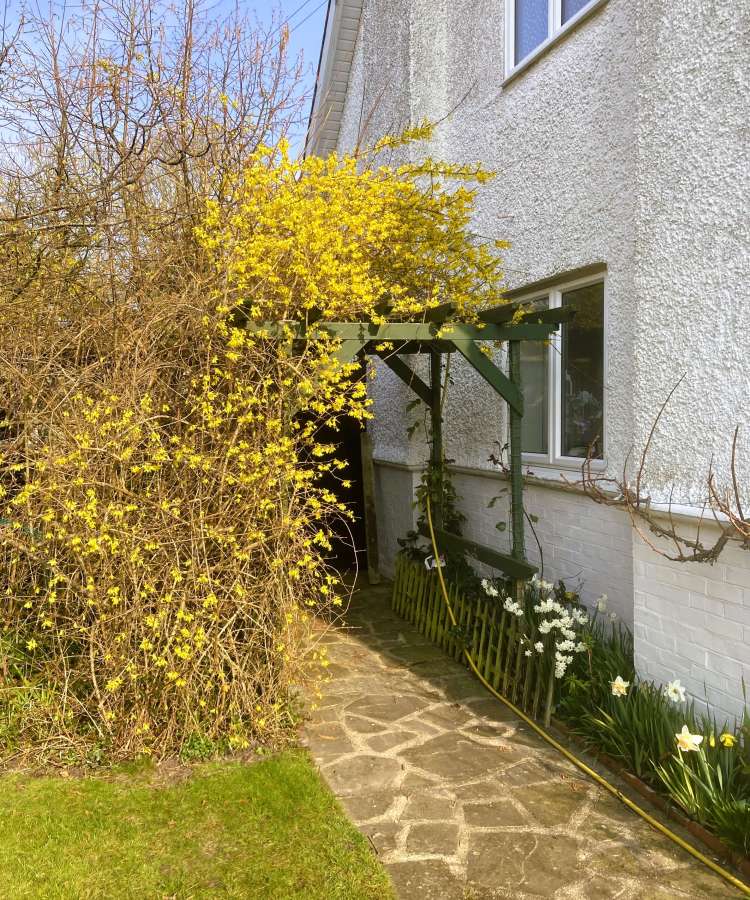


| Border Forsythia: Spring’s Boldest Hello When it feels like winter might never leave, border forsythia bursts onto the scene—vivid, golden, and impossible to ignore. No, waiting for leaves or warm days; it jumps straight into bloom, sending out brilliant yellow flowers like spring’s trumpet fanfare. A Splash of Sunshine Before Anything Else Before the garden starts thinking about waking up, forsythia is already in celebration mode. Each bare branch becomes a bright, golden wand, lighting up the landscape while snow lingers. It’s one of spring’s first big statements, a floral exclamation mark saying, “We’re back!” Low Maintenance, High Impact Border forsythia is the definition of easygoing. It’s challenging, fast-growing, and bounces back from even the hardest pruning. Whether you want it neat or wild and sprawling, it adapts without complaint. It shrugs off cold, thrives in average soil, and doesn’t need pampering. A Short but Show-Stopping Bloom Its golden show doesn’t last long—just a few dazzling weeks in late March or early April—but it’s worth every second. Clusters of tiny, bell-shaped yellow flowers cling to bare branches, stealing the spotlight before leaves arrive. Once the bloom fades, the green leaves move in, and the plant fades into the background, content to have had its moment. Big Personality, Natural Shape Let forsythia do its thing, and it will grow into a large, arching fountain of a shrub—anywhere from 6 to 10 feet in both directions. While some dwarf varieties exist, most want space to spread. Do you have a miniature garden? Prune it once a year to keep it in check and look fresh. What Forsythia Loves (and What It Doesn’t) Sun: Loves full sun. More sun equals more flowers. Shade = less dazzle. Soil: Not fussy. Any decent garden soil works just fine. Water: Drought-tolerant once established, but regular watering helps it thrive early. Timing Is Key: How to Prune It Right Here’s the trick: forsythia flowers on old wood—meaning next year’s flowers grow on this year’s stems. So, prune right after blooming ends, or risk losing the show. Take out about one-third of the oldest stems at ground level to keep them youthful and blooming strong. Where It Shines in the Garden Informal Hedges: Great for relaxed, colourful hedging. Not for strict lines or boxy shapes. Spring Backdrops: Plant it behind bulbs or other spring bloomers for layered colour. Wilder Corners: Forsythia thrives in less-manicured spaces—woodland edges, slopes, or the yard’s forgotten corners. Want More? Multiply It Yourself Forsythia is one of the easiest shrubs to propagate. Take a cutting in spring or summer, or bend a flexible branch to the ground and secure it. You’ve got roots and a new plant ready to go a few months later. Can’t Wait? Force Blooms Indoors Want an early taste of spring? Clip a few branches in late winter, pop them in a vase with water, and place them in a warm, sunny spot. Within days, you’ll have cheerful blooms brightening your kitchen well before spring officially arrives. Final Thoughts: A Burst of Joy, Every Year Border forsythia isn’t just another shrub—it’s a seasonal celebration. It arrives early, blooms boldly, and asks for very little. If you’re looking for a plant that kicks winter to the curb and declares, “Spring is here,” this is the one. |


Forsythia is the first clue that winter is coming to an end, and a very welcome sight…
LikeLiked by 1 person
Yes very much so Jaye 🙂
LikeLike
Such a beautiful and cheerful color, Rory.
LikeLiked by 1 person
Hey Eugenia, yes it is, l love, like many others to see yellow in gardens 🙂
LikeLiked by 1 person
😊
LikeLiked by 1 person