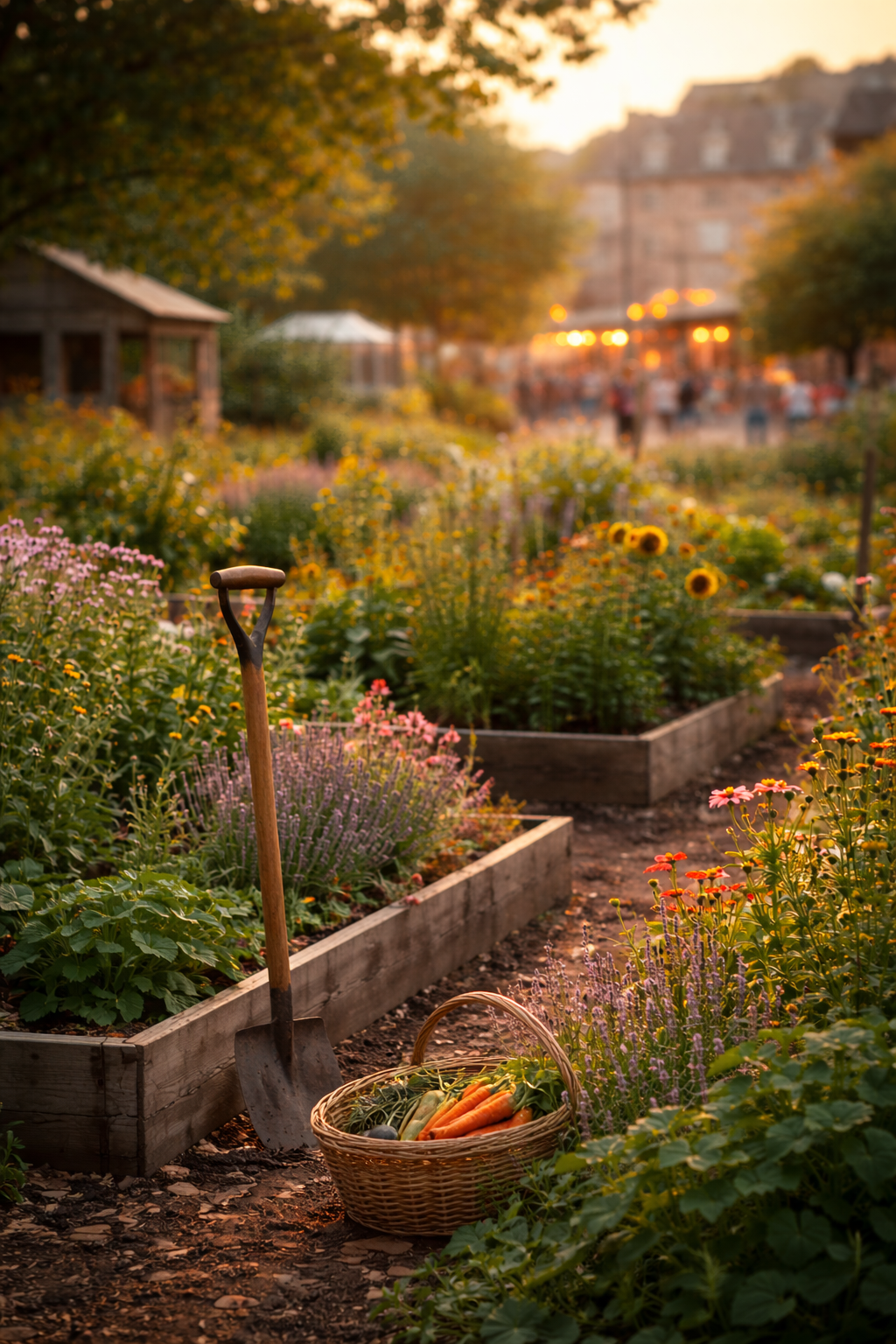
| The Gardener’s Perspective I’m often grateful that I’m a gardener, spending most of my working life in open spaces, away from crowds and constant noise. In recent weeks, though, while walking through town, I’ve seen a number of confrontations between people who’ve taken umbrage over the smallest of things. Sharp words, raised voices, tension that seems to flare almost instantly. At times, I can’t help but wonder if many people are walking around already wound tight, just waiting to be triggered. We live in an uncertain world, that’s true, but life feels far too short to be upset all the time. Perhaps that contrast is what makes it stand out so clearly. When you spend your days outdoors, working with soil, weather, seasons, and living things, you get used to a slower rhythm. Problems still exist, of course, but they tend to be practical ones — what needs pruning, what needs time, what will recover if you leave it alone. Then you step back into town and everything feels sharper, faster, more reactive. A big part of this comes down to how close we all are to one another now. Conversations that once stayed local and informal are played out in public, both online and in real life, often without the softening effect of familiarity or context. A comment that might once have passed unnoticed can now feel like a personal slight, especially when people are already carrying their own worries and frustrations. At the same time, awareness has grown. People are more conscious of injustice, inequality, and lived experience than ever before, and that’s a positive shift in many ways. But awareness doesn’t always come with the skills needed to sit with discomfort or talk things through. Instead of curiosity, we reach for offence. Instead of conversation, we reach for confrontation. It’s quicker, and it feels decisive, even if it leaves everyone more brittle afterwards. There’s also the way anger is quietly encouraged. Outrage gets attention. Calm rarely does. The more reactive moments rise to the surface, making it seem as though everyone is constantly on edge, when in reality, many people are simply trying to get through their day. But when the loudest reactions are the ones we see most often, it can feel as though tension is the default state. Another layer sits in how closely beliefs have become tied to identity. Disagreeing with an idea can feel like an attack on a person. Questioning something can feel like being dismissed or erased. When that’s the emotional backdrop, even minor issues can spark disproportionate responses. And then there’s simple exhaustion. Uncertainty has a way of eroding patience. Rising costs, climate concerns, personal pressures, and a general sense of instability leave people with very little spare capacity. When resilience is low, tolerance tends to follow. Offence becomes less about the moment itself and more about everything that’s already been building. What I keep coming back to is how different it feels outside. In a garden, things don’t react instantly. Growth takes time. Damage can often be repaired. Not everything needs an immediate response. There’s a quiet lesson there, I think — that not every irritation needs to be confronted, not every comment needs to be challenged, and not every moment of discomfort is an emergency. Most people, I suspect, aren’t looking for reasons to be offended. They’re tired. They’re worried. They’re overloaded. But life really is too short to live in a constant state of agitation. Sometimes the most grounding thing we can do is slow down, breathe, and remember that most humans aren’t trying to cause harm—they’re just trying to cope. Perhaps that’s one of the quiet gifts of working with the land. It reminds you that patience matters, perspective matters, and that staying rooted — literally and emotionally — might be one of the best ways to navigate an uncertain world. |
Finding Calm Amid Chaos


A beautiful philosophical essay, Rory.
LikeLiked by 1 person
Hi Jocelyn, many thanks – how are you?
LikeLike