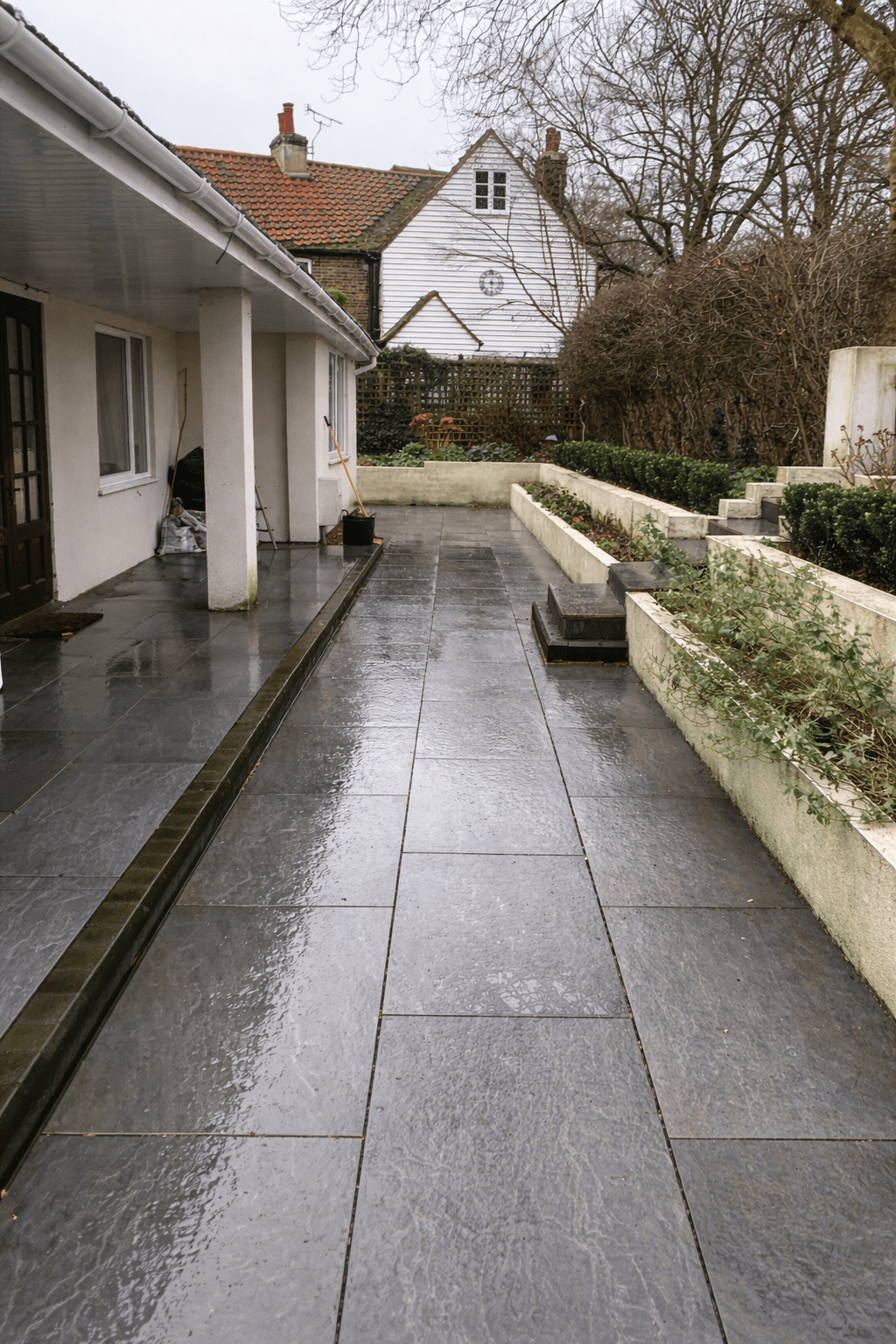
| When Cleaning Becomes Care: Walls, Patios, Trust, and the Long Way Round |
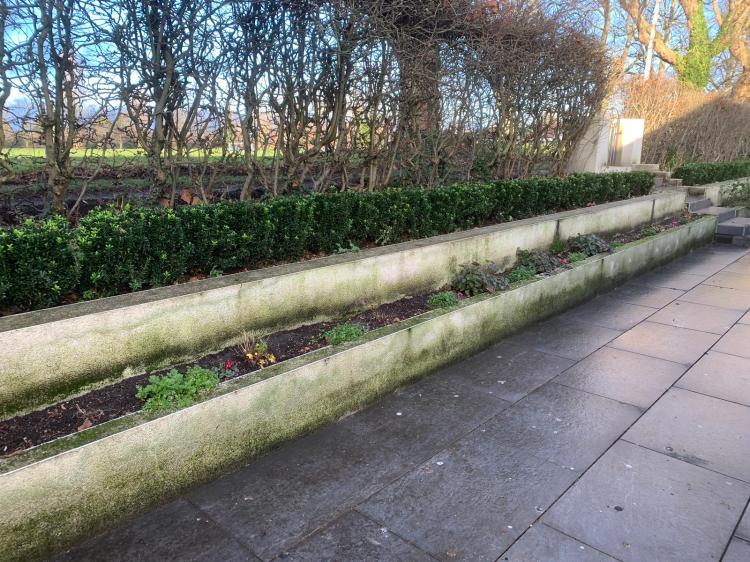
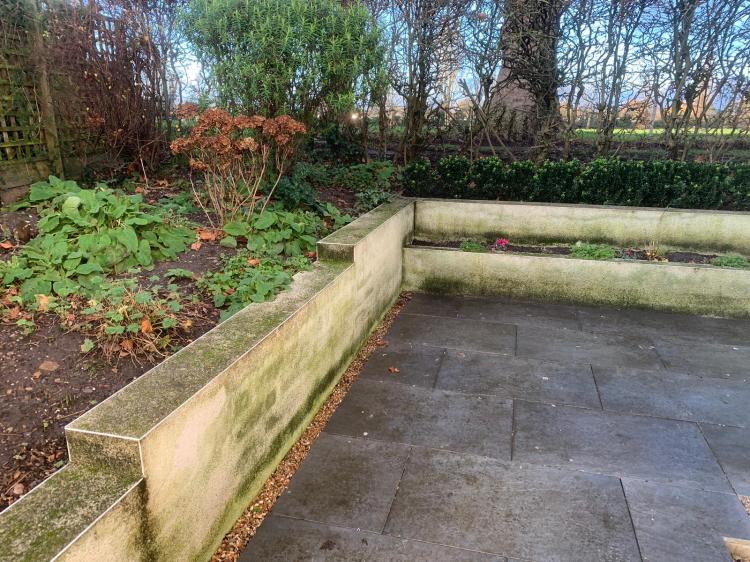
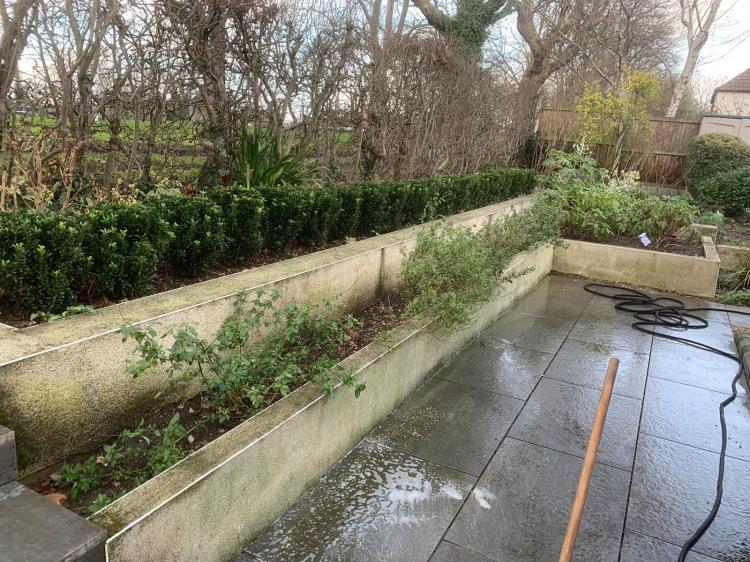
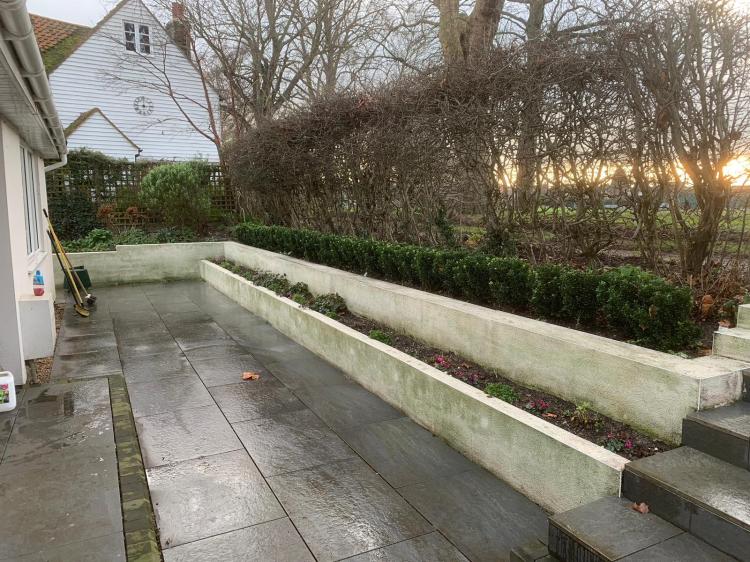
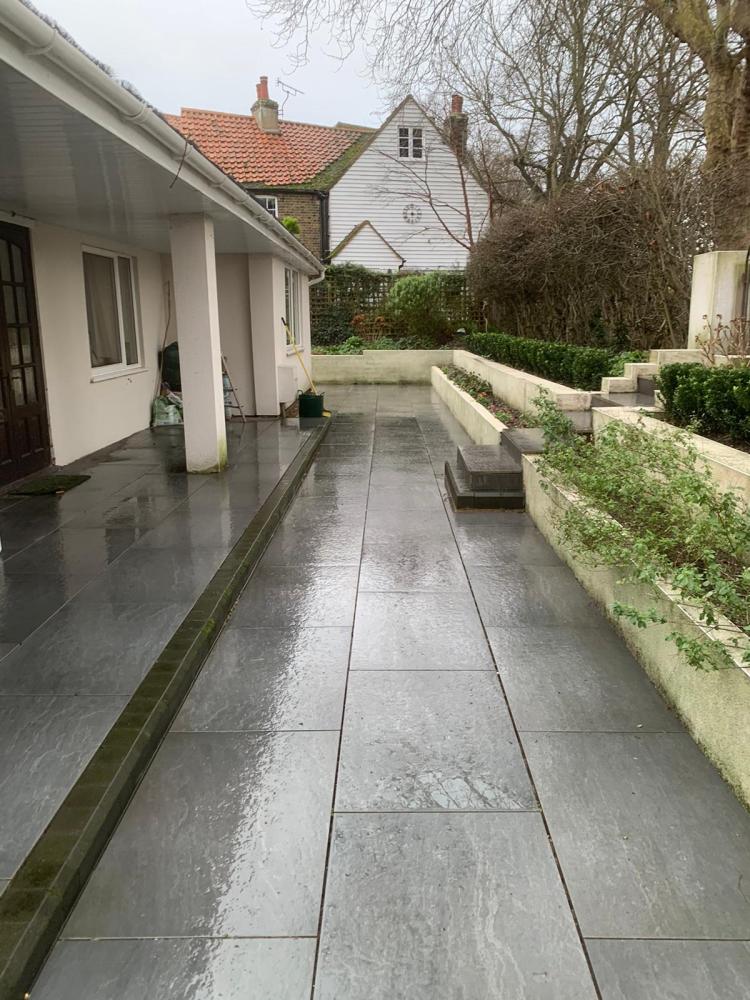
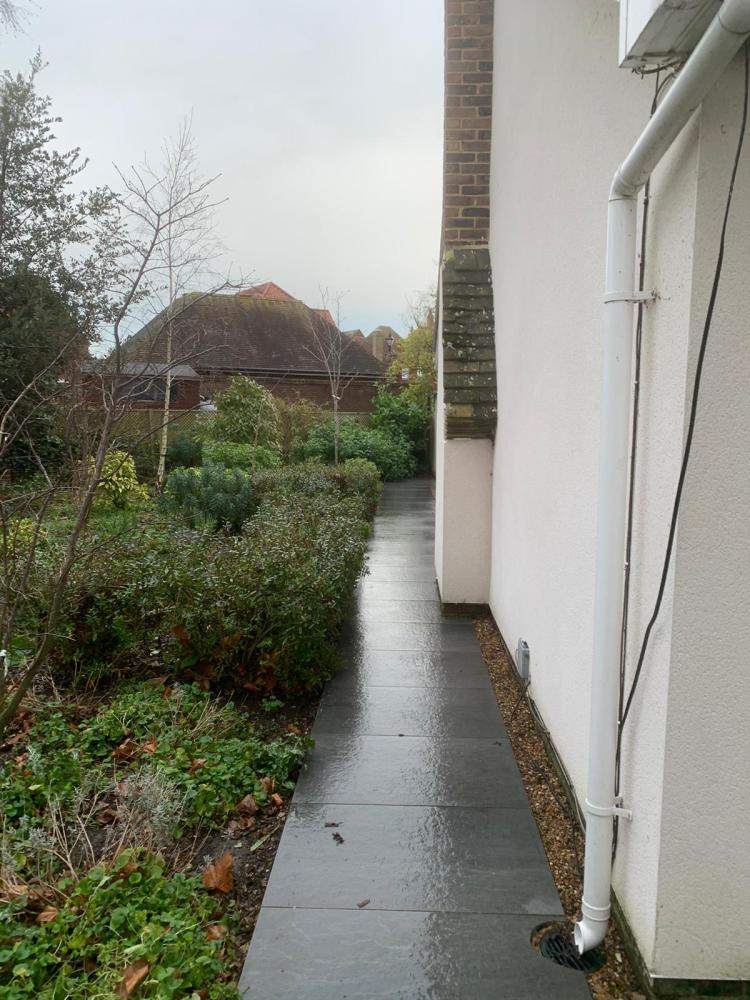
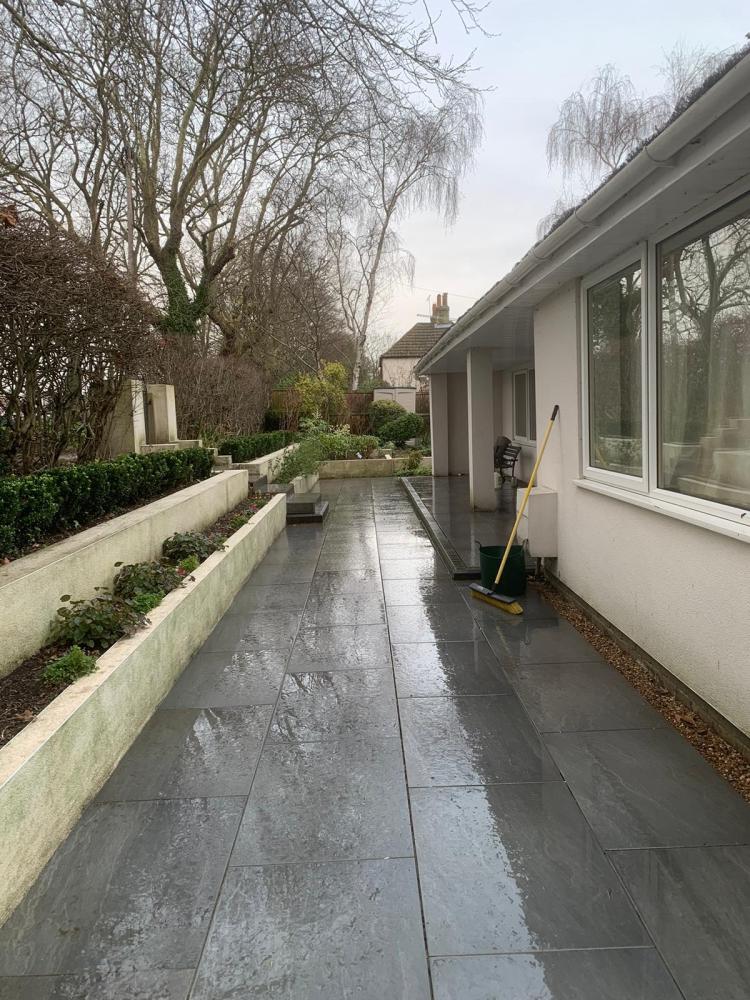
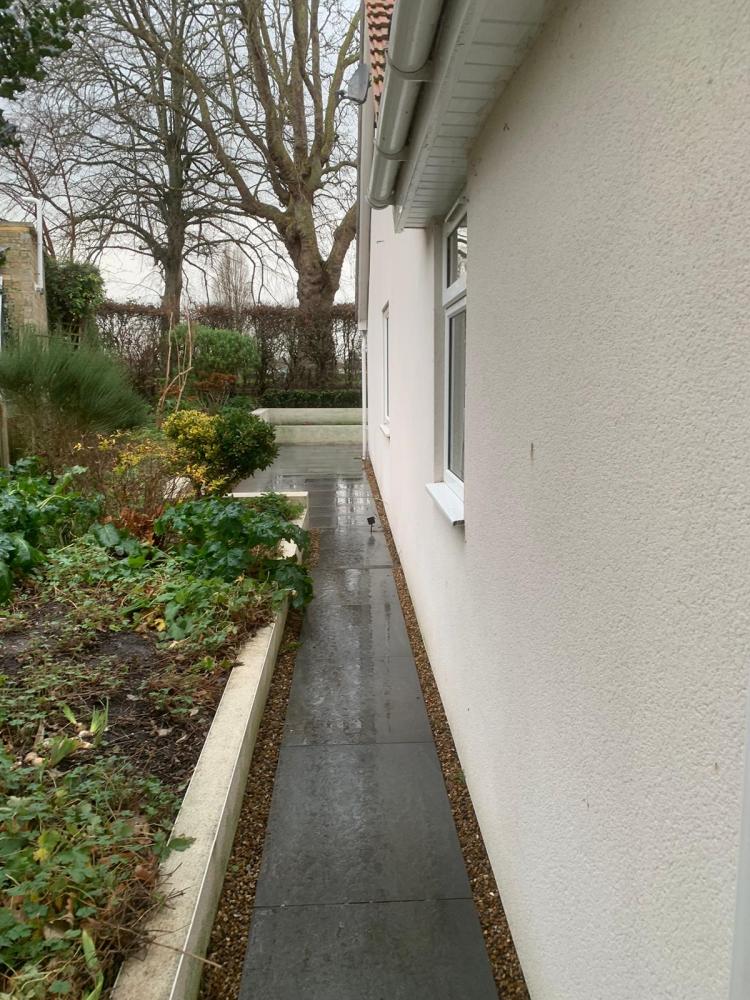
| The question didn’t arrive dramatically. There was no crisis moment, no sudden failure, no demand for transformation. It arrived quietly, the way most worthwhile garden questions do. Can these walls be cleaned without damaging them? Not should they look new. Not only can they be blasted back to white, but whether it was possible to intervene at all without undoing what time, weather, and use had already written into them. That distinction matters more than most people realise. This garden has been lived in. Not styled for photographs or rushed into maturity, but allowed to settle into itself. Raised beds give it structure. Paths guide movement. Planting softens edges and absorbs time. Like many gardens that work well, it doesn’t shout about any of this. It just does its job, season after season. And like all gardens that are genuinely used, it has also accumulated wear. Green staining crept slowly up the rendered walls. Algae settled where moisture lingered. The surfaces hadn’t failed, but they had begun to blur. The garden still functioned, but its lines were starting to lose their clarity. The temptation, in situations like this, is to reach for force. Pressure washers exist for a reason, and sometimes they’re exactly the right tool. But force is not the same as care, and in gardens — especially older ones — the difference is everything. I’ve learned, over years of maintaining other people’s spaces, that the most important decision is often whether to act at all. Cleaning is not neutral. Every intervention leaves a trace, even if you can’t see it immediately. The question is whether that trace respects the material in front of you, or overrides it. Rendered garden walls sit in an awkward position. They are architectural, but they live outdoors. They’re designed to weather, but not to be scoured. Treated too gently, nothing changes. Treated too harshly, the surface is permanently altered. Once the skin is opened or the texture stripped, there is no quiet way back. This is where a lot of well-intentioned garden cleaning goes wrong. Pressure washing becomes the default, not because it’s appropriate, but because it’s efficient and visible. The result looks impressive for a short while, but often at the cost of the surface’s future. The wall may be clean, but it’s also compromised. Before any work began here, the walls were treated as surfaces, not problems. Their age mattered. Their orientation mattered. North-facing sections behaved differently from those that caught the afternoon light. Sheltered corners told a different story again. Moisture, airflow, and exposure — these things shape how algae settles and how stubborn it becomes. This wasn’t about erasing time. It was about understanding how time had arrived. The decision to clean the walls gently was not a compromise. It was the point. The aim was never to return them to some imagined original state, but to lift the organic build-up that had slowly settled over the years and allow the render’s own tone to re-emerge. That meant patience. It meant brushes where hands could do better than machines. It meant controlled rinsing and test areas that were observed, not rushed past. Walls tell you quickly how they want to be treated, if you’re prepared to listen. Some release growth easily. Others hold onto it stubbornly. The trick is not to argue with them. When the cleaning was finished, the result was not dramatic in the usual sense. There was no stark contrast, no moment where the garden suddenly looked “done to”. Instead, the walls looked like themselves again — lighter, calmer, more defined. The green haze that had been pulling the eye upwards had gone, and the structure of the garden could breathe again. And then something interesting happened. With the vertical surfaces no longer carrying that visual weight, the eye dropped downwards. The paving, previously quiet and unassuming, became noticeable — not because it was suddenly dirty, but because everything else had settled enough to be read correctly. This is one of those subtle shifts that’s hard to explain unless you’ve experienced it. Resolve one element of a garden properly, and it gives permission for the next to be seen. The patio had its own history. It had been laid several years earlier, before Earthly Comforts ever came on board. The job was never properly finished. The joints between the slabs were left unsealed. The levels were inconsistent. Drainage wasn’t disastrous, but it wasn’t thoughtful either. More importantly, the experience left the clients cautious. Understandably so. Once trust is damaged in a garden, it doesn’t come back quickly. When I arrived later as green maintenance cover, the aim wasn’t to fix everything at once. It was to stabilise the space. To work with what was there. To prove, quietly and consistently, that care could be applied without rushing, upselling, or pretending problems didn’t exist. Over the years, the garden has been brought back to life in that way, not through a single intervention, but through accumulation. Beds reshaped. Planting adjusted. Edges redefined. The patio itself was slowly corrected where possible, without lifting and relaying everything for the sake of it. That kind of work doesn’t photograph well, but it’s the only kind that lasts. By the time the walls were cleaned, the patio was structurally sound. But like most paving in a damp climate, it had developed a uniform film of organic growth. Algae dulls colour, softens edges, and changes how surfaces behave underfoot. It’s not dramatic, but it’s cumulative. Unlike the walls, the patio wasn’t asking for restraint. Stone paving is designed to take wear. It exists to be walked on, weathered, and cleaned. When growth builds evenly across slabs, and the joints are stable, a carefully controlled power wash isn’t aggressive — it’s effective. This is where one of the most common gardening myths deserves to be challenged: that pressure washing is always harmful. It isn’t. What’s harmful is using it indiscriminately, without regard for material, age, or context. The tool isn’t the problem. The lack of judgment is. The decision to power wash the patio was made the day after the walls were cleaned, not at the same time. That pause mattered. It allowed the walls to dry and show their response. It allowed the garden to be reassessed as a whole, rather than as a list of tasks. Cleaning has momentum, and once machines are out, it’s tempting to keep going. Gardens benefit from pauses. When the patio was power-washed, it was done decisively but not brutally. The aim wasn’t to strip the stone back to something it never was, but to remove years of accumulated surface growth in one efficient pass. The difference was immediate. Underfoot, the surface felt more secure. Visually, the natural variation in the stone returned. Light behaved differently across the slabs, even on an overcast day. Rain, the following morning, sat lightly rather than clinging unevenly. The patio dried more evenly. Edges became legible again. Paths regained direction. The ground felt like a surface meant to be used, not just crossed. And still, the job wasn’t finished. What cleaning does — when it’s done properly — is make the truth visible. It doesn’t hide faults; it reveals them. In this case, it highlighted something that had been true since the patio was first laid: the joints still needed sealing. Joint sealing is not glamorous work. It doesn’t make for dramatic photographs. It also can’t be rushed. It needs dry weather, settled temperatures, and time — all the things that hurried projects tend to ignore. Attempt it in the wrong conditions, and it fails quietly, often invisibly, until weeds and water tell the story later. So, for now, the patio is not being declared finished. It’s being declared ready. That distinction is essential. There’s no pretending here that cleaning alone completes the work. It doesn’t. What it does is create the conditions for the final stage to be carried out correctly when the weather allows. That is not a delay born of indecision, but of respect. Once the walls and patio were both clean, the garden rebalanced itself. Raised beds felt intentional rather than tired. Walkways felt purposeful rather than merely functional. The house sat more comfortably within its setting. What’s striking is how little actually changed. No planting was altered. No structures were rebuilt. Nothing was added. And yet the space felt wider, lighter, more composed. This is the quiet power of good maintenance. It doesn’t compete with design. It removes the noise that has built up over time. The effect was particularly noticeable in the edges — narrow side paths, sheltered corners, thresholds between house and garden. These are places where moisture gathers, and neglect creeps in quietly. Once cleaned, they stopped feeling like forgotten margins and started reading as part of the whole. There’s a tendency to think of cleaning as a reset, a way of returning something to “new”. I’ve never found that a useful idea in gardens. Gardens aren’t static objects. They are systems, shaped by weather, use, and time. The aim isn’t to turn back the clock, but to keep the system legible. Soft cleaning the walls preserved their texture and integrity. Power washing the patio acknowledged its strength and purpose. Each decision was surface-led, not tool-led. That distinction sits at the heart of how I approach this kind of work. There is no single right way to clean a garden. Soft washing and power washing are not opposites; they are tools. Render needs patience. Stone can take pressure. Some surfaces want time, others decisiveness. Good garden care lives in those distinctions, and in the willingness to accept trade-offs rather than chase perfection. The final images from this project weren’t taken for drama. They were taken because the garden looked ready — ready to be walked through, ready to weather the following season, ready to be enjoyed without distraction. Nothing here has been reinvented. Nothing has been forced. The garden has been allowed to return to itself. And in my experience, that is the most durable result you can hope for. |
| About our writing & imagery Most articles reflect our real gardening experience and reflection. Some use AI in drafting or research, but never for voice or authority. Featured images may show our photos, original AI-generated visuals, or, where stated, credited images shared by others. All content is shaped and edited by Earthly Comforts, expressing our own views. |


What an awesome job done.
LikeLiked by 1 person
Thanks Sadje, Yes J did a fantastic two day job with this garden wall and patio, the results were excellent and the clients very pleased.
LikeLiked by 1 person
Yes, there’s a marked difference.
LikeLiked by 1 person