
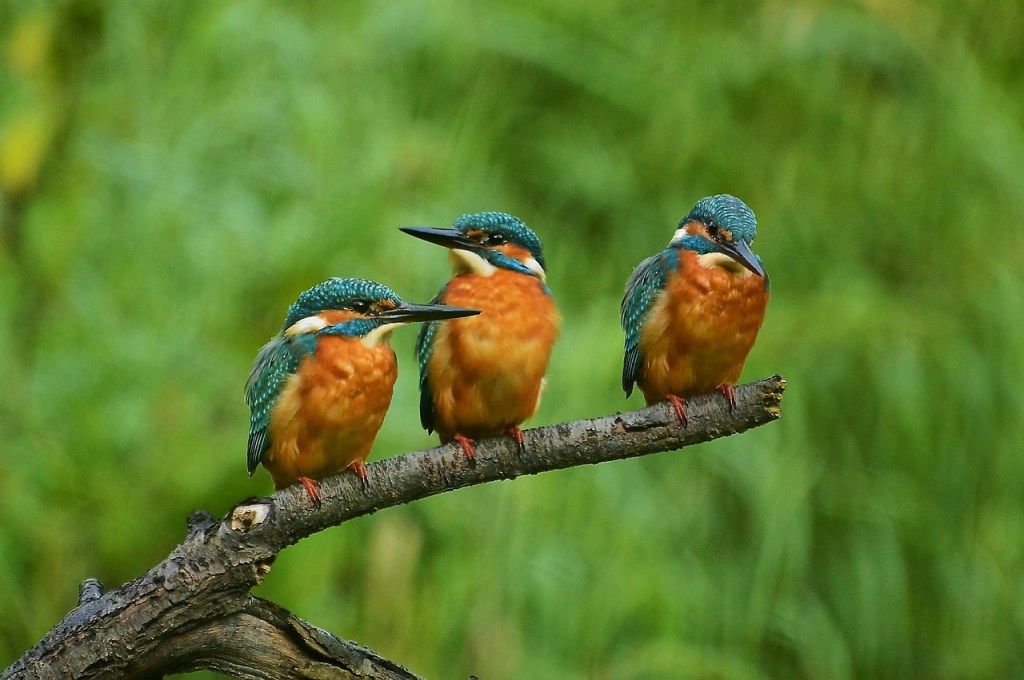
| The Secret Life of the Common Kingfisher Few sights in British wildlife are as arresting as the sudden streak of electric blue that signals a kingfisher passing by. One moment, the riverbank is still; the next, it is pierced by colour and gone again, leaving only ripples and a sense that something extraordinary has just happened. The common kingfisher is not a rare bird in the UK, but it is deeply special. Its beauty, speed, and dependence on clean, living water make it both a joy to encounter and a powerful symbol of healthy landscapes. To understand the kingfisher is to understand rivers, patience, and the delicate balance between land and water. |
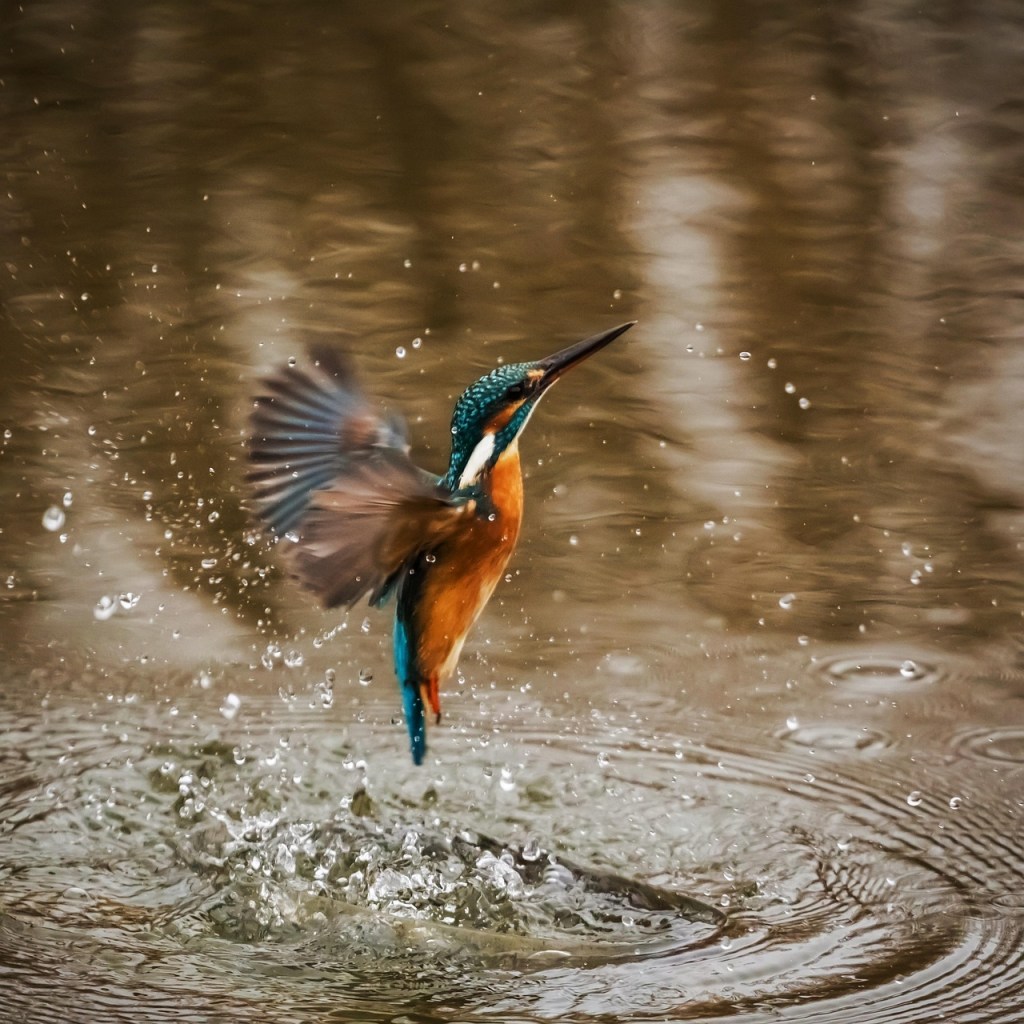
| What Is the Common Kingfisher? The common kingfisher is a small, compact bird, roughly sparrow-sized, but far more vivid than its modest proportions suggest. It’s back, and wings shimmer in shades of turquoise and blue-green, while its underparts glow rich orange. A long, straight bill—dark above and often orange below—completes a silhouette built for precision fishing. Despite its brilliant colour, the kingfisher is surprisingly well camouflaged. Against moving water and dappled light, its blue can blend into reflections, making it difficult to spot unless it moves. Most people notice a kingfisher only in flight, as a fast, low dart skimming just above the water’s surface. A Bird Shaped by Water Everything about the kingfisher is adapted to life along rivers, streams, canals, lakes, and ponds. Its short tail and rounded wings allow rapid acceleration and agile flight over water. Its large head houses excellent binocular vision, essential for judging distance and depth when hunting. The kingfisher’s eyes are particularly remarkable. They are adapted to see clearly both above and below water, compensating for the distortion caused by refraction. This allows the bird to strike with astonishing accuracy, even when the prey appears to have shifted beneath the surface. The result is a hunter that rarely wastes effort. The Art of Fishing Fishing is at the heart of the kingfisher’s life. From a low perch—often a branch, reed, or fence post—it waits, motionless, watching the water below. When a fish comes into view, the kingfisher launches forward, diving headfirst in a clean arc. The impact is brief and decisive. The bird emerges with prey held crosswise in its bill, returning to a perch to stun and swallow it headfirst. This ensures fins fold flat and the fish passes smoothly. Small fish form the bulk of the diet, but aquatic insects and other small water-dwelling creatures are also taken when available. Territory and Solitude Kingfishers are strongly territorial birds. A single stretch of river may be defended vigorously, particularly during the breeding season. They chase rivals with sharp calls and high-speed flights, often skimming the surface by inches. For most of the year, kingfishers live solitary lives. Pairs breed together, but even then, the relationship is based on cooperation rather than closeness. Each bird needs sufficient fishing space to survive, and overcrowding quickly leads to conflict. This territorial behaviour is one reason kingfishers are never abundant in any one place, even where conditions are good. Breeding and Nesting in Riverbanks Kingfishers nest in burrows excavated directly into riverbanks. Both birds work together to dig a narrow tunnel, often 60–90 centimetres long, ending in a small chamber. These burrows are usually located above the normal waterline but close enough to fishing areas to reduce travel distance. The choice of site is critical—too low and flooding becomes a risk; too high and access to food is compromised. Eggs are laid directly onto accumulated fish bones and pellets within the chamber. While this may sound untidy, it reflects the bird’s practical, functional approach to life. Raising Chicks Kingfisher chicks hatch blind and helpless, growing rapidly on a diet of small fish delivered constantly by the parents. Feeding is intensive, with adults making repeated fishing trips throughout the day. As the chicks grow, competition within the nest increases. Older chicks are often fed first, and survival depends on both food availability and timing. Eventually, fledglings emerge at the burrow entrance before making their first flights. These early days are perilous, as young birds learn to fish while avoiding predators and territorial adults. Sound and Subtle Communication Despite its visual impact, the kingfisher is not a loud bird. Its call is a sharp, high-pitched whistle, often heard just as the bird flashes past. This call serves as both a contact and a warning—announcing presence to rivals and signalling movement across a territory. Those who spend time near water often learn to recognise the call before spotting the bird itself. Kingfishers rely far more on sight than sound, both for hunting and for awareness of their surroundings. Seasonal Challenges and Winter Survival Winter is the most dangerous time for kingfishers in the UK. Freezing temperatures can lock waterways under ice, cutting off access to food. During prolonged cold spells, kingfishers may be forced to move downstream, search for unfrozen water, or perish. Many kingfishers do not survive severe winters. Those that do often rely on spring breeding success to rebuild populations. This boom-and-bust pattern makes them sensitive indicators of both climate and water health. Their presence for one year is no guarantee of presence the next. Kingfishers and Water Quality Few birds are as closely tied to water quality as the kingfisher. Clear water is essential for hunting, while healthy fish populations are essential for survival. Pollution, excessive sedimentation, canalisation, and poorly managed banks all reduce the suitability of the area for kingfishers. Conversely, rivers with natural vegetation, varied flow, and stable banks provide ideal conditions. When kingfishers return to restored waterways, it is often one of the first visible signs that recovery is working. Canals, Rivers, and Unexpected Places Although often associated with quiet rural streams, kingfishers are increasingly found in urban and suburban waterways. Canals, drainage channels, and even city rivers can support them if fish are present and disturbance is manageable. This adaptability allows kingfishers to live surprisingly close to people, though they remain easily disturbed. Regular human movement is tolerated; sudden changes or direct approaches are not. Their presence in built environments is a quiet success story for nature’s resilience. Why Kingfishers Matter Kingfishers matter not because they are rare, but because they are precise. They demand clean water, abundant prey, and stable habitat. When those conditions are met, they thrive. When they fail, kingfishers disappear. They also matter because they inspire. A single sighting can change how someone sees a river forever—transforming it from background scenery into a living habitat. This power to awaken attention is no small thing. Learning to Notice the Blue Flash Seeing a kingfisher is rarely planned. It happens when you stop, when you linger, when you look at water rather than just pass it by. The stillness required to notice a kingfisher is part of the reward. It teaches patience, awareness, and respect for subtle movement. In a world that moves quickly, the kingfisher reminds us to pause—because sometimes the most extraordinary moments pass in a heartbeat. A Guardian of the Water’s Edge The common kingfisher is more than a beautiful bird. It is a guardian of rivers, a marker of balance, and a living thread connecting land, water, and sky. To protect kingfishers is to protect the quiet integrity of waterways themselves. And in doing so, we protect something essential—not just for wildlife, but for the health and character of the landscapes we share. |

