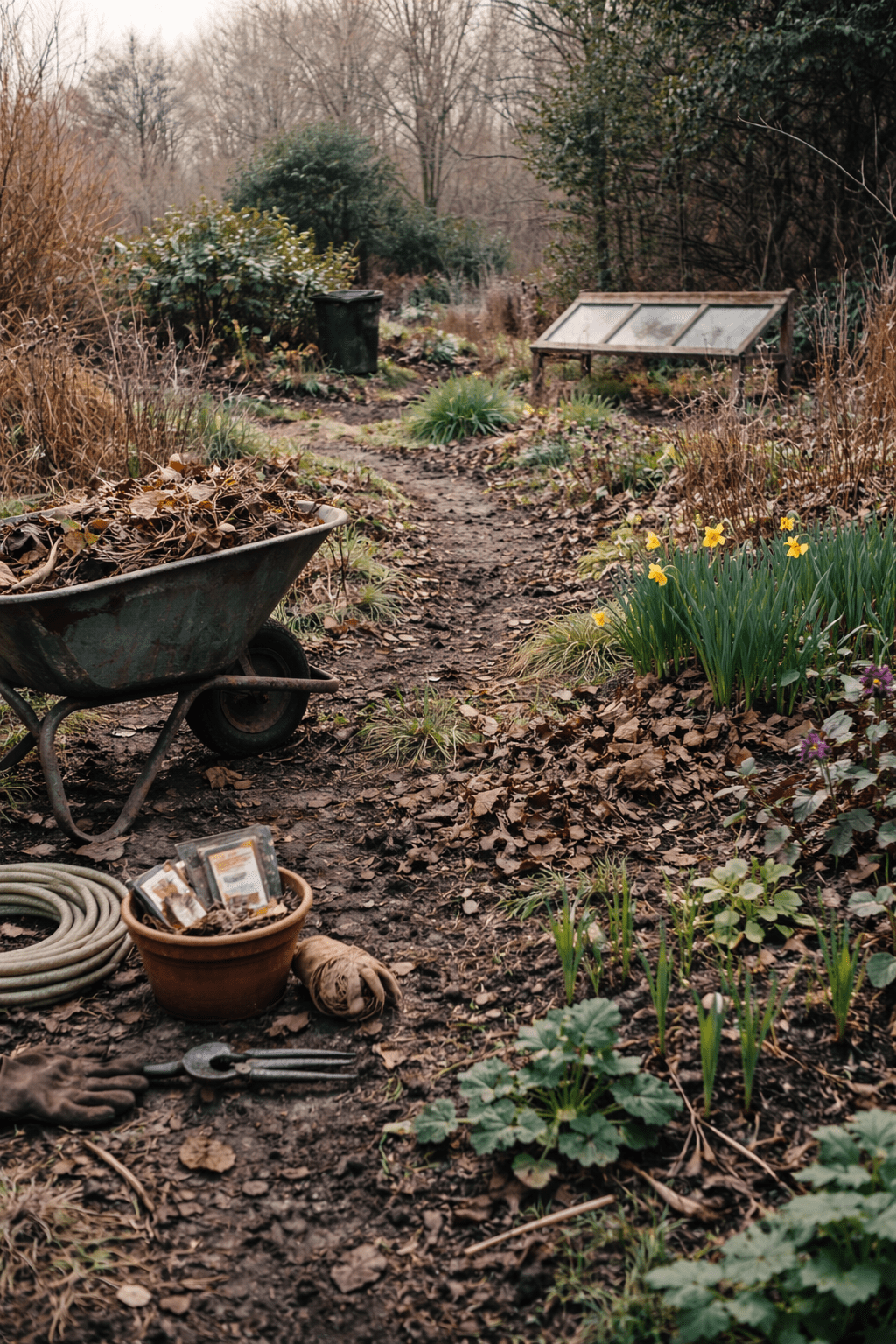
| Why spring is messy, late, unpredictable — and never a clean slate. Spring is sold as a beginning. A fresh start. A reset button you press after winter clears away. In gardening terms, it’s meant to be the moment everything finally makes sense again. That story is neat. It’s also wrong. Spring does not arrive cleanly, and it certainly doesn’t reset anything. It drags winter behind it, argues with the weather, and arrives on its own terms, not yours. Anyone who has worked in real gardens knows this, even if we rarely say it out loud. The idea of a perfect spring reset creates more frustration than motivation. It sets up expectations that nature has no intention of meeting. Spring is not a blank page. It’s a continuation. What actually happens in spring is an overlap. Old and new growth coexist. Dead stems are still standing while shoots push through underneath. Soil is half-ready at best. Beds are uneven. Lawns are patchy. Some things wake up early, others refuse to move at all. This is not failure. It’s how seasonal systems behave. The pressure to “reset” usually shows up as urgency. Clear everything. Cut everything back. Start fresh. But spring doesn’t reward haste. Ground temperatures lag behind light levels. Rain patterns are unreliable. Frost still turns up when you least want it. Spring looks productive from a distance. Up close, it’s awkward and unfinished. Much of the mess people blame on poor gardening is actually timing. Cutting back too early exposes new growth to cold snaps. Clearing too thoroughly removes insulation that soil still needs. Rushing to plant fills beds before conditions are stable. The result is more intervention later, not less. A proper reset would imply control. Spring offers none. One of the quiet truths of spring is that it reveals what winter decided. Drainage issues appear. Compaction becomes obvious. Plants that struggled last year don’t magically recover. Losses surface slowly, then all at once. Spring doesn’t erase these things. It exposes them. This is why the idea of starting again is misleading. Gardens carry memory. Soil remembers pressure. Plants remember stress. Pests remember where food was easy to find. None of that disappears because the calendar changed. The gardener’s job in spring is not to overwrite that history, but to read it. Spring is also late more often than people admit. March promises more than it delivers. April teases warmth, then withdraws it. May arrives unevenly, depending on exposure, soil type, and location. Planning as if spring arrives everywhere at once leads to disappointment. Gardens wake in stages. South-facing corners move first. Sheltered beds follow. Shaded areas take their time. Some things wait until they’re certain. Impatience does not speed them up. The belief in a reset also feeds comparison. Social feeds fill with images of instant abundance, freshly turned beds, and uniform growth. What you don’t see is what was removed, forced, or replaced to create that look. Real gardens don’t behave like edited ones. In working gardens, spring is when unfinished winter jobs collide with new demands. You’re still clearing storm damage while weeds germinate. You’re repairing edges while growth accelerates elsewhere. The sense of always being behind is common and unnecessary. You are not late. Spring is uneven. Another part of the lie is the promise of motivation. We’re told spring will energise us, pull us outside, and make everything feel possible again. Sometimes it does. Sometimes it doesn’t. Spring can be overwhelming. The sheer volume of growth puts pressure on. Everything needs attention at once, and attention is finite. The idea that spring should feel exciting ignores how demanding it actually is. Gardening energy doesn’t rise automatically with daylight. This matters because pushing through exhaustion early in the season leads to burnout later. Overworking in spring often results in neglected maintenance by summer, when conditions are harder and consequences more visible. A steady spring beats an ambitious one. The most damaging aspect of the spring reset myth is how it treats mess as something to eliminate. Mess in spring is functional. It protects soil, supports insects, buffers temperature swings, and marks where life is reorganising itself. Clearing the mess for the sake of appearance removes structure before replacements are ready. Spring gardens are transitional by nature. They should look transitional. A healthier approach to spring is not to reset, but to re-enter. Step back into the garden gently. Notice what survived without help. Pay attention to where growth is strongest. Let the garden show you where to focus. Spring rewards observation more than effort. That doesn’t mean doing nothing. It means doing less, better. Choosing what matters now and what can wait. Accepting that some areas will look unresolved for weeks. Trusting that the delay is not neglect. The clean slate idea encourages erasure. Spring needs continuity. When gardeners let go of the reset mindset, something shifts. Work becomes responsive rather than reactive. Decisions are based on conditions, not dates. The garden stops feeling like a list of tasks and starts behaving like a system again. That shift reduces pressure. It also improves outcomes. Spring is not a performance. It doesn’t need to impress anyone. It doesn’t care if everything is finished by Easter or planted by May Day. It responds only to weather, light, and time. The gardener’s role is to keep pace, not set it. There is relief in abandoning the idea of a perfect start. Once you accept that spring will always be partial, uneven, and slightly late, you stop fighting it. You work with what’s there, not what you hoped would be. That is where good gardening begins. Spring is not a reset. It’s a negotiation between what was and what’s coming next. The mess is part of that conversation. The pauses matter. The delays are telling you something. Listen to them. |
Unless stated, featured images are my own work, created independently or with the assistance of AI.

