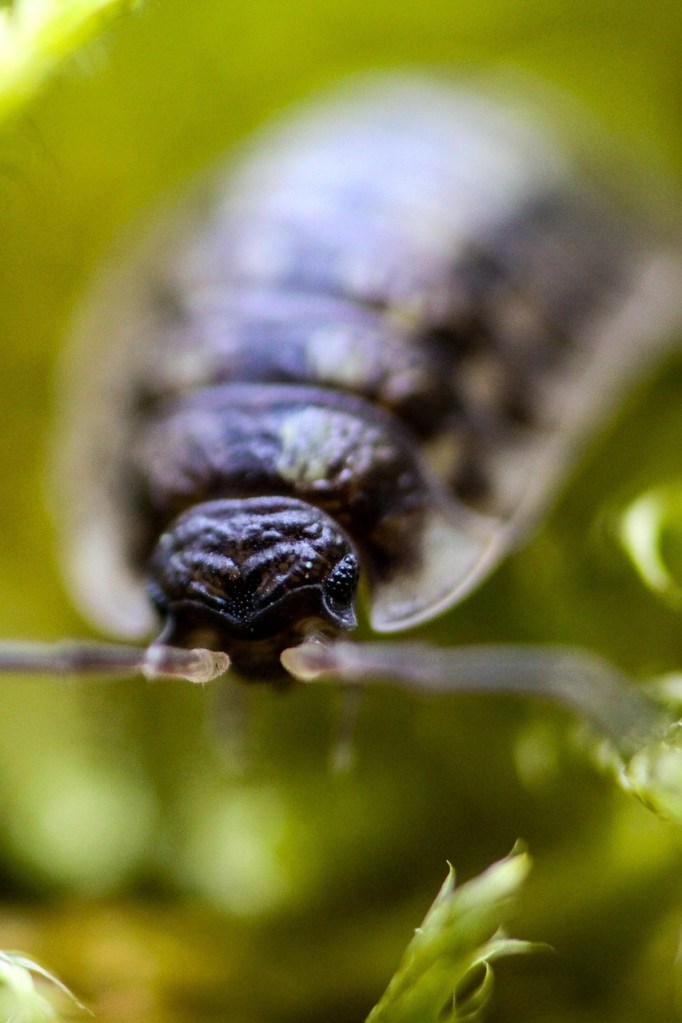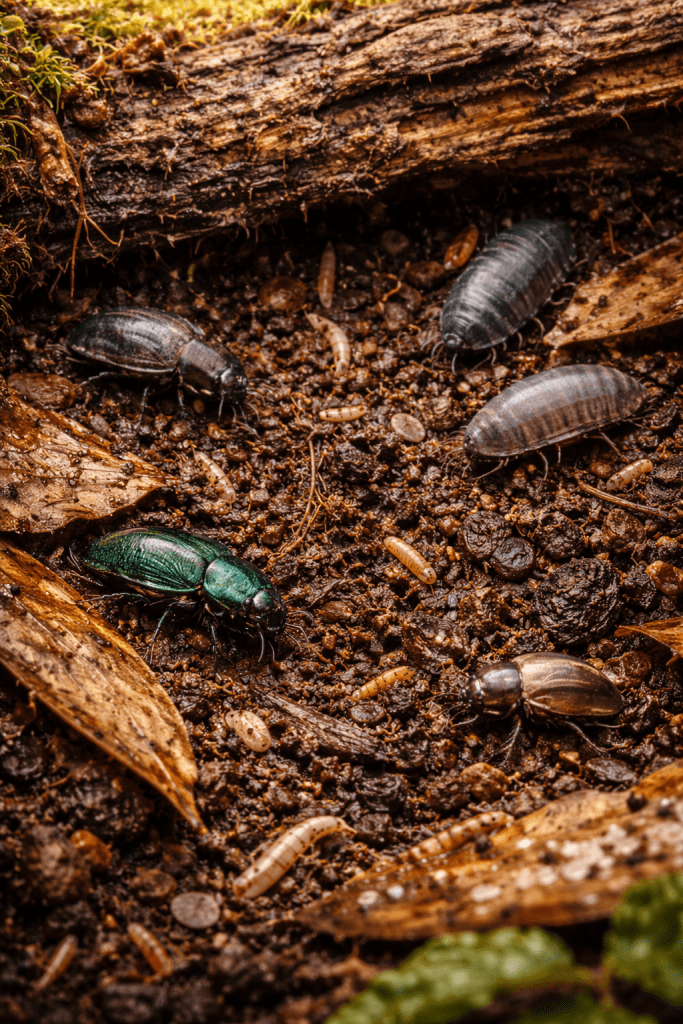
| The most important work in a garden happens where no one is looking. Beneath the surface — under mulch, logs, compost, and the quiet crust of soil — an entire workforce is already on the job. They don’t bloom. They don’t sing. They don’t attract comment. But without them, nothing above ground would thrive for long. Beetles and woodlice are the backbone of that hidden economy. Beetles arrive first when the cover is lifted. Some scatter instantly, armour flashing as they vanish into cracks and shadows. Others pause, as though offended by the interruption. There are hunters and recyclers, specialists and generalists, each one occupying a role so precise it feels intentional rather than accidental. Ground beetles patrol the soil surface, feeding on slugs, larvae, and other soft-bodied creatures. They don’t announce themselves — they correct imbalances quietly. Scarabs and their kin work deeper, breaking down organic matter, pulling nutrients back into circulation. Then there are the woodlice. So often dismissed as pests, yet so utterly essential. Woodlice are not insects at all, but land-dwelling crustaceans — creatures that made the long evolutionary leap from water to soil. They require dampness, decay, and darkness, which is precisely why they thrive where gardeners are told not to look. They eat what most things won’t: rotting leaves, softened wood, fungal growth. In doing so, they fragment material that bacteria and fungi can then finish breaking down. Without them, compost stalls. Soil structure suffers. Nutrients remain locked away rather than returning to plants. As a gardener now, I’ve learned to read their presence like a report card. Woodlice under mulch tell me the moisture is right. The number of beetles tells me chemicals are absent. Diversity tells me balance is holding. Absence tells me something has been over-managed, over-cleared, or overly sanitised. Behind the spade, I see this workforce constantly — especially after rain, when the soil loosens, and the underground briefly reveals itself. It’s not pretty work. It’s not elegant. But it is relentless, patient, and utterly necessary. We talk often about “feeding the soil.” These creatures are how the soil eats. British gardens depend on them more than we like to admit. Every tidy instinct works against them. Every swept corner, every stripped bed, every demand for neatness removes the habitat they rely on to keep the whole system running. Once you understand that, your idea of a good garden changes. A good garden is not a clean one. It is a busy one. And if, when you lift the spade, beetles run and woodlice curl, you can be quietly confident that the underground workforce is doing exactly what it should — so everything above ground has a chance to follow. |
| 10 True Facts About Beetles & Woodlice in British Gardens Beetles are the most diverse insect group in the UK They occupy a wide range of roles, from predators to decomposers. Ground beetles are important natural pest controllers Many feed on slugs, larvae, and other garden pests. Most beetles prefer to stay hidden. They live under logs, stones, mulch, and within soil layers. Woodlice are crustaceans, not insects. They are more closely related to crabs and shrimp than to beetles. Woodlice need moisture to survive. They breathe through gill-like structures, which is why they favour damp habitats. Woodlice help break down tough plant material Their feeding makes organic matter more readily available for microbial decomposition. Beetles and woodlice improve soil structure. Their movement through soil increases aeration and water infiltration. Healthy compost heaps are full of invertebrates Beetles, woodlice, and their larvae are essential to efficient composting. Removing leaf litter reduces underground biodiversity. Many species rely on it for shelter, food, and overwintering sites. Their presence is a sign of a functioning garden ecosystem A diverse underground workforce usually indicates good soil health and low chemical use. |