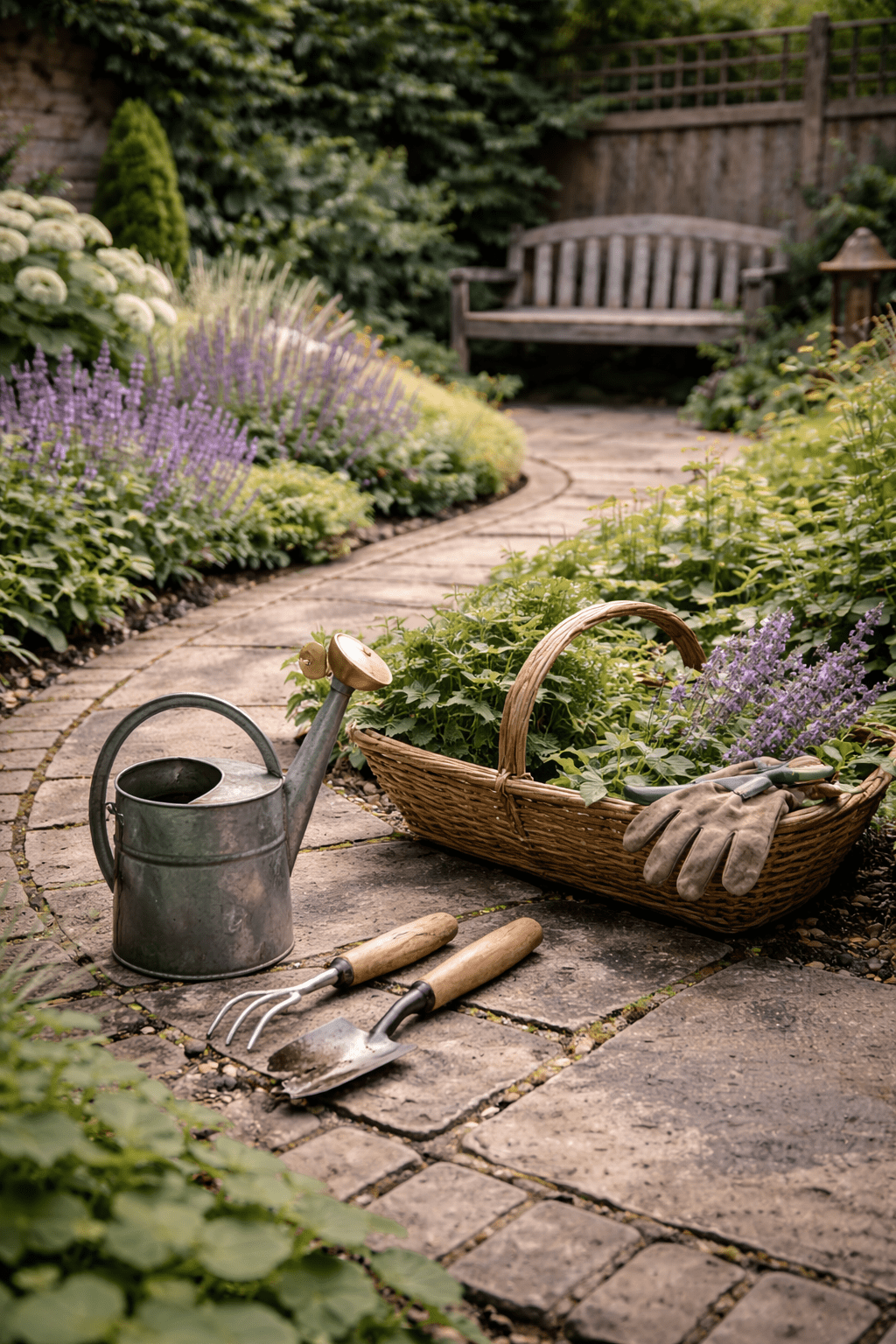
| Part 10 Maintaining a Small Garden in Short Visits Small gardens don’t need rescuing. They don’t need big clear-outs, dramatic interventions, or occasional bursts of effort that leave everything disrupted for weeks afterwards. What they need is something quieter and far more effective: Regular, short visits that keep things steady. In compact spaces, rhythm matters more than intensity. Small gardens respond quickly — for better or worse. One of the defining features of a small garden is its quick response. Missed maintenance shows up fast: weeds seed, growth overlaps, edges blur. But the opposite is also true. Light, timely care makes an immediate difference. A short visit — done with purpose — can restore clarity, prevent problems, and keep the garden feeling settled without turning it upside down. Small gardens reward attention, not upheaval. Short visits favour prioritisation. When time is limited, every action has to earn its place. Short visits naturally encourage focus on what matters most: Clearing access Restoring edges Removing problems early Supporting plants before they collapse This kind of maintenance is selective rather than exhaustive. It keeps the garden functional and calm rather than chasing perfection. In small gardens, doing the right things matters far more than doing everything. Regular light maintenance prevents heavy work. Most of the difficult jobs in small gardens begin as small, manageable ones. A plant that needs staking. A weed that hasn’t yet seeded. An edge that’s starting to soften. Addressed early, these jobs take minutes. Left too long, they turn into disruptive tasks that dominate the garden and drain energy. Short, regular visits stop work from accumulating, and accumulation is what overwhelms small spaces. Short visits protect the garden’s structure. Big interventions often undo good design. Borders get trampled. Plants are cut back harder than necessary. Soil is compacted. The garden loses its rhythm and has to recover all over again. Short visits work with the structure rather than against it. They allow gentle adjustments instead of corrections, and they preserve the framework that keeps the garden readable and calm. Maintenance becomes stewardship, not repair. This approach suits real lives. Short visits aren’t just good for gardens — they fit real lives better too. They work around: Limited time Fluctuating energy Shared spaces Changing priorities They reduce disruption, keep gardens usable, and prevent the sense that gardening has to be “geared up for.” A small garden should be easy to return to — not something that’s avoided because it feels like too much. Short visits rely on good initial decisions. This way of maintaining only works when the garden has been set up sensibly. Clear structure, appropriate plant choices, manageable borders, and realistic expectations all support short, effective visits. When a garden is overcrowded or poorly planned, even frequent attention struggles to keep it in check. That’s why small gardens benefit so much from restraint earlier on — it makes everything that follows easier. Consistency builds trust between the gardener and the garden. Over time, short visits create familiarity. Patterns are noticed. Changes are anticipated. Problems are addressed before they announce themselves. The garden and the person caring for it settle into a shared rhythm. This is when a small garden begins to feel reliable — not demanding, not fragile, but quietly cooperative. In the final two posts, I’ll look at the role of removal before addition, and why small gardens are never truly finished — only carried forward. Because a small garden done properly doesn’t need constant effort. It needs continuity. |
The Small Garden