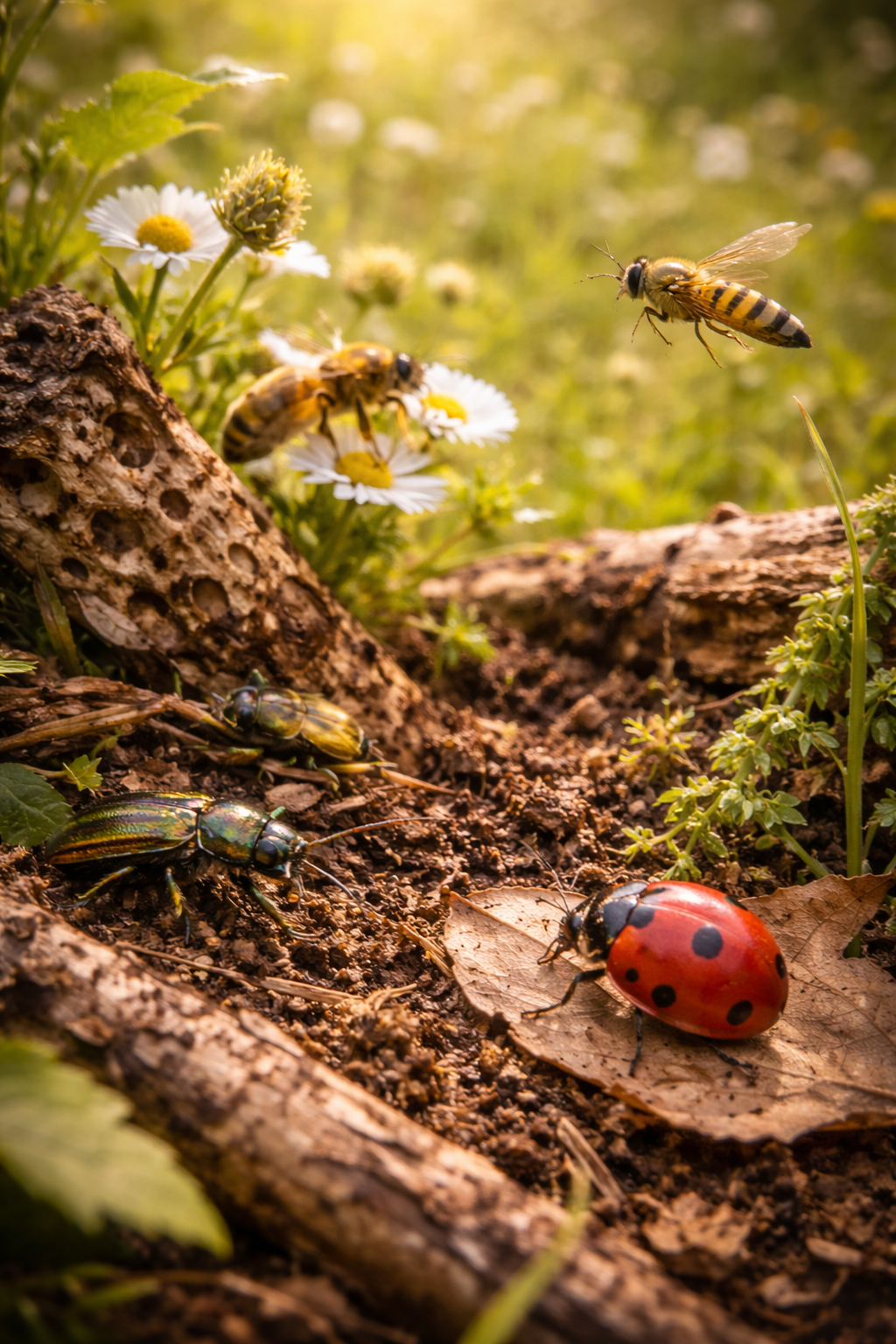
| Why the smallest lives hold the whole system together Most gardens are shaped around what we can see. Flowers, foliage, birds, butterflies — these are the lives we notice, name, and often celebrate. But beneath leaves, within soil, under stones, and along stems, another world is quietly at work. It is less visible, less admired, and far more essential than most of us realise. Insects are the backbone of the garden. They pollinate, decompose, aerate, recycle, balance, and feed almost everything else. Without them, gardens would not simply be quieter — they would unravel. Spring is when this hidden workforce truly comes into its own. |
| A world beneath the surface Garden insects rarely announce themselves. They live in places we are taught to tidy away: Leaf litter Dead wood Long grass Soil and compost Hollow stems and seed heads In early spring, as temperatures rise, insect life begins to stir. Beetles emerge from overwintering sites. Worms return to the upper layers of soil. Hoverflies appear before many bees. Spiders resume their patient patrols. None of this is dramatic. But together, it sets the foundation for everything that follows. A garden that supports insect life in spring can support birds, mammals, amphibians, and plants throughout the year. |
| More than pollinators When people think of helpful insects, they often think only of pollination. But insects perform many roles — often simultaneously. They: Break down dead plant material. Recycle nutrients back into the soil. Control populations of other insects Improve soil structure and drainage. From the base of the food web. Beetles consume pests and detritus. Lacewing larvae feed on aphids. Hoverfly larvae are clear, soft-bodied insects long before they ever become noticeable. Worms pull organic matter underground, enriching soil invisibly. These processes are continuous, subtle, and easily disrupted. |
| The importance of being left alone Many garden insects depend on stillness. They overwinter as adults, larvae, pupae, or eggs — often in places that appear lifeless. Clearing beds, removing old stems, or turning soil too early can destroy generations before they ever emerge. Spring tidying is often done with enthusiasm and speed. But insects respond best to gradual change. Working in stages, leaving some areas untouched, and allowing old material to break down naturally creates refuge at exactly the moment it is most needed. A garden does not have to be wild everywhere. It simply has to be kind somewhere. |
| Insects as food, not pests One of the hardest shifts for gardeners is learning to see insects not as problems, but as participants. Aphids feed ladybirds. Caterpillars feed birds. Slugs feed beetles and frogs. Spiders feed on almost everything smaller than themselves. Remove one layer, and pressure builds elsewhere. Gardens that aim for zero insect damage often rely on constant intervention. Gardens that allow some imbalance often find that balance restores itself. This doesn’t mean accepting damage everywhere. It means recognising that a chewed leaf is often evidence of life doing its job. |
| Soil life: the hidden engine Much of the garden’s insect life never comes above ground. Soil-dwelling insects and invertebrates: Create air pockets that roots rely on Move nutrients through soil layers. Support fungi and microbial life. Improve water retention Spring digging and turning can disrupt this network just as it becomes active again. Undisturbed soil tends to hold more life — and, over time, supports healthier plants with less effort. Healthy soil is not tidy. It is busy. |
| Why do insects disappear quietly Insect decline is rarely obvious at first. Gardens still look green. Flowers still bloom. But fewer birds visit. Pollination becomes less reliable. Pests appear suddenly and persistently. Insects respond quickly to change. They disappear long before the effects are visible at a larger scale. When they are gone, the garden must work harder to compensate — often unsuccessfully. Their absence is not dramatic. Their importance is. |
| Spring decisions, lasting consequences Spring is a hinge point. What is cleared, cut, sprayed, or disturbed in March and April shapes insect populations for the rest of the year. A single missed generation can mean fewer pollinators, fewer predators, and fewer birds by summer. Conversely, gardens that pause — that allow old growth to stand a little longer, that retain leaf litter, that avoid unnecessary disturbance — build resilience quietly. These are not sacrifices. They are investments. |
| Learning to value the overlooked Insects challenge our sense of beauty. They ask us to value: Subtle movement Imperfect leaves Quiet abundance Processes we don’t witness They remind us that gardens are not displays, but systems — held together by lives that rarely draw attention to themselves. Once you begin to notice insects, the garden changes. It feels deeper. More connected. Less fragile. |
| The quiet majority Most garden insects will never be named or photographed. They will live brief, hidden lives, carrying out essential work before disappearing again. Their success is measured not in visibility, but in continuity — in what is able to grow, return, and thrive because they were there. Spring gardens full of insect life hum quietly beneath the surface. They don’t demand recognition. They simply make everything else possible. |

