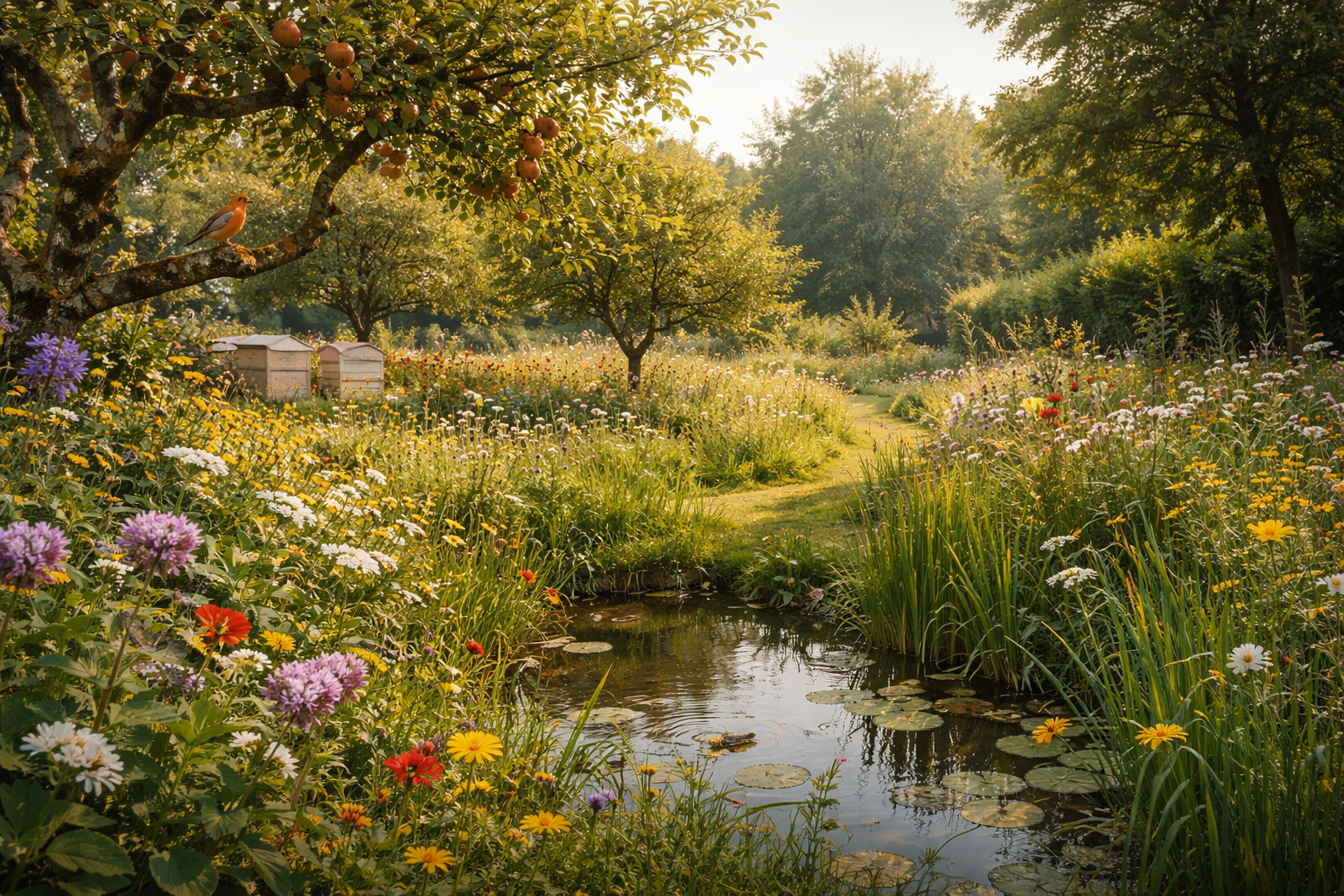
| A wildlife garden, when managed with intention, becomes far more than a pleasant green space. It is a functioning ecosystem—alive, responsive, and quietly powerful—demonstrating the ecological value of a thoughtfully managed wildlife estate. As structure is restored, airflow improves, and seasonal rhythms are respected, the land begins to recover. Insects return first, then birds, and a balanced ecological pattern emerges. This occurs as natural systems re-establish themselves. Pollinators: The First Return With pollinator-friendly planting and reduced disturbance, a wildlife estate quickly begins to support a rich diversity of pollinating species: Honey bees and solitary bees Bumblebees Hoverflies Butterflies such as Small Tortoiseshell, Peacock, Brimstone, and Red Admiral Their presence is foundational. Pollinators influence fruit yield, vegetable production, biodiversity, and soil regeneration. They are the quiet workforce behind a thriving garden. For children, this is science made visible. Flowers, insects, and food are no longer abstract concepts—they are connected, observable, and real. Beneficial Insects: Nature’s Gardeners A healthy wildlife garden supports a wide range of beneficial insects that help regulate the ecosystem: Ladybirds (natural aphid control) Lacewings Ground beetles Dragonflies, especially near water Earthworms and soil organisms These species maintain plant health and lessen the need for human intervention. Pest control becomes a natural process rather than a chemical one. For younger observers, this introduces an early understanding of predator-prey—an essential ecological principle playing out in real time. Birds: Indicators of Balance As habitats stabilise and food sources become reliable, birdlife begins to flourish. A well-managed estate may attract: Robins Blackbirds Song thrushes Blue tits and great tits Wrens Goldfinches Dunnocks Wood pigeons Sparrows Even in orchard fruit and seed-bearing plants, migratory species may pause during seasonal transitions. Birds bring more than movement and song. They contribute to: Natural pest regulation Seasonal soundscapes Nesting behaviour and lifecycle observation A deeper awareness of habitat needs Watching birds encourages patience, stillness, and attention—qualities often lost in modern environments. The Pond Environment: A Living Micro-System A balanced pond introduces a whole new layer of biodiversity. When properly managed, it becomes a self-contained ecosystem supporting: Frogs and toads Dragonflies and damselflies Water boatmen Pond skaters This environment offers a direct window into aquatic life cycles and biodiversity. It is one of the most engaging and educational features of a wildlife garden, especially for children who can experience these processes firsthand. Seasonal Change as a Living Curriculum Unlike static planting schemes, a wildlife garden teaches time. Spring brings pollinators and blossoms. Summer delivers fruit, insects, and seed production. Autumn introduces decay, fungi, and preparation. Winter reveals structure, dormancy, and reliance on birdlife. Through this cycle, deeper lessons emerge: Interdependence of species The necessity of both growth and rest Responsibility for habitat care The role of stewardship in maintaining balance A wildlife estate becomes a living classroom—one that evolves daily. Vibrancy Without Artificiality The true value of a wildlife garden lies in authenticity. There is no need for exotic planting or overly designed spaces. Real vibrancy comes from: Balanced ecosystems Layered habitat structure Consistent food sources Shelter and protection Minimal disturbance Provide these conditions, and nature responds clearly and confidently, without artifice. Educational Impact: Learning Through Presence A living estate offers something increasingly rare: Calm, outdoor learning environments Sensory engagement with the natural world Development of observation skills Growing ecological awareness Respect for life cycles Responsibility through participation In this setting, insects and birds are no longer background features—they become teachers. Closing Reflection Transforming an estate into a wildlife garden restores a functioning landscape rather than a showpiece. With thoughtful management, the reward is not simply a tidy space, but a place alive with motion, sound, and seasonal change. That living energy is what gives a wildlife estate its lasting strength. |
| About our writing & imagery Many of our articles are written by us, drawing on real experience, reflection, and practical work in gardens and places we know. Some pieces are developed with the assistance of AI as a drafting and research tool. Featured images may include our own photography, original AI-generated imagery, or—where noted—images kindly shared by other creators and credited accordingly (for example, via Pixabay). All content is shaped, edited, and published by Earthly Comforts, and the views expressed are our own. |

