
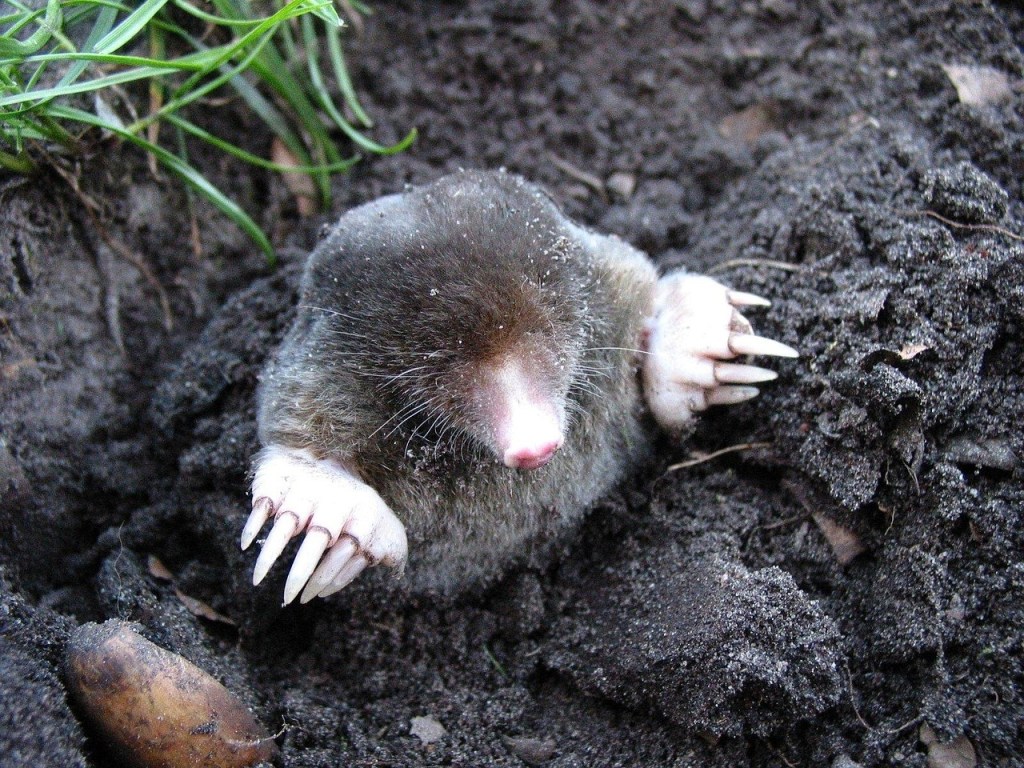
| The Hidden Life of Moles The Underground Engineer: Understanding Moles in the UK Moles are among the most misunderstood mammals in the UK. Rarely seen, often blamed, and usually noticed only by the tell-tale hills of soil they leave behind, they live almost their entire lives out of sight. Yet beneath our feet, moles are constantly working—digging, hunting, shaping soil, and quietly influencing the health of the land. To understand the mole is to shift perspective downward. This is not an animal of gardens and fields in the way birds or foxes are. It is an animal of the soil itself—one that lives within it, reshapes it, and depends on it completely. What Is a Mole? The UK is home to one species of mole: the European mole. Compact, powerful, and perfectly adapted to underground life, it looks unlike almost any other mammal. Its body is cylindrical, its neck barely visible, and its fur dense and velvety—able to lie flat in any direction, allowing the mole to move forwards or backwards through tunnels without resistance. Its eyes are tiny, often hidden by fur, and its external ears are absent. This does not mean the mole is blind or deaf, but sight plays a very minor role in its life. Instead, touch, vibration, and smell dominate. The most striking feature is the forelimbs: broad, spade-like hands turned outwards, armed with strong claws and driven by powerful shoulder muscles. These are not adapted limbs—they are specialist digging tools. A Life Spent Underground Moles are almost entirely subterranean. They construct complex tunnel systems beneath grassland, pasture, gardens, woodland, and verges—anywhere the soil is workable, and food is plentiful. These tunnel systems are not random. They include: Permanent tunnels that form the core network are often deeper underground. Surface tunnels, closer to the topsoil, where most feeding occurs Nest chambers, lined with dry grass or leaves, are used for resting and breeding. A single mole can maintain hundreds of metres of tunnel. The familiar molehill is simply the excess soil pushed up as these tunnels are excavated. The mole does not dig for the sake of digging. Every tunnel serves a purpose. Diet: Carnivore of the Soil Despite popular belief, moles do not eat roots or plants. They are strict carnivores. Their primary food is earthworms, supplemented by insect larvae, beetles, slugs, millipedes, and other soil-dwelling invertebrates. A mole must eat frequently—often every few hours—to survive, as its energy demands are high. One of the mole’s most remarkable adaptations is its ability to store food. Earthworms are bitten and paralysed, then stored alive in underground larders. This allows the mole to survive periods when hunting is less productive, such as during frost or drought. Few mammals show this level of underground resource management. Senses Without Sight Moles do not rely on vision to navigate their world. Instead, they use: Touch: Sensitive hairs on the snout and tail detect tunnel walls and movement Smell: Used to locate prey and recognise territory Vibration detection: Allowing them to sense movement above and below ground Their hearing is also well developed, tuned to low-frequency vibrations rather than airborne sound. A footstep, grazing animal, or digging rival is detected instantly. This sensory system allows the mole to operate efficiently in total darkness. Territory and Solitude Moles are solitary animals. Each adult occupies its own territory, which it defends vigorously against other moles. Encounters between adults are brief and aggressive, usually resulting in one animal retreating or being driven out. Because of this territorial behaviour, mole populations are naturally limited. A large garden or field may contain only one or two individuals, even if molehills appear extensive. What looks like “many moles” is often the work of just one very busy animal. Breeding and Early Life Breeding occurs in spring. Females give birth to a small litter of blind, hairless young in a nest chamber deep underground. These young grow rapidly, feeding on milk before transitioning to solid prey. After several weeks, young moles are forced to disperse. This is one of the few times moles travel above ground, usually at night. It is also when many are killed by predators, vehicles, or exposure. Only a fraction of young moles survives to establish territories of their own. Mole Hills: Problem or Process? Molehills are the main reason moles attract human frustration. In gardens, lawns, sports fields, and farmland, they are often seen as damage. From an ecological perspective, molehills are a sign of active soil processes. They bring deeper soil to the surface, improve aeration, and mix organic matter. Over time, this can enhance soil structure and drainage. In natural systems, mole activity benefits plant growth and soil life. Conflict arises mainly where human expectations of tidiness clash with natural behaviour. The mole is not damaging the land—it is interacting with it. Moles in Gardens Gardens provide ideal conditions for moles: soft soil, earthworms, moisture, and minimal disturbance. A mole passing through a garden is not targeting lawns or borders; it is simply following food availability. Moles do not undermine foundations, eat plants, or attack pets. Their tunnels are shallow and temporary, constantly being reshaped. A garden with mole activity is often one with healthy, living soil. Seasonal Behaviour Moles are active year-round. They do not hibernate. However, their behaviour changes with the seasons. Spring and autumn: Peak activity, with more visible molehills Summer: Deeper digging in dry conditions Winter: Tunnel systems extend below frost level In winter, molehills often appear suddenly after frost thaws, as deeper tunnels are connected to surface feeding routes. Their work never truly stops. Predators and Position in the Food Web Moles are prey for a range of animals, including owls, foxes, stoats, and birds of prey. However, because they spend so little time above ground, predation rates are relatively low. They occupy an important middle position in the ecosystem—controlling soil invertebrate populations while supporting predators that rely on them during dispersal periods. Their presence indicates a functioning soil ecosystem. Misunderstanding and Persecution Historically, moles have been heavily persecuted, particularly in agricultural settings. Their reputation as pests has overshadowed their ecological role for centuries. Modern understanding shows that, while moles can be inconvenient in certain settings, they are not as destructive as they are often portrayed. Their impact is local, temporary, and reversible. Killing moles rarely solves long-term issues, as vacant territories are quickly recolonised. Why Moles Matter Moles matter because soil matters. They are living indicators of soil health, moisture, and invertebrate abundance. Their tunnels improve aeration and drainage. Their feeding regulates underground insect populations. Their activity supports a complex web of life that begins below ground and rises upward through plants, insects, birds, and mammals. Few animals influence ecosystems so quietly—and so persistently. Learning to Look Beneath the Surface Moles challenge how we define wildlife value. They are not decorative, vocal, or visible. They leave a mess rather than beauty. Yet their contribution is fundamental. To appreciate moles, we must value process over appearance, function over neatness. Every molehill tells a story—not of damage, but of life happening beneath the surface. The Invisible Workforce While we walk, garden, and build above ground, moles continue their work below—digging, hunting, reshaping, and sustaining the soil. They ask for nothing but space to exist as they always have. Understanding moles does not mean welcoming every molehill. It means recognising that the land is alive in more ways than we see—and that some of the most important work happens out of sight. |

