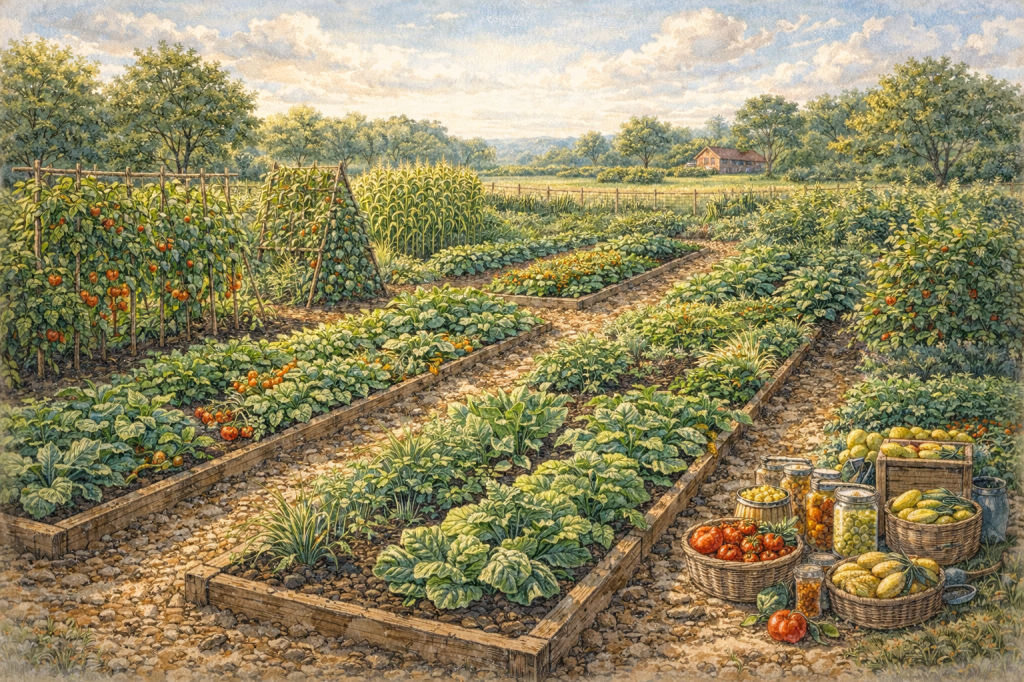
| Episode 12: Jess Sowards (Roots and Refuge Farm) Growing Food as a Household System, Not a Hobby As the American chapter of this series draws to a close, the focus widens from individual beds and techniques to something larger: how vegetable gardening fits into everyday life over many years. That is where Jess Sowards, creator of Roots and Refuge Farm, brings a distinctive and valuable perspective. Based in Arkansas, Sowards documents food growing at a household and homestead scale — where vegetables are not grown for content or experimentation alone, but to feed people consistently, season after season. A Garden Built Around Real Life Roots and Refuge Farm did not begin as a polished destination garden. It evolved alongside family life, limited resources, changing plans, and gradual expansion. Vegetable growing here is shaped by practical questions: What will feed a household reliably? What can be preserved for winter? What systems reduce work over time rather than increase it? Beds are productive but also forgiving. Layouts prioritise access and efficiency. Crops are chosen not just for novelty, but for usefulness. This grounding in everyday reality is central to Sowards’ appeal. Vegetables at Meaningful Scale Unlike many backyard gardens, Roots and Refuge operates at a size where decisions matter. Mistakes are costly. Timing is critical. Preservation becomes essential. Vegetables are grown not just to harvest fresh, but to: Can Freeze Store Share This scale introduces pressures that smaller gardens never encounter — pest cycles, labour limits, and the need for consistency — making the lessons especially relevant to growers looking to move beyond casual production. Teaching Through Continuity One of Jess Sowards’ strengths is continuity. The garden is shown across years, not just peak moments. Viewers see: Beds improve over time. Systems refined rather than replaced Crops succeed, fail, and return in different ways. This long view reinforces a truth often missing from online gardening: success compounds slowly. Rather than chasing optimisation, Roots and Refuge emphasises steadiness — doing what works, repeating it, and improving incrementally. Accessibility Without Simplification While the scale of Roots and Refuge Farm is larger than most home gardens, Sowards consistently translates what she does into lessons that smaller growers can apply. Raised beds, in-ground rows, composting, succession planting, and seasonal planning are all explained clearly — without stripping away complexity. The result is content that respects the audience’s intelligence while remaining approachable. Why Jess Sowards Belongs in This Series Jess Sowards is included because she represents integration. In the context of the USA section: Epic Gardening opens the door. MIgardener builds fundamentals James Prigioni explores abundance and diversity. Roots and Refuge Farm shows how it all holds together over time. Her work demonstrates how vegetable gardening becomes sustainable not just ecologically, but personally — fitting into the rhythms of daily life. Influence Through Relatability Roots and Refuge Farm resonates because it feels lived-in. The garden is productive, but it is not idealised. It reflects weather, fatigue, adaptation, and persistence. This relatability has built deep trust with viewers, many of whom are navigating similar goals: feeding families, reducing reliance on stores, and reconnecting with seasonal food. Influence here is measured not in spectacle, but in imitation. Where to Follow Roots and Refuge Farm Roots and Refuge Farm is shared through: A widely followed YouTube channel documenting vegetable growing, preservation, and seasonal rhythms Social media platforms offering regular garden updates and encouragement An online presence focused on long-form learning rather than quick tips. A Strong Close to the USA Chapter As the twelfth episode in this series, Roots and Refuge Farm closes the American section on a grounded note. It reminds us that vegetable gardening is not just about methods, yields, or trends — it is about building systems that support real lives, over many seasons, without burning people out. With the USA chapter complete, the series is now ready to move south — toward the distinct climates and growing cultures of Australia. |

