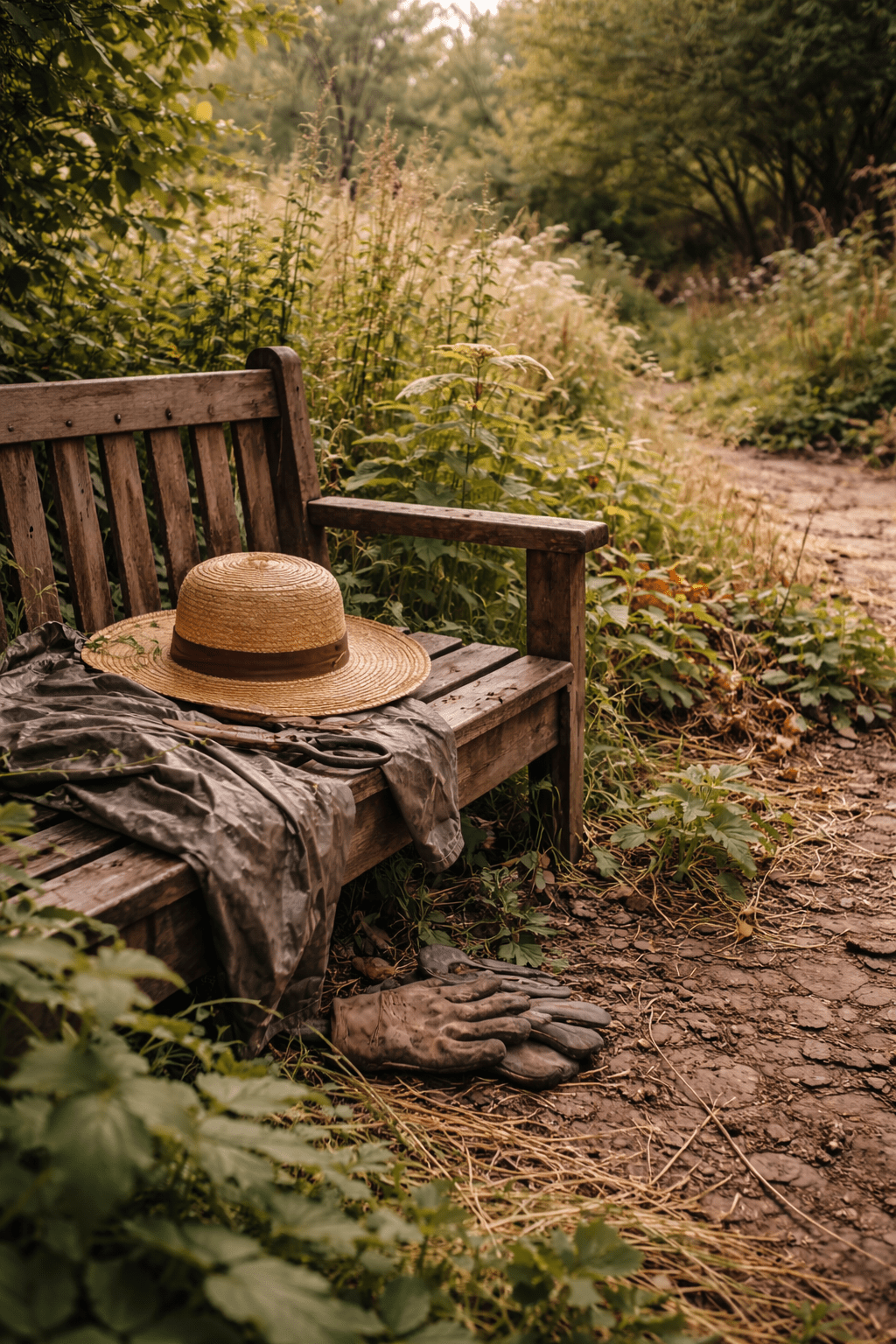
| Rest, illness, grief, burnout — and removing guilt from pause Gardening culture rarely talks about stopping. It celebrates effort, consistency, and showing up no matter what. The unspoken message is that good gardeners push through. Weather. Tiredness. Low mood. Loss. You keep going. That message does real harm. There are times when not gardening is the most responsible choice you can make. Not because the garden doesn’t matter, but because you do. Learning to recognise those moments — and release the guilt around them — is part of mature, sustainable gardening. Gardens are long relationships. They don’t require constant attendance to survive. One of the biggest misconceptions is that pausing equals neglect. It doesn’t. Neglect is indifference. Pausing is intentional. It’s the difference between walking away because you don’t care and stepping back because you understand limits. Gardens understand pauses better than people do. Rest is the simplest place to start. Physical tiredness accumulates quietly. Gardening involves repetition, bending, lifting, and focus. Without rest, technique slips and injuries creep in. Working through fatigue often results in mistakes that take longer to fix than the rest you avoided. Rest is maintenance, not indulgence. Illness changes the equation entirely. Whether temporary or ongoing, illness reduces capacity in ways that aren’t always visible. Energy fluctuates. Concentration wavers. Recovery slows. Gardening through illness is often framed as resilience, but it can easily become self-neglect. Gardens don’t benefit from that trade-off. There is no moral value in pushing through pain. Plants don’t reward it. Soil doesn’t notice it. The only thing that suffers is the person doing the work. Accepting that capacity has limits is not giving up. It’s working honestly. Gardening should not cost you your health. Grief is another state rarely acknowledged in gardening advice. Loss changes perception, motivation, and energy. Tasks that once felt grounding can feel heavy or pointless. The pressure to keep everything “normal” adds another layer of strain. Gardens don’t require normality. They accommodate absence During grief, it’s common to feel guilt about not keeping up. Beds go quiet. Weeds appear. Growth continues without you. This can feel like failure, but it isn’t. Gardens have their own momentum. They don’t interpret pause as abandonment. They wait. Burnout often arrives disguised as obligation. You garden because you always have. Because you should. Because things will get worse if you don’t. Over time, the joy drains away, leaving only responsibility. That’s a warning sign, not a personal flaw. Burnout doesn’t resolve through more effort. It resolves through space. Stepping back allows perspective to return. It lets you see which tasks are truly necessary and which were sustained by habit alone. Gardens often recover faster than gardeners expect. One of the hardest parts of pausing is the guilt that comes with it. Gardening guilt is subtle. It sounds like “I should just do a bit.” Or “It won’t take long.” Or “Other people manage.” These thoughts don’t reflect reality. They reflect comparison and expectation. Guilt is not a good decision-making tool. Gardening media rarely show pauses. It shows progress. Transformation. Before and after. That creates a false baseline. In reality, most gardens spend long periods in between. Untidy. Quiet. Unresolved. That’s normal. There are also practical reasons to pause that don’t involve emotional or physical strain. Extreme weather. Saturated soil. Drought. Heat. Conditions where effort does more harm than good. Knowing when not to intervene protects the garden as much as it protects you. Restraint is part of skill. Pausing doesn’t mean abandoning responsibility entirely. It means redefining it. You might water one plant instead of ten. You might leave beds untouched, but clear a path for access. You might do nothing at all for a while. All of these are valid choices. Another overlooked truth is that gardens don’t collapse the moment attention stops. Systems have inertia. Soil biology continues. Perennials rest. Self-seeders find space. Wildlife adapts. What changes is appearance, not function. Appearance is not the same as health. When people return to gardening after a pause, they often expect disaster. More often, they find resilience. Some things struggled. Others thrived. The garden reveals what can cope without constant input. That information is useful. Removing guilt from pause also changes how gardening feels long-term. It becomes less about obligation and more about a relationship. You return because you want to, not because you’re afraid of consequences. That shift restores trust. Gardening is often described as therapeutic, but only when approached with kindness. When it becomes another place to measure worth or productivity, it loses that quality. Pausing protects gardening from becoming another source of pressure. Gardens should offer refuge, not demand performance. There will always be seasons where energy is low, focus is elsewhere, or life takes precedence. These seasons are not interruptions. They are part of the rhythm. Gardening that survives them is gardening built on realism. The garden does not keep score. Learning when not to garden is as important as learning when to act. It requires honesty, self-respect, and a willingness to let go of idealised versions of care. What remains is something steadier and more humane. You are allowed to stop. The garden will not punish you for it. In most cases, it will simply wait — ready to meet you again when you’re able, not when you feel you should be. |
Unless stated, featured images are my own work, created independently or with the assistance of AI.

