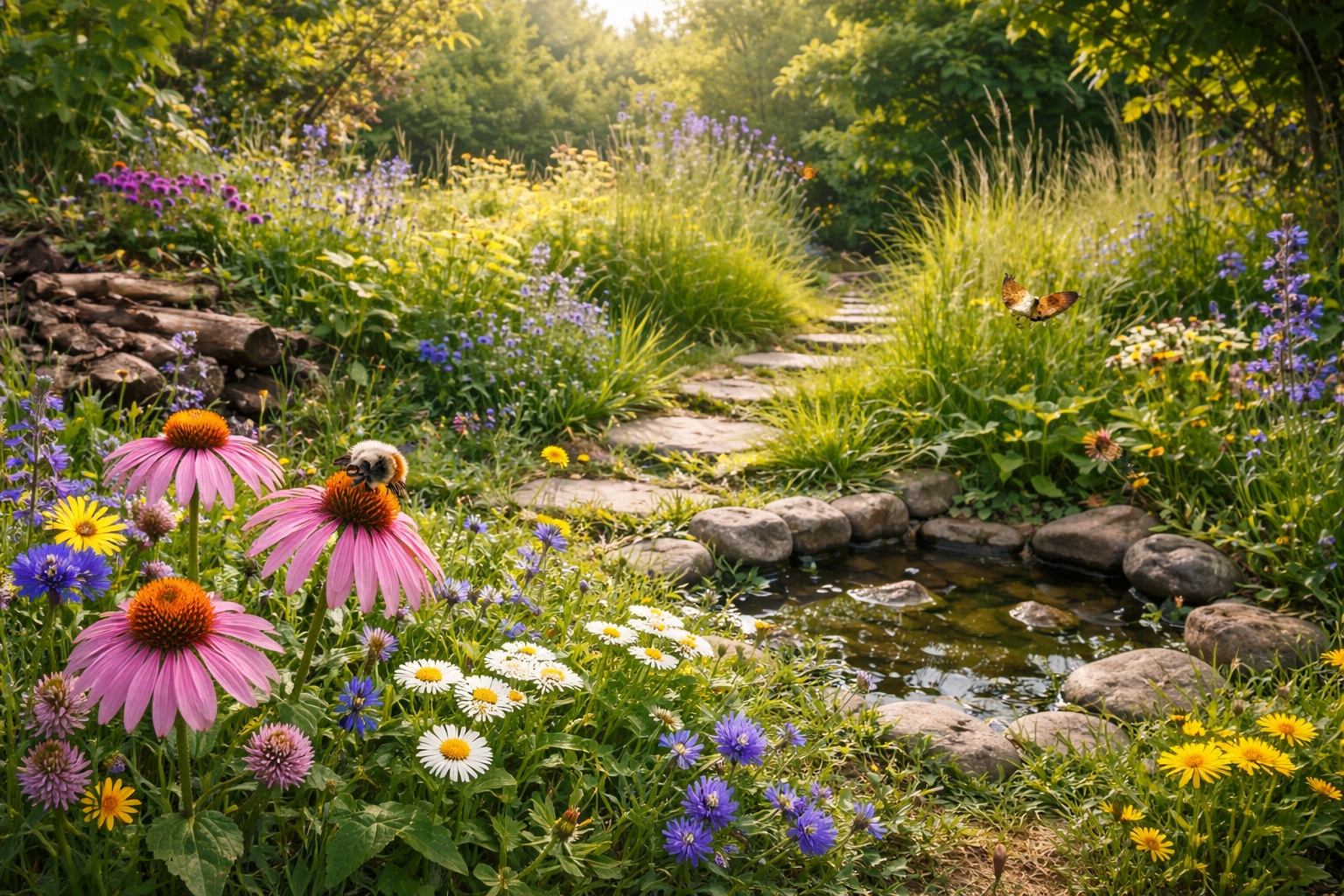
| Letting insects lead the way Rewilding doesn’t have to mean abandoning your garden or letting it collapse into chaos. It also doesn’t mean importing rare species, building ponds the size of swimming pools, or turning your back on neatness altogether. At its heart, rewilding is about stepping back just enough to let life reorganise itself. And if you want to understand whether your garden is working, don’t start with plants. Start with insects. Insects are the quiet workforce of any healthy garden. They pollinate, recycle, aerate, predate, and balance. When they arrive of their own accord, it’s a signal that something is going right. When they disappear, it usually means something is off. Rewilding, in practical terms, is less about what we add and more about what we stop interfering with. Most modern gardens are managed to look finished. Lawns trimmed to millimetre precision, borders cleared back hard, leaves removed the moment they fall. It looks tidy, but biologically it’s empty. Insects don’t want perfection. They want shelter, variation, and time. When we remove all three, we shouldn’t be surprised when nothing turns up. Letting insects lead the way means observing before acting. Instead of asking “what should I plant here?”, ask “who is already trying to live here?”. A patch of clover in a lawn isn’t a problem; it’s a food source. Aphids on a rose aren’t a failure; they’re the beginning of a food chain. Rewilding doesn’t mean loving every insect equally, but it does mean understanding their role before reaching for control. One of the biggest shifts is learning to tolerate untidiness in specific places. This doesn’t mean letting the whole garden run wild. It means allowing edges, corners, and transitions to soften. A strip of longer grass by a fence, a pile of leaves under a hedge, hollow stems left standing through winter. These small decisions create micro-habitats, where insect life begins. Timing matters more than people realise. Cutting everything back in autumn might feel productive, but it removes shelter at the exact moment insects need it most. Many overwinter in stems, soil, or leaf litter. Leaving plants standing until spring isn’t laziness; it’s stewardship. When you do cut back, doing it in stages rather than all at once gives insects a chance to relocate. Chemical-free gardening isn’t about being a purist. It’s about recognising that broad solutions cause narrow outcomes. Pesticides rarely solve problems in the long term because they remove predators along with pests. When insects are allowed to balance themselves, outbreaks are usually shorter and less severe. A garden with lacewings, ladybirds, hoverflies, and ground beetles rarely stays out of balance for long. Plant choice still matters, but not in the way garden centres often suggest. Native plants help, but structure and diversity matter more. Insects respond to layered planting, long flowering periods, and plants that are allowed to age naturally. A single shrub left to flower, seed, and decay slowly can support more life than a dozen over-managed perennials replaced every season. Lawns are often the hardest habit to break. They’ve been sold to us as the default, but ecologically, they’re among the worst uses of space. Rewilding a lawn doesn’t mean getting rid of it entirely. It means relaxing the rules. Mow less often. Raise the cutting height. Let flowers appear. Even small changes allow insects to return quickly, often within a single season. Water is another quiet attractor. You don’t need a formal pond. A shallow dish refreshed regularly, damp soil at the base of plants, or a rain garden that holds water briefly after storms all support insect life. Many species need water more than nectar, and they need it in accessible, shallow forms. What’s important is patience. Rewilding is not instant. Insects arrive in waves, often invisibly at first. You’ll notice fewer gaps in leaves, more movement at ground level, and a hum rather than a silence. Birds often follow insects, not the other way around. When insects return, the whole garden comes to life again. There’s also a mindset shift involved. A rewilded garden is never finished. It’s seasonal, responsive, and slightly unpredictable. Some years will feel messier than others. Some plants will self-seed where you didn’t expect them. This isn’t failure; it’s feedback. The garden is telling you what works. Letting insects lead doesn’t mean giving up control entirely. It means choosing where to intervene and where to observe. Paths still need defining. Access still matters. A garden can be both welcoming and wild. The balance is personal, and it evolves as your confidence grows. In the end, rewilding is less about saving the world and more about restoring relationships. When you stop fighting nature and start working alongside it, the garden becomes easier to manage, not harder. Insects do the heavy lifting. All we have to do is make space, slow down, and pay attention. |
Unless stated, featured images are my own work, created independently or with the assistance of AI.

