
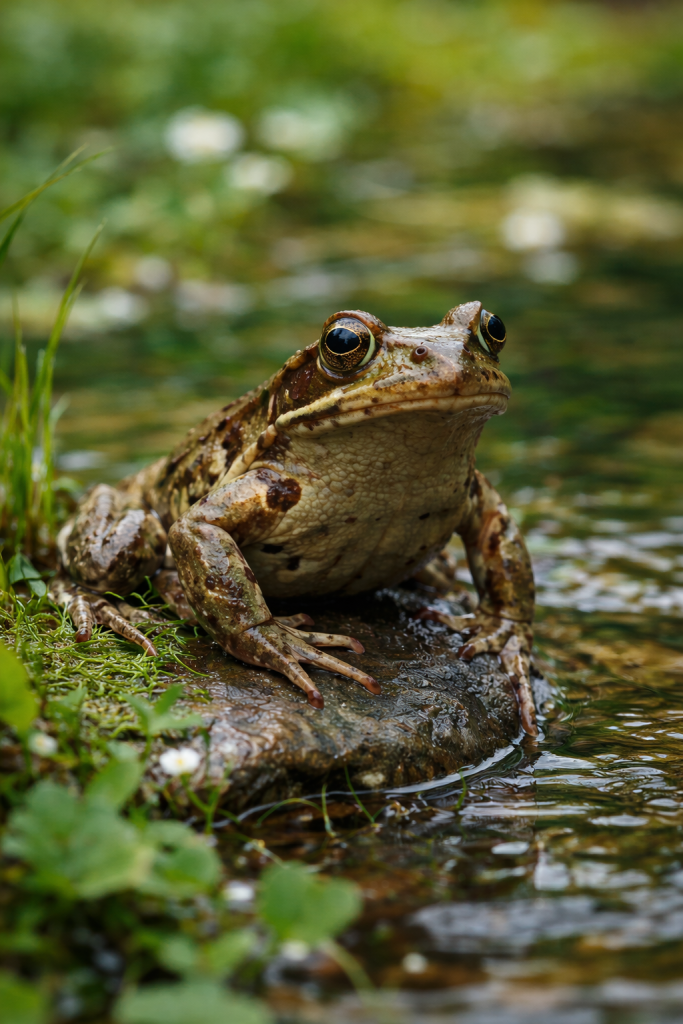
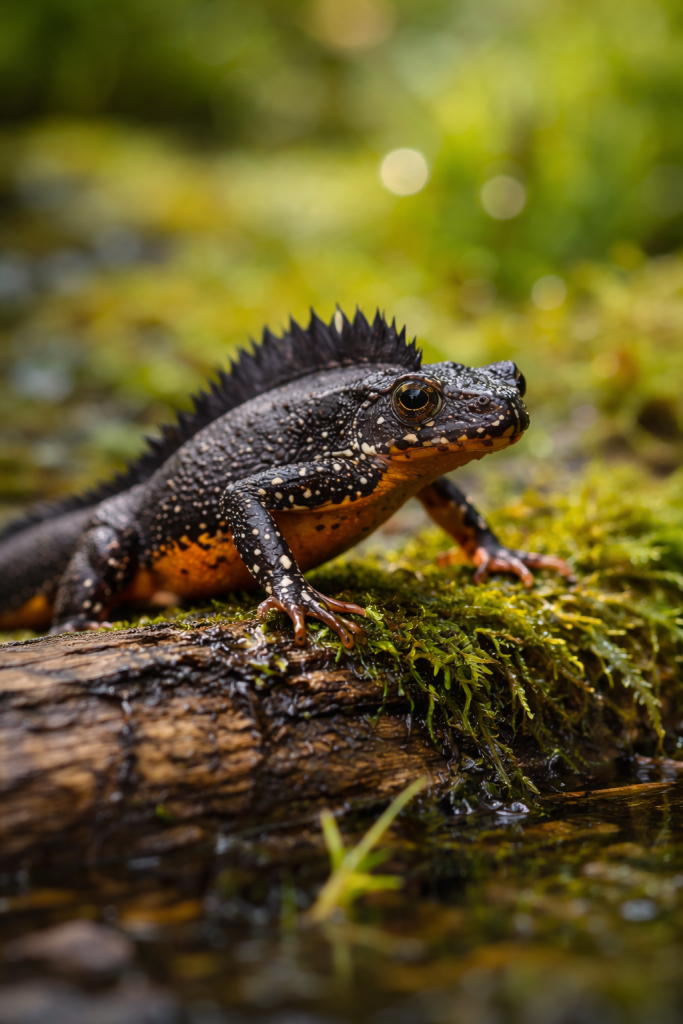
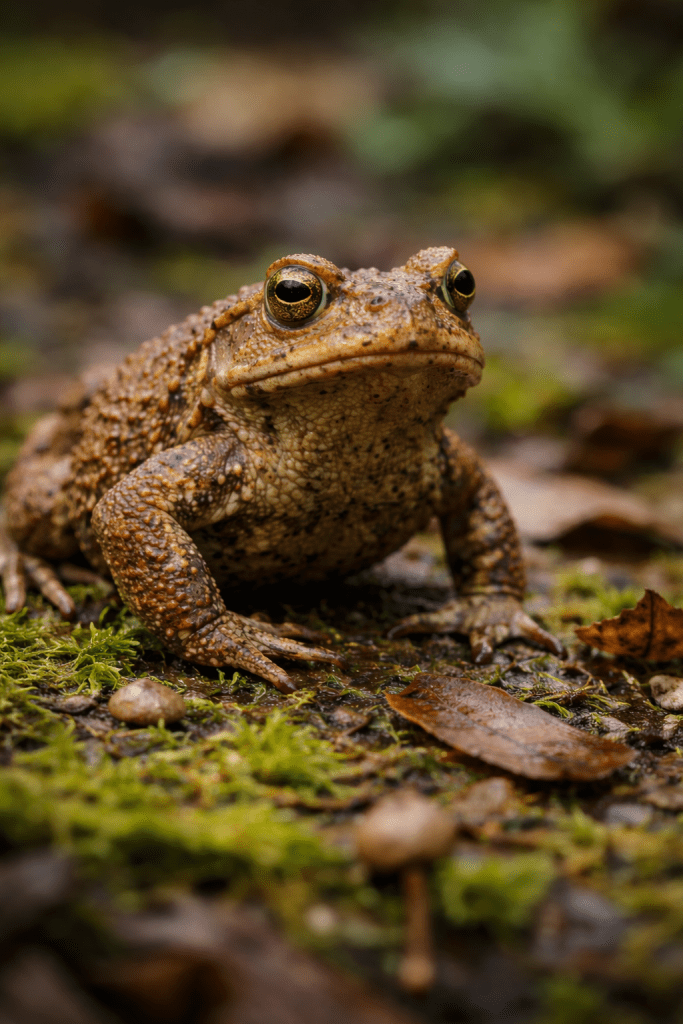
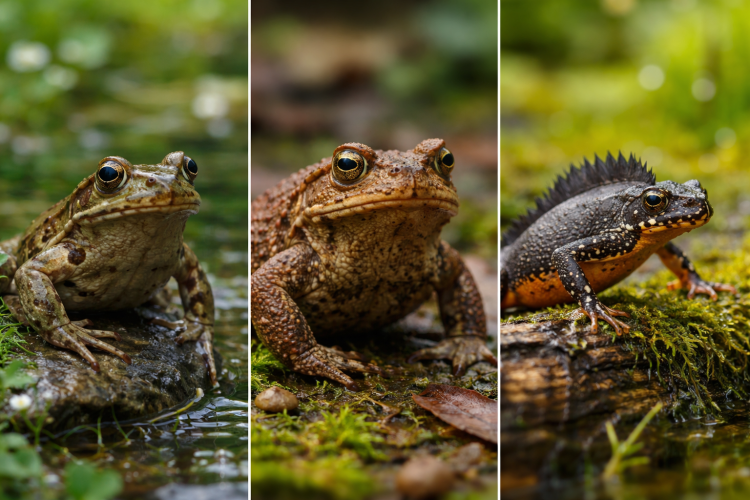
| AI Generated Images |
| Frogs, Toads, and Newts as One Living System British gardens, lanes, ponds, and hedgerows are not as empty as they sometimes appear. Beneath leaves, within damp soil, and under the still surface of water live three of the UK’s most quietly important animals: the Common Frog, the Common Toad, and the Great Crested Newt. These amphibians are familiar in name, yet rarely understood in depth. They are often discussed separately, treated as individual species with distinct needs. In reality, they form part of a shared ecological story—one that links water to land, gardens to countryside, and seasonal rhythm to long-term environmental health. To understand frogs, toads, and newts properly is to stop seeing ponds as standalone features and start seeing landscapes as living systems. |
| Three Species, Three Ways of Living Although grouped together as amphibians, frogs, toads, and newts have evolved very different survival strategies. The common frog is agile, quick, and responsive. It moves easily between water and land and is often the most visible species, particularly during early spring when frogspawn suddenly appears in ponds. The common toad is heavier, slower, and far more terrestrial. It spends most of its life away from water, emerging mainly at night and relying on chemical defence rather than speed. The great crested newt is the most secretive of the three. It is highly selective about breeding sites, spends much of the year hidden on land, and is often present without being seen. These differences are not accidental. They reduce competition and allow the three species to coexist—provided the landscape offers what each one needs. Water: Essential, But Only Briefly All three species depend on ponds, but none live in them permanently. For frogs and toads, water is needed primarily for breeding. In late winter or early spring, adults migrate back to ponds—often the same ones they were born in—to mate and lay eggs. Once breeding is complete, they leave again, sometimes travelling surprisingly long distances to summer feeding areas. Great crested newts remain in ponds for longer during the breeding season, but even they abandon water once larvae have developed and metamorphosis is complete. This means that ponds alone are not enough. A perfectly maintained pond surrounded by hostile or overly tidy land will fail to support amphibians in the long term. The surrounding habitat is just as critical as the water itself. Life on Land: Where Most of the Year Is Spent Despite their aquatic associations, amphibians are largely terrestrial animals. For most of the year, frogs, toads, and newts shelter in: Long grass and rough margins Beneath shrubs and hedgerows Under logs, stones, and leaf litter Inside compost heaps and old walls In undisturbed corners of gardens and fields These spaces provide moisture, temperature stability, and protection from predators. Gardens that are heavily manicured—where leaf litter is removed, lawns are closely cut, and every corner is “tidied”—can be surprisingly hostile environments. Amphibians do not need pristine order; they need structure, dampness, and continuity. Mess, in ecological terms, is often a sign of health. Feeding and Natural Balance All three species are carnivorous and feed primarily on invertebrates. Frogs consume slugs, flies, beetles, worms, and spiders. Toads are particularly effective slug and snail predators, moving slowly but steadily through gardens at night. Great crested newts feed on aquatic and terrestrial invertebrates, contributing to balanced pond ecosystems. None of these animals damages plants, digs soil, or interferes with garden structures. Their role is subtle but important: regulating populations of smaller creatures and maintaining balance within food webs. Their presence often goes unnoticed—but their absence can lead to visible problems. A Shared Seasonal Rhythm Though their lifestyles differ, frogs, toads, and newts follow a similar annual cycle. In late winter and early spring, rising temperatures and damp conditions trigger movement. Frogs and toads migrate toward breeding ponds; newts re-enter water from terrestrial shelters. This period is brief but intense, representing the most vulnerable time of year. Spring and early summer are periods of growth and development. Eggs hatch, larvae grow, and young amphibians slowly transform into land-ready forms. By late summer, dispersal begins. Juveniles leave ponds, spreading into the surrounding habitat. Adults focus on feeding and storing energy. Autumn signals preparation for winter. Frogs, toads, and newts seek frost-free shelters where they can slow their metabolism and survive months of inactivity. Disturbance during any of these stages—especially hibernation—can be fatal. Gardens as Hidden Corridors As wetlands decline and landscapes fragment, gardens have become unexpectedly important. A single wildlife-friendly garden may support amphibians at multiple life stages: Breeding in ponds Feeding in damp borders Sheltering beneath logs and compost Overwintering in protected corners More importantly, gardens can act as corridors, linking ponds, hedgerows, and green spaces together. Amphibians move through landscapes in small, incremental steps. Break those links with roads, fences, or hostile terrain, and populations become isolated. Connectivity matters more than perfection. The Quiet Role of the Great Crested Newt Among the three species, the great crested newt receives the highest level of legal protection—and for good reason. It is highly sensitive to change. It requires: Clean, fish-free or low-fish ponds Abundant aquatic plants Undisturbed terrestrial habitat nearby Stable water levels Because of this, its presence often indicates exceptional environmental quality. Where great crested newts survive, it usually means that water, land, and management practices are working together. Their protection is not about bureaucracy—it is about recognising fragility. Threats That Build Slowly Amphibian declines rarely happen overnight. Instead, they result from: Gradual pond loss Increased road traffic during breeding migrations Overuse of pesticides and chemicals Over-tidying of gardens and field margins Fragmentation of habitat Climate change adds further pressure, altering breeding times, increasing drought risk, and exposing eggs to late frosts. Because frogs, toads, and newts are still relatively familiar, declines often go unnoticed until absence becomes obvious. Why These Species Matter Together Seen individually, amphibians can seem unremarkable. Seen together, they tell a deeper story. They link water and land. They connect gardens to the countryside. They respond quickly to environmental change. Their continued presence suggests that landscapes still function as systems rather than isolated features. Protecting one species helps the others—but protecting all three requires thinking beyond single ponds, single gardens, or short-term aesthetics. Learning to Value the Familiar There is a tendency to value rarity over familiarity. Yet common species often tell us more about environmental health than rare ones. Frogspawn returning each spring signals continuity. A toad crossing a path reveals ancient routes still being used. A great crested newt surviving unseen confirms quiet resilience. These animals do not demand attention. They simply need space, water, and time. A Shared Responsibility, Lightly Held Caring for amphibians does not require expertise or intervention-heavy management. It requires: Leaving some areas undisturbed Protecting ponds and damp ground Reducing chemical use Being aware during spring migrations Sometimes, it is as simple as stopping for a moment and letting a traveller pass. The Quiet Measure of Care Frogs, toads, and newts are not symbols of wilderness untouched by people. They are indicators of care—careful land use, thoughtful gardening, and respect for seasonal rhythms. Where they persist, something is working. And in a changing world, that quiet success matters more than we often realise. |
 Earthly Comforts
I’ve probably said this before, but all flora and fauna has its purpose in ecosystems. Nice post, Rory!
LikeLike