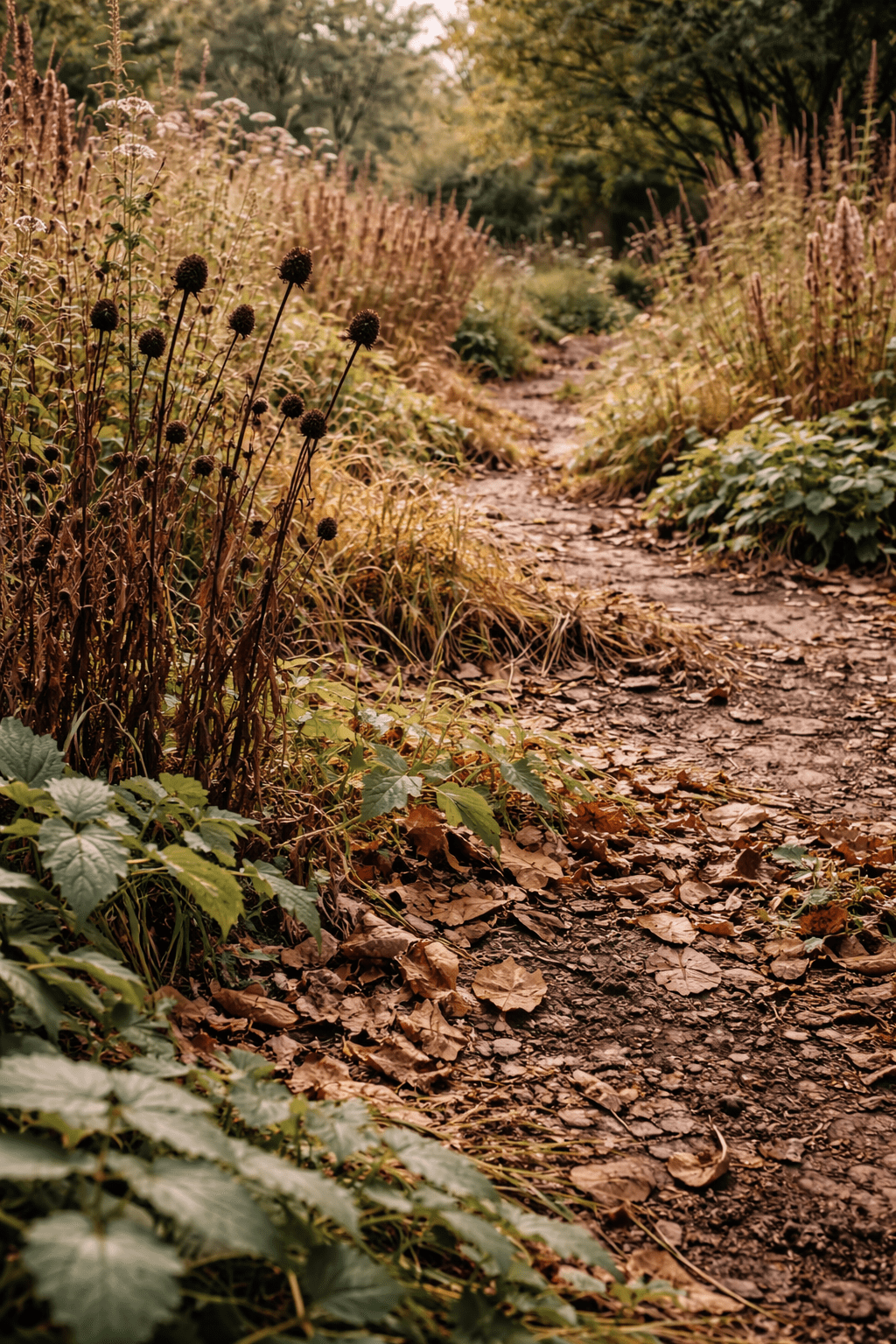
| Seed heads, fallen leaves, bare soil, and the aesthetics of honesty Gardening has a problem with mess. It treats untidiness as something to fix, hide, or apologise for. Clean edges, cleared beds, and constant order are held up as signs of care. Anything that falls outside that picture is quietly labelled neglect. That equation is wrong. Mess in a garden is not automatically a failure. Often, it’s evidence that the garden is doing exactly what it should. Growth, decay, pause, and regeneration don’t happen neatly. They happen in layers, overlaps, and loose ends. Gardens are processes, not displays. Seed heads are a good place to start. They’re usually the first thing people remove in the name of tidiness. Spent flowers look unfinished. Stems stand awkwardly. The urge to cut everything back is strong. What’s rarely acknowledged is what those seed heads are doing. They feed birds. They shelter insects. They protect crowns from cold. They mark where life will return. Removing them early trades function for appearance. Leaving them is not laziness. Its intention. Fallen leaves carry a similar misunderstanding. They’re often seen as clutter, something to sweep away before they rot. In reality, leaves insulate soil, slow moisture loss, and support the organisms that keep the ground healthy. They break down gradually, improving structure and fertility. A leaf-free bed is not automatically a healthy one. Bare soil makes many people uncomfortable. It looks unfinished, exposed, and vulnerable. That discomfort often leads to unnecessary planting, over-mulching, or constant disturbance. In some seasons, bare soil is simply a pause. A space waiting for conditions to change. Covering it too quickly can do more harm than leaving it alone. The idea that a garden should look “done” at all times is borrowed from design, not ecology. Natural systems don’t aim for completeness. They aim for balance. Balance includes gaps, decay, and unevenness. Honest gardens show their workings. The push for tidiness often comes from comparison. Gardens are judged against images, neighbours, or imagined standards. Those comparisons flatten context. They ignore soil type, weather, time, energy, and intention. What looks messy in one place is functional in another. Uniform standards don’t fit living systems. Mess also has a seasonality that’s frequently overlooked. A winter garden stripped bare of everything “untidy” enters spring weaker. A summer garden over-tidied loses shade and moisture. An autumn garden cleared too thoroughly removes protection before it’s needed. Tidiness has timing. Ignoring that timing creates problems. There’s also a cultural element at play. Mess is often associated with a lack of control. A neat garden suggests mastery. An untidy one suggests something has slipped. This framing turns gardening into performance rather than care. Gardens don’t need to demonstrate control. They need to function. One of the most useful shifts a gardener can make is learning to distinguish between harmful mess and harmless mess. Weeds choking young plants are a problem. Seed heads standing through winter are not. Rubbish and invasive growth need addressing. Leaf litter and uneven edges often don’t. Discernment matters more than blanket rules. Bare soil, for example, can be a sign of recent disturbance or erosion. It can also be a deliberate rest. Understanding which you’re looking at changes the response. Reacting to appearance alone leads to unnecessary work. Not all mess needs action. There’s also a difference between a temporary mess and a permanent disorder. Many gardens look chaotic mid-transition. Spring overlap, summer abundance, autumn shedding. These phases resolve themselves if given time. Intervening too early interrupts the process. Patience is an underrated tool. The aesthetics of honesty are quieter than the aesthetics of control. They don’t photograph as cleanly. They don’t announce themselves. But they age better. They reflect real conditions rather than idealised ones. An honest garden tells the truth about the season. This approach can feel uncomfortable at first, especially if you’ve internalised the idea that effort must always be visible. Leaving things standing can feel like doing nothing. In reality, it’s a decision based on understanding rather than anxiety. Stillness is a form of work. Mess also supports resilience. Gardens that allow for cycles of decay and regrowth build stronger soil, deeper roots, and more stable ecosystems. Constant clearing resets systems unnecessarily. Over time, that creates fragility. Resilience looks rough before it looks stable. Another aspect rarely discussed is the gardener’s relationship with mess. For many people, tidying becomes a way to manage stress or regain control. That’s understandable. But when tidiness becomes compulsory rather than chosen, it adds pressure. Gardens shouldn’t increase stress. Accepting a degree of mess frees up energy. Time spent chasing perfection can be redirected to observation, care, or rest. The garden becomes less demanding and more forgiving. Forgiveness matters in long-term care. Mess also invites life. Insects, birds, fungi, and microbes rely on material that’s often removed in the name of order. A perfectly tidy garden is often a quiet one. Quiet is not always desirable. Life makes noise, texture, and clutter. There’s no argument here for abandoning maintenance entirely. Boundaries still matter. Paths need clarity. Structures need care. Invasive species need management. The point is not to reject order, but to apply it selectively. Selective order supports function. Learning to live with mess is learning to trust the garden. Trust that it knows what it’s doing. Trust that not everything needs your intervention. Trust that care doesn’t always look like action. Mess is not the opposite of care. Often, it is the result of it. An honest garden is not always pretty in the conventional sense. It is alive, transitional, and truthful. It shows where things are going, not just where they’ve been. That kind of garden doesn’t apologise for itself. It doesn’t need to. |
Unless stated, featured images are my own work, created independently or with the assistance of AI.

