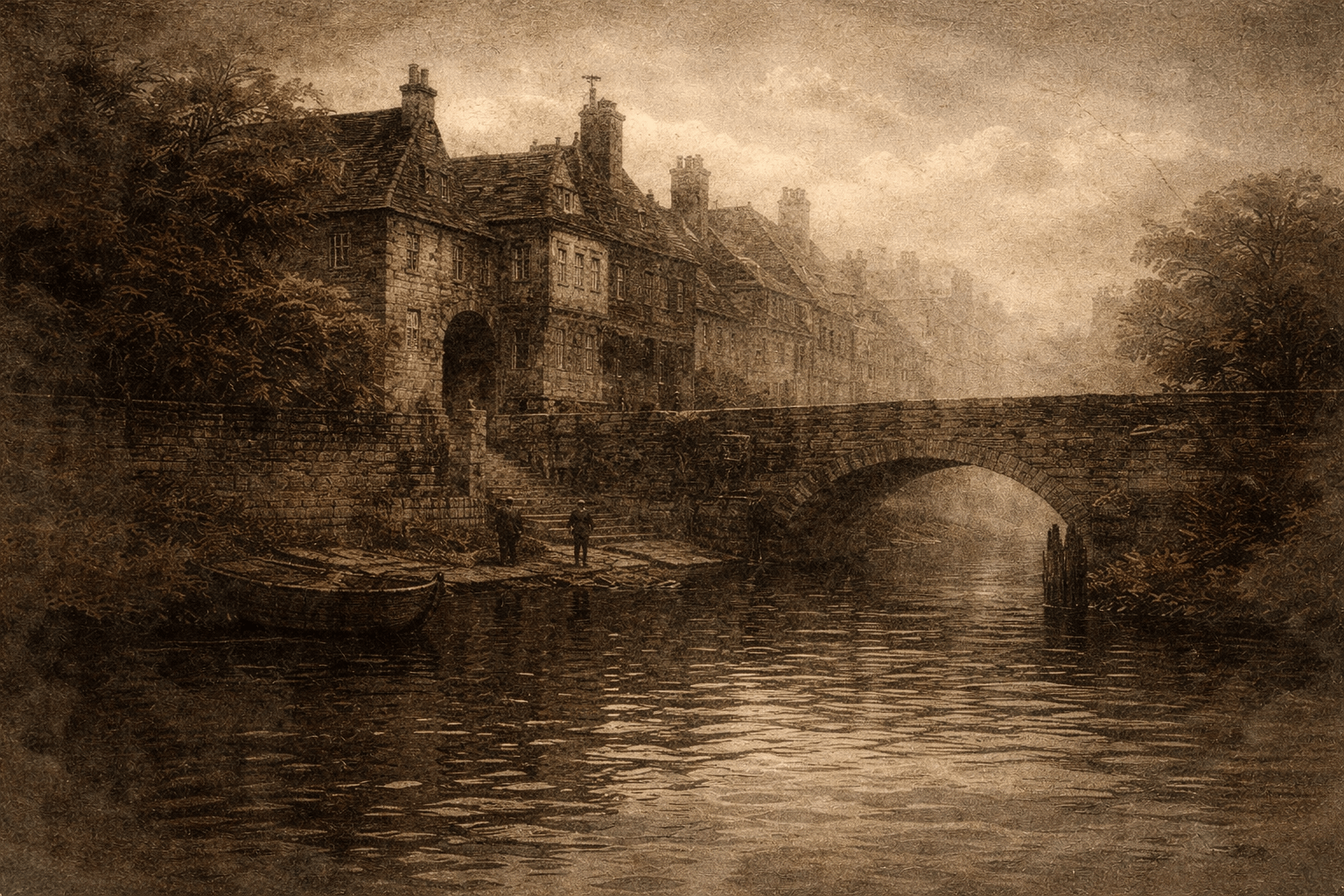
| Part Seven After adjustment comes familiarity. In Sandwich, pressure did not remain a temporary condition. It settled into expectation. What had once required explanation became normal, and the town learned to live within narrower margins without constantly measuring what had been lost. This was the point at which change stopped feeling like change. The harbour was no longer discussed as something that might be restored to its earlier ease. It was managed as it was. Trade was no longer imagined in terms of expansion, but rather in terms of reliability. Work continued, not because it promised growth, but because it sustained life. The town recalibrated its sense of success without announcing it. Habit has a stabilising force. Once expectations align with reality, strain eases. Sandwich entered a phase where continuity mattered more than improvement. The effort required to maintain daily life was understood and accepted. Systems were sized to what could be supported rather than what had once been possible. That acceptance did not erase pressure, but it made it manageable. This shift altered how people related to the town itself. Identity became less about outward connection and more about internal coherence. What happened elsewhere mattered, but it no longer defined worth. Sandwich was no longer measuring itself against other ports. It was measuring itself against its own capacity to endure. The physical town reflected this inward turn. Repairs took precedence over new construction. Boundaries held. Growth slowed. The town’s footprint stabilised, not because ambition had vanished, but because restraint had become practical wisdom. Where earlier generations had tested limits, later ones learned where not to press. Memory played a role here. The knowledge of what Sandwich had been did not disappear, but it softened. It became background rather than a goal. The past informed behaviour without dictating it. This quiet relationship with memory allowed the town to persist without being trapped by comparison. Social life adapted accordingly. Stability favoured familiarity. Roles became clearer. Expectations tightened. In places shaped by contraction rather than growth, trust carries more weight than novelty. Sandwich leaned into that dynamic. Community mattered because it reduced risk. Continuity mattered because it lowered cost. The environment continued its steady work. The river did not change its nature to suit the town’s acceptance. The land did not become more forgiving. But because expectations had adjusted, those conditions felt less adversarial. They were simply part of the ongoing equation. This phase is often overlooked because it lacks drama. There are no turning points to mark, no decisive actions to celebrate or condemn. Yet it is here that Sandwich proved something important: that survival does not require prominence. A town can persist without being central, provided it understands itself clearly. By the time this way of life settled in, Sandwich was no longer waiting for conditions to improve. It was no longer trying to recover an earlier version of itself. It had become something quieter, but also more certain. Its relationship with land, water, and work was no longer aspirational. It was practical, negotiated, and ongoing. A town allowed by circumstance reaches this stage when it stops asking for more than it can sustain. Sandwich did not retreat from history. It found a stable position within it and stayed there long enough for endurance to become identity. |
Sandwich: A Town Allowed