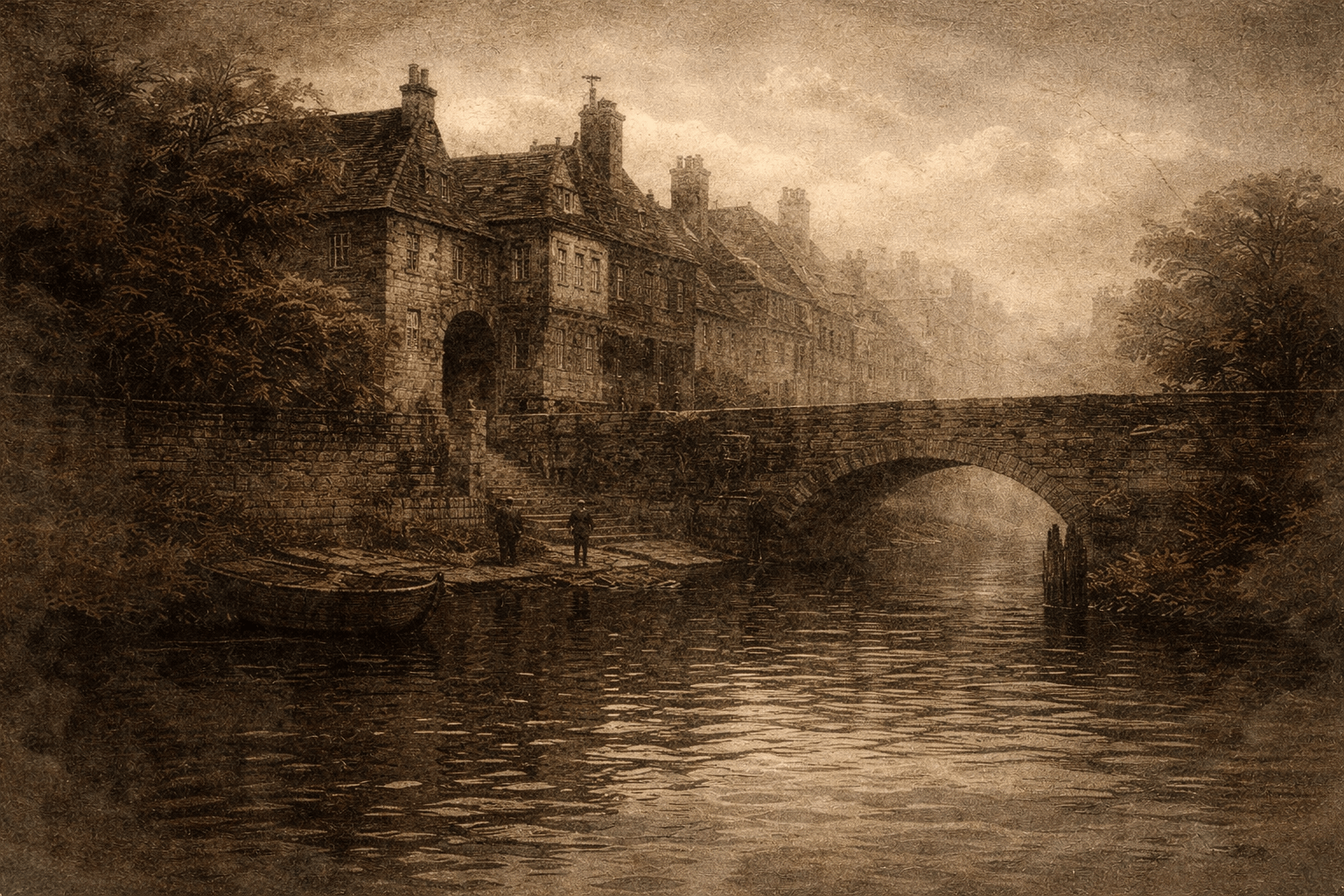
| Part Eight When prominence fades, memory takes on a different role. In Sandwich, the past did not disappear when the town stepped out of the centre of attention. It lingered, unevenly, shaping how the place understood itself without demanding that it become what it once had been. This was not a town that forgot its history. It was a town that learned to carry it lightly. Old routes remained visible even when they were no longer busy. Buildings retained their purpose long after the reasons for their scale had softened. The physical environment retained traces of its former importance, but daily life no longer revolved around them. Memory in Sandwich became selective. What was useful was retained. What no longer served the present was allowed to recede without ceremony. This was not neglect. It was a form of care. In a place where effort was finite, attention had to be directed where it mattered most. The town could not afford to preserve everything simply because it had once been necessary. The relationship between past and present grew more reflective than aspirational. History offered context rather than instruction. It explained why things were the way they were, not how they ought to be changed. This allowed the town to stabilise without becoming static. Continuity was maintained without being enforced. Physical preservation followed the same logic. Structures that remained useful were maintained. Those that did not slowly adapted to new purposes or fell into quieter roles. Change occurred without wholesale replacement. The town’s appearance became layered rather than updated, accumulating time instead of erasing it. This layering softened the edges of loss. Sandwich did not experience absence as rupture. It experienced it as space. Space for different rhythms, different scales of life, different forms of value. Where once the town measured itself through movement and exchange, it now measured itself through familiarity and presence. The environment reinforced this shift. The river continued its steady work. The land remained consistent in its limits. These constants anchored memory, preventing it from drifting into myth. The town’s past could be felt in its layout and texture, not just recalled in stories. Importantly, this phase did not produce stagnation. Life continued to adapt. Trades adjusted. Households reorganised. The town changed, but without the urgency that accompanies growth or decline. Change became incremental, guided by what could be absorbed rather than what could be imposed. This way of living with history produced a quiet confidence. Sandwich did not need to prove itself. It no longer competed for relevance. It existed on its own terms, shaped by accumulated decisions rather than current ambition. A town allowed by circumstance reaches this point when memory becomes a companion rather than a burden. Sandwich carried its past forward not as a destination, but as texture. That choice, made gradually and without declaration, preserved a sense of coherence that prominence alone could never have guaranteed. |
Sandwich: A Town Allowed