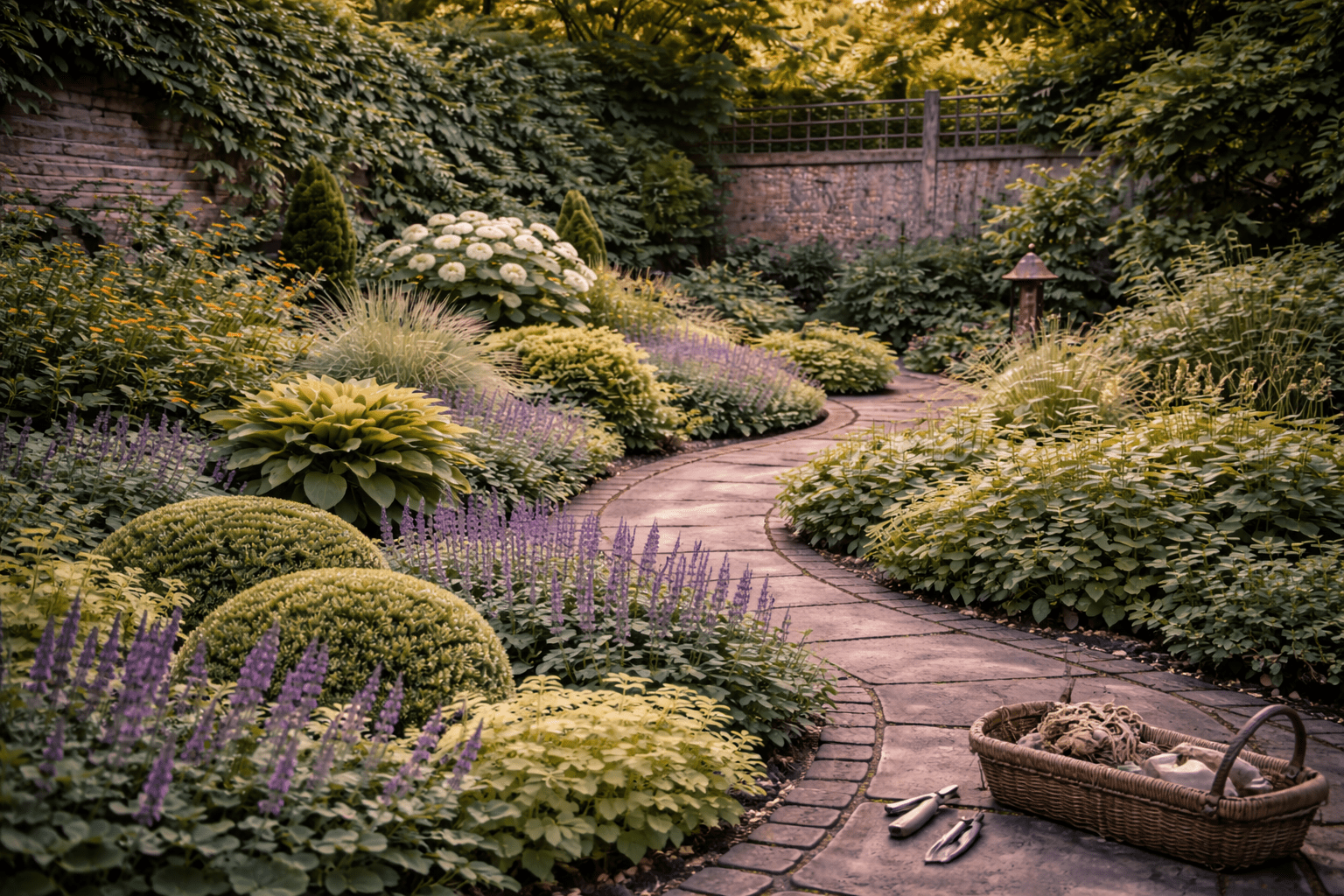
| Part 12 A Small Garden Is Never Finished — and That’s the Point There’s a moment many small garden owners recognise. The planting is in. The edges are neat. Everything looks as though it finally belongs. And then the question appears: Is it finished now? In truth, a small garden is never finished — and that isn’t a failure of planning or effort. It’s one of its strengths. Gardens are living systems, not projects. The idea of a “finished” garden comes from treating gardens like static objects — something to complete, admire, and then maintain in place. But gardens don’t behave that way. Plants grow, shift, and respond to weather. Soil changes. Light moves. What works one year may need adjusting the next. In small gardens, especially, these changes are felt quickly and clearly. The space responds almost immediately to care — and to neglect. A garden that’s allowed to keep changing stays alive. One that’s forced to stay the same becomes brittle. Finishing thinking creates pressure. When a garden is seen as something that must be finished, every change can feel like a setback. A plant that fails feels like a mistake. A border that needs editing feels like wasted effort. A quiet season feels like something is going wrong. This mindset creates pressure — and pressure often leads to over-intervention. Small gardens don’t need constant fixing. They need room to adjust. Ongoing care is not endless work. There’s a difference between unfinished and unsettled. An unsettled garden feels chaotic, demanding, and unresolved. A garden that is never finished but well cared for feels stable, even as it changes. The difference lies in continuity. Regular, thoughtful attention allows a garden to evolve without tipping into disorder. Small adjustments replace big corrections. Observation replaces urgency. Care becomes a rhythm rather than a task list. Change is how understanding deepens. A garden that’s allowed to keep changing teaches you things. You learn which plants thrive quietly and which need too much input. You notice how light shifts across the seasons. You see where space is needed — and where it isn’t. This understanding doesn’t come from completion. It comes from time. In small gardens, this learning happens faster and more clearly than anywhere else. A never-finished garden is more forgiving. Life changes. Energy fluctuates. Time becomes scarce. A garden that’s built around flexibility copes with this far better than one that relies on constant attention to stay “right.” Small gardens that are allowed to breathe can absorb missed visits, awkward weather, and shifting priorities without unravelling. They don’t demand perfection. They adapt. The point is not arrival — it’s stewardship. When you stop trying to finish a garden, something shifts. The garden becomes less of a project and more of a companion. Something you walk alongside rather than chase. Care becomes lighter, more intuitive, and more sustainable. This is where small gardens are at their best — not frozen at a peak moment, but carried forward gently, season after season. A small garden done properly isn’t complete. It’s continued. And that, in the end, is what makes it last. |
The Small Garden