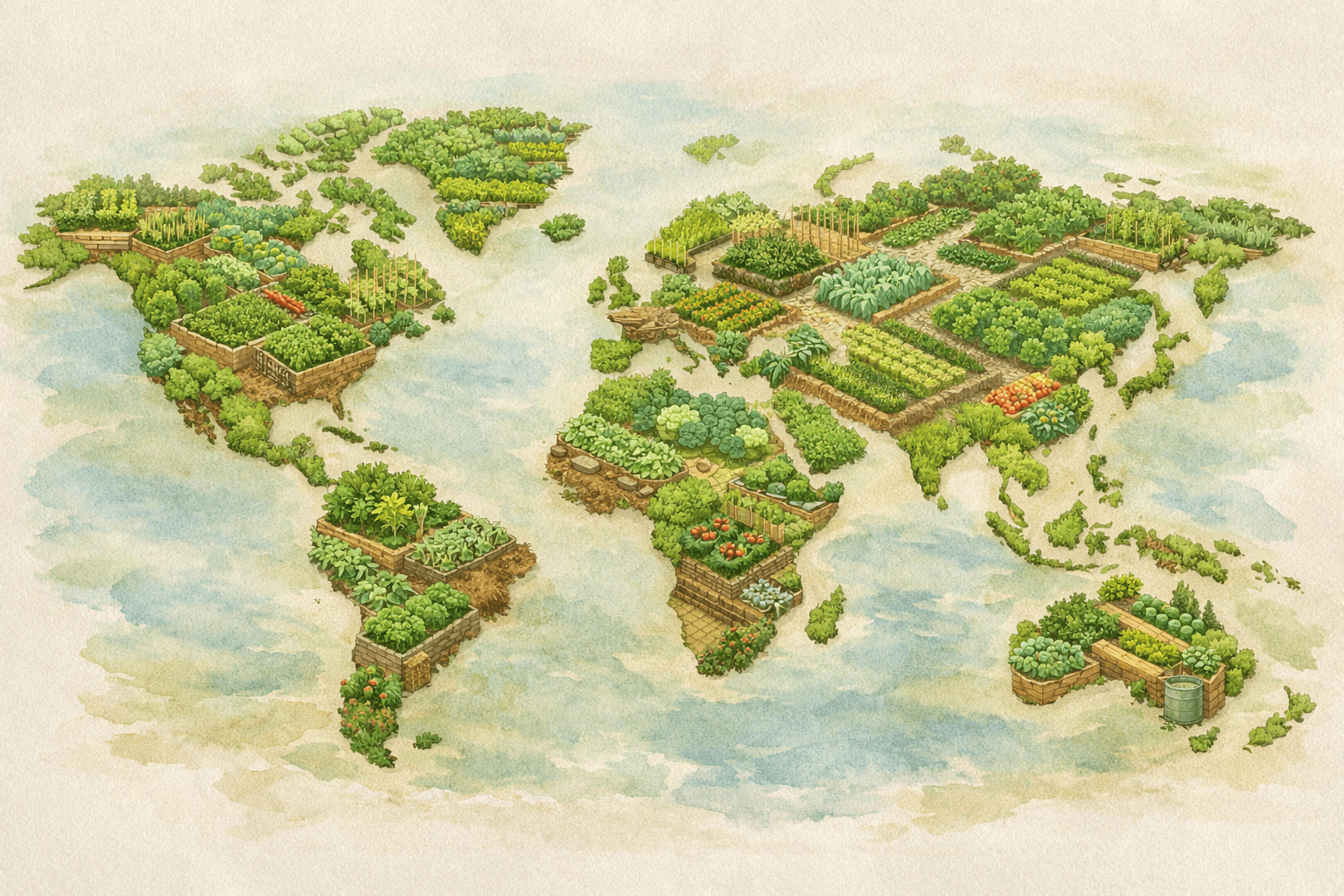
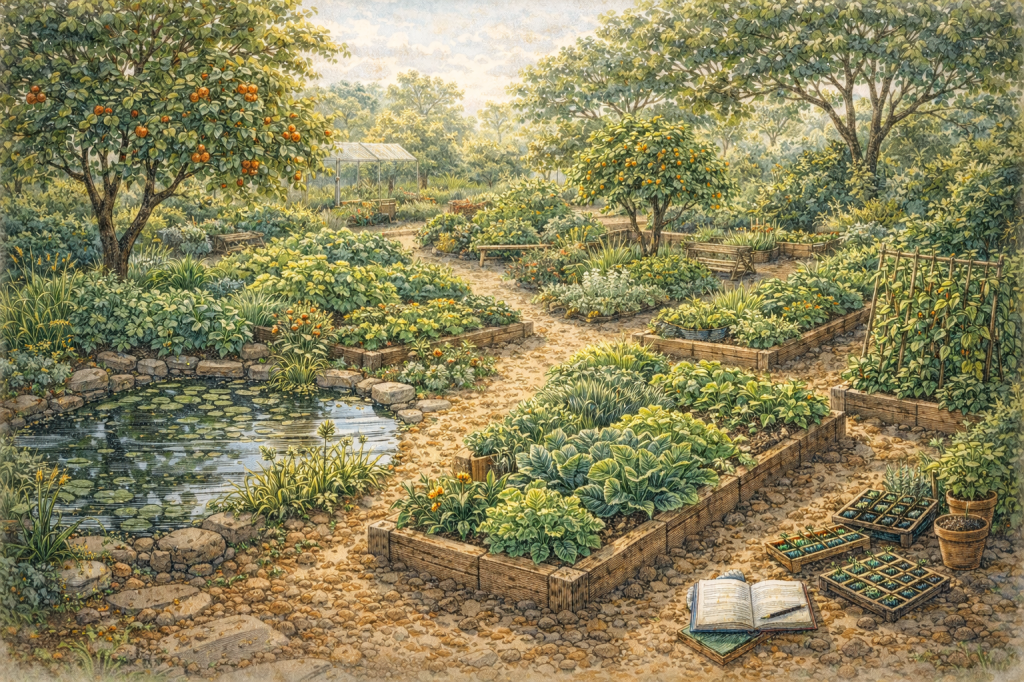
| Episode 16: Morag Gamble Teaching the World How to Grow Food Gently Every journey needs an ending that makes sense of what came before. After moving through backyard experiments, seed systems, climate pressure, national broadcasters, and everyday gardens, this series concludes not with scale or spectacle — but with education, connection, and care. That is where Morag Gamble belongs. Based in Australia but working globally, Morag Gamble is a permaculture educator, author, and communicator whose work focuses on helping people grow food where they are, using principles that prioritise soil, community, and long-term resilience over short-term results. A Teacher at the Centre of the Web Unlike many gardeners featured in this series, Morag Gamble is not defined by a single garden. Her influence comes from teaching — connecting people, ideas, and places into a shared understanding of how food can be grown sustainably. Through courses, writing, and video education, she has helped thousands of people rethink: What a vegetable garden can look like How food growing fits into daily life. Why observation matters more than control Her work consistently asks why before how — a critical distinction at this stage in the global gardening conversation. Permaculture Made Understandable Permaculture can sometimes feel abstract or intimidating. One of Morag Gamble’s greatest strengths is her ability to make it human and accessible. Rather than presenting permaculture as a rigid system, she frames it as: A way of seeing relationships A way of working with nature rather than against it A toolkit adaptable to any scale Vegetables are never separated from this thinking. They are woven into discussions of soil health, water, energy, time, and care — reinforcing the idea that food growing is part of a larger living system. Gardening as a Cultural Act Throughout this series, we have seen gardening framed in many ways: productive, resilient, experimental, and necessary. Morag Gamble adds another layer — gardening as cultural repair. Her work highlights how growing food: Rebuilds confidence and agency Strengthens communities Restores attention to seasonal rhythms Encourages gentler relationships with the land In this sense, vegetable gardening becomes more than a practical skill. It becomes a way of participating in a healthier future. Why Morag Gamble Closes This Series Morag Gamble is not the “biggest” gardener in this series, nor the most technical. She is included last because she helps make sense of everything that has come before. Across 16 episodes, we have explored: Methods that work Systems that endure Gardens shaped by climate People are learning publicly and privately. Morag Gamble’s work connects these threads. She reminds us that no single method is universal — but thoughtful principles can travel anywhere. A Global Classroom Through online education, Morag Gamble reaches gardeners across continents — from small urban plots to rural homesteads, from beginners to experienced growers seeking coherence. Her teaching reinforces a quiet but powerful idea: Food growing does not need to be perfected — it needs to be shared. This generosity of knowledge mirrors the best traditions of gardening itself. Where to Follow Morag Gamble Morag Gamble shares her work through: Online permaculture courses and learning programmes A widely followed YouTube channel focused on food gardens, systems, and slow living. Writing and resources exploring regenerative living and education Books by Morag Gamble Morag Gamble is the author of: The Permaculture Education Institute Handbook Our Permaculture Life Her writing expands on the ideas explored throughout this series, grounding them in lived experience and practical teaching. The Series, Revisited This series began with soil — with no-dig beds and careful observation — and it ends with connection. Across the UK, Europe, the USA, and Australia, the gardeners featured here demonstrate that vegetable growing is not one thing. It is: Personal and collective Technical and intuitive Local and global What unites them is not a method, but a commitment to learning — from soil, from climate, and from each other. |

