| The Difference Between Being Busy and Being Occupied |
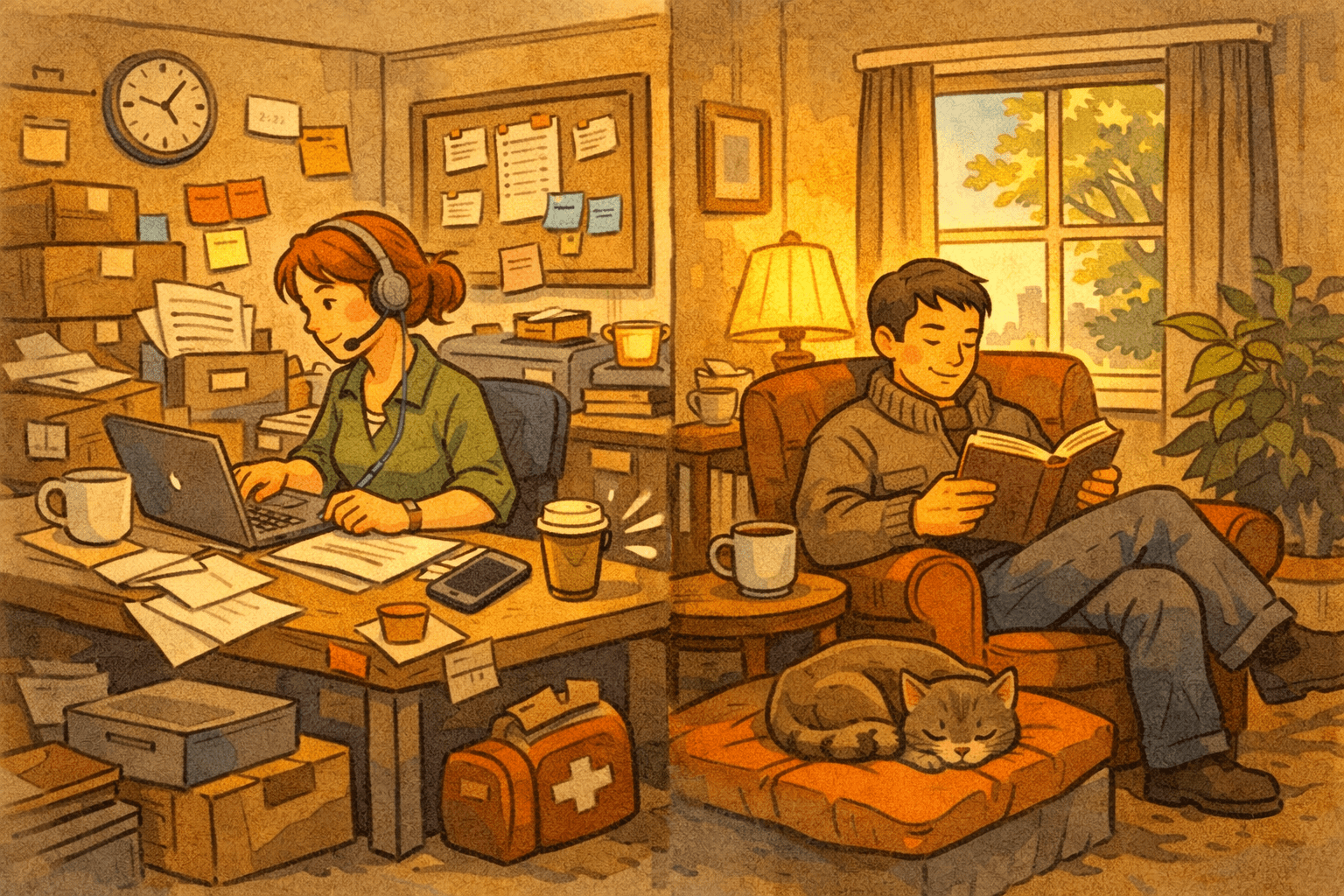
| For a long time, I thought “busy” and “occupied” were interchangeable. They’re used that way in conversation, often as shorthand for the same state: time filled, energy spent, attention committed elsewhere. Only later did I realise they describe very different experiences — and that confusing them causes more exhaustion than work itself. Busy is movement without depth. Occupied is engagement. As a gardener, I see the distinction daily. There are days packed with activity that leave little trace once they’re over. And there are quieter days, fewer tasks completed, that feel solid — as though something has been adequately attended to. The difference isn’t volume. Its orientation. Busy days are often reactive. You move from one thing to the next, responding to urgency, interruption, and expectation. There’s momentum, but no centre. Occupied days have direction. Even when interrupted, they retain a sense of purpose because attention is deliberately placed, not scattered. One common assumption is that feeling busy means being useful. In reality, busyness can be a form of avoidance. It’s easier to stay in motion than to sit with a task that requires patience or judgment. Speed offers cover. It creates the impression of productivity without demanding commitment. Gardening exposes this quickly. You can stay busy trimming endlessly without improving a space’s structure. You can move soil around all day without addressing what it needs. Occupation, by contrast, often looks slower. It requires stopping. Looking. Deciding. And those pauses can feel uncomfortable if you’ve learned to equate motion with value. Another quiet difference lies in how time is experienced—busy time fragments. Hours break into pieces. You reach the end of the day with little sense of continuity. Occupied time stretches. Not because it drags, but because attention thickens it. You remember what you did, not just that you did a lot. There’s also a bodily signal. Being busy leaves you wired but unsatisfied. Occupied leaves you tired in a grounded way. The fatigue feels earned rather than draining. You can trace it back to a specific cause. Working outdoors has made me wary of schedules that reward constant activity. Plants don’t respond to urgency. They respond to timing. Too much effort applied at the wrong moment does harm. Too little at the right moment does more good. Occupation aligns effort with need. This challenges the idea that full days are better than shorter ones. Some of the most effective work happens when space is left around tasks. Space to notice. Space to adjust. Space to stop before doing damage. I’ve noticed that people who describe themselves as constantly busy often struggle to articulate what they’re actually working toward. The activity becomes self-justifying. Occupation, on the other hand, tends to clarify intention. You know why you’re there. You can explain what you’re tending. There’s a social element too. Busy is performative. It’s easy to signal. Occupation is quieter. It doesn’t always read as impressive from the outside. Someone standing still, thinking, may look idle. Someone rushing past with tools appears productive. Gardening teaches you quickly how misleading that impression can be. This isn’t an argument for doing less. It’s an argument for doing with and being with a task rather than skimming over it and allowing attention to settle long enough for judgment to form. One practical lesson here is knowing when to stop. Busy rarely knows when it’s done. Occupied does. There’s a point where enough has been achieved for now. That boundary protects both the work and the worker. I’ve also found that occupation reduces the need to explain yourself. When you’ve spent time engaged adequately with something, justification feels unnecessary. The work holds its own shape. Busy work often demands explanation because its outcomes are diffuse. Over time, distinguishing between the two becomes a form of self-respect. You stop measuring your days by how full they were and start measuring them by whether attention landed where it mattered. The difference between being busy and being occupied is subtle, but it changes how you move through time. One scatters. The other gathers. And in a world that rewards constant motion, choosing an occupation is a quiet way to stay intact. |
| About our writing & imagery Most articles reflect our real gardening experience and reflection. Some use AI in drafting or research, but never for voice or authority. Featured images may show our photos, original AI-generated visuals, or, where stated, credited images shared by others. All content is shaped and edited by Earthly Comforts, expressing our own views. |

