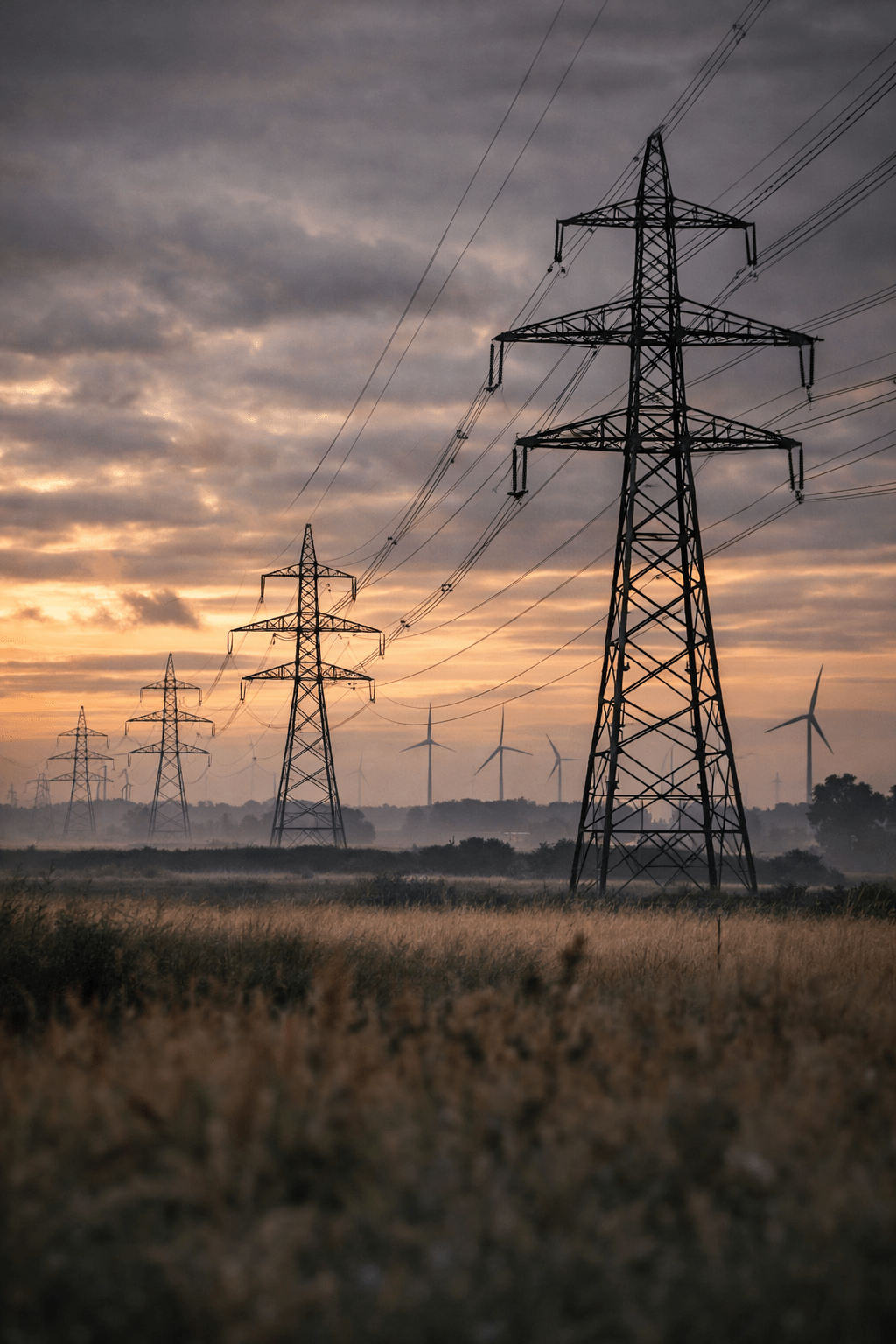
| … Doesn’t Tell Us There’s a particular satisfaction in a record. Highest output. Cleanest day. Best month on record. The language is familiar and reassuring — proof that something is working, that effort has translated into measurable success. Working outdoors tempers that comfort a little. Records are snapshots. They capture a moment, not a pattern. A still morning doesn’t tell you how a hedge will stand up to winter. A dry week says nothing about the flood that follows. In the garden, you learn to be wary of single data points, however impressive they look. Clean energy headlines have that same quality. Solar peaks, wind milestones, days when renewables carry most of the load. All of it is real. All of it matters. But none of it answers the quieter question underneath: can the system cope when conditions are awkward rather than ideal? Gardening teaches you to think in margins. What happens at the edges of seasons? What survives late frosts? What copes with weeks of rain or a run of dry wind? Success isn’t defined by best-case performance; it’s defined by how little falls apart when things turn unpredictable. Energy systems are now being asked to do the same. Weather has always mattered to power generation, but climate volatility sharpens the relationship. High-output days are often paired with low-output days. Calm, cold spells test capacity. Hot, still periods strain demand. The average tells one story; the extremes tell another. There’s a persistent myth that once enough clean generation is built, reliability will naturally follow. In practice, generation is only one piece of the puzzle. Timing matters. Location matters. Storage matters. So does the ability to move power from where it’s produced to where it’s needed, when it’s needed. From the perspective of someone whose work depends on light, weather, and physical effort, resilience feels more honest than triumph. A system that performs slightly less impressively but consistently is often preferable to one that shines spectacularly and stumbles under pressure. What doesn’t get much attention is how invisible the grid usually is. When it works, nobody notices. When it fails, it becomes suddenly intimate—heat, light, refrigeration, communication. Gardening shares that invisibility. Soil only becomes interesting when it stops draining. Water only becomes a topic when it doesn’t arrive or won’t leave. Clean energy records tell us what’s possible. Grid resilience tells us what’s dependable. The two are related, but not interchangeable. Progress now depends less on building more of the same and more on knitting systems together so they flex rather than fracture. There’s nothing anti-renewable in that observation. It’s pro-maturity. A recognition that the next phase of transition isn’t about celebration alone, but about preparation. About designing systems that assume variability rather than hoping it behaves. In the garden, the most resilient spaces are rarely the most optimised. They have Slack built in. Redundancy. A tolerance for fluctuation. Energy systems, like ecosystems, are learning the same lesson — that stability is not the absence of change, but the capacity to absorb it. |
| Companion Fact Box — Clean Energy & Grid Resilience (Neutral Reference) Recent clean energy milestones Renewable energy sources, particularly wind and solar, have reached record levels of generation in parts of the UK and Europe. Records typically reflect peak output over short periods rather than sustained averages. Why grids matter Electricity grids balance supply and demand in real time. Variability in renewable generation requires flexibility to maintain stability. Key resilience tools Energy storage (batteries, pumped storage) Demand-side response (adjusting usage patterns) Interconnectors between regions Forecasting and system management Weather and variability Wind and solar output are weather-dependent. Climate change increases the frequency of extreme conditions that challenge grid operation. System limitations High generation does not guarantee local availability. Transmission capacity can constrain delivery. Backup and flexibility remain essential. Further information (UK & Europe) National Grid ESO — system balancing and resilience Ofgem — market oversight and infrastructure International Energy Agency — system transition analysis ENTSO-E — cross-border grid coordination |
| About our writing & imagery Many of our articles are written by us, drawing on real experience, reflection, and practical work in gardens and places we know. Some pieces are developed with the assistance of AI, used as drafting and research tools rather than as a voice or authority. Featured images may include our own photography, original AI-generated imagery, or—where noted—images kindly shared by other creators and credited accordingly (for example, via Pixabay). All content is shaped, edited, and published by Earthly Comforts, and the views expressed are our own. |

