| Weight, Timing, and the Quiet Work Beneath |
| There are plants that sit politely within a garden, and there are plants that, over time, take ownership of it. A mature Phormium belongs to the latter. It does not creep or scramble. It simply grows—slowly, steadily—until one day you realise that what was once a neat architectural accent has become a presence. It has weight now. Physical weight, yes, but also a kind of visual gravity. At some point, the question arises: can it be moved? This is rarely a theoretical question. It comes when the space has changed—when a border has shifted purpose, when light patterns have altered, or when a plant has outgrown its allotted role. And with phormiums, the decision to move them is tinged with hesitation. They look resilient, almost indestructible, but beneath the leaves is a root system that tells a different story. |
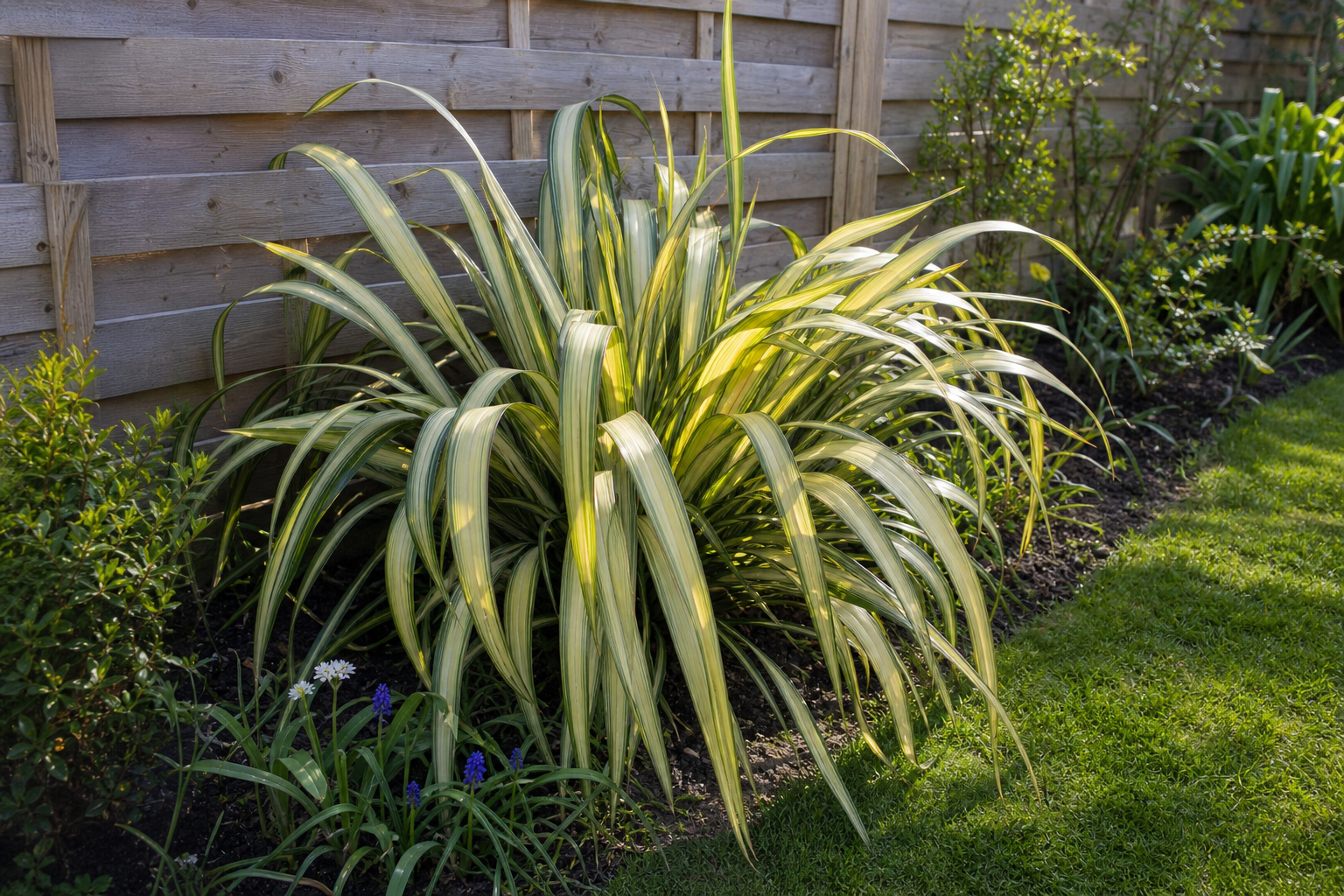
| A client recently asked whether a large, established phormium in their garden could be moved—less out of choice, more out of necessity. It had outgrown its position along a fence line, pressing into the space rather than shaping it. The question itself is a familiar one, but with plants like this, the answer is never quite as simple as “yes” or “no.” A mature phormium carries weight, both above and below ground. What appears as a bold architectural plant is underpinned by a dense, fibrous root mass that resists disturbance. Moving it is entirely possible, but it calls for a measured approach—one that balances effort with outcome. The best way to tackle the task is not to treat it as a straightforward transplant, but as an opportunity to reset the plant. In most cases, lifting and dividing the clump into manageable sections proves more effective than attempting to move it whole. This reduces strain on the plant, makes the physical work more realistic, and ultimately gives each section a better chance of re-establishing well in its new position. What follows is not a delicate operation, but a considered one—grounded in timing, practical judgement, and a willingness to work with the plant as it is, rather than as we might prefer it to be. |
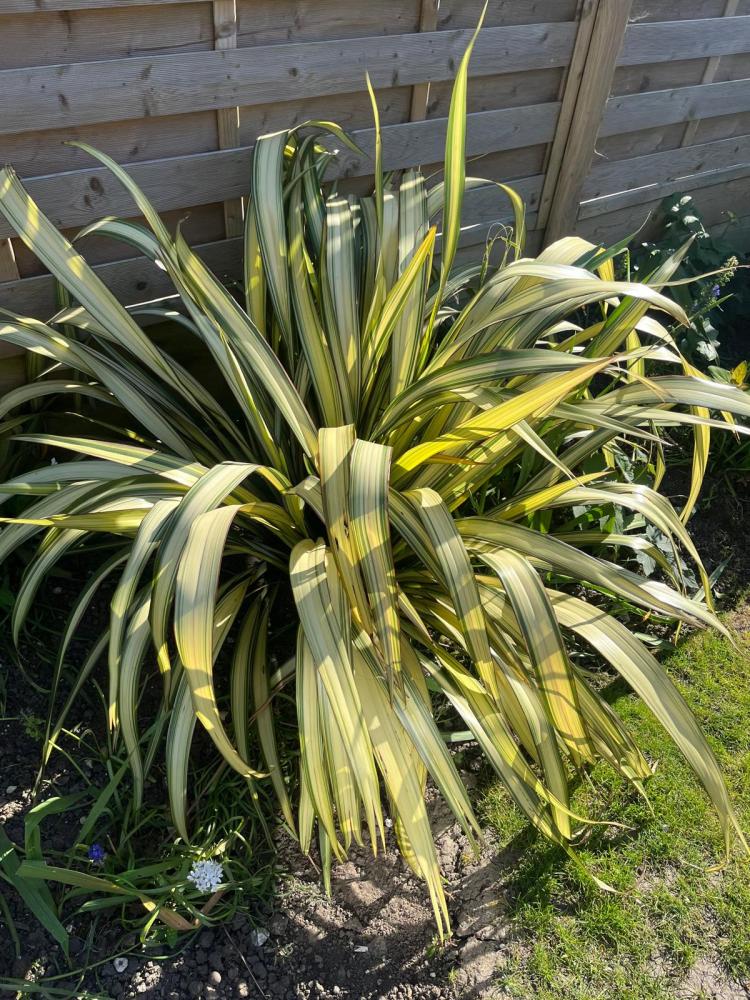
| The nature of the plant Phormiums—New Zealand flax—are not delicate things. Their leaves are tough, fibrous, and designed for exposure. Wind does not frighten them; coastal conditions do not deter them. They are built for endurance above ground. But below the surface, their strength lies in density rather than depth. A mature plant forms a tight, fibrous root mass, not a deep-reaching system but a compact, interwoven structure. It binds itself to the soil in a way that feels deliberate. When you dig into one, you notice it immediately: this is not loose-rooted planting. It resists, not aggressively, but persistently. That resistance is what gives people pause. It is also what makes the act of moving one more thoughtful than it first appears. Timing is not everything, but it matters. There is a tendency in gardening advice to overstate timing, to suggest that if a job is not done within a precise window, it will fail. That is rarely true. Plants are more accommodating than we give them credit for. But timing does influence how forgiving the process will be. With phormiums, spring is a kind moment. The soil is warming, growth is beginning, and the plant has a season ahead of it to recover. Early autumn offers something similar, a quieter opportunity for roots to re-establish without the pressure of heat. Summer, despite being the most active period in the garden, is less forgiving. The plant is in full leaf, transpiring heavily, and any disruption to its roots is felt more acutely. Winter, on the other hand, presents its own challenges—cold soil, reduced activity, and the simple difficulty of working the ground. So while there is flexibility, there is also a rhythm to respect. Moving a phormium in spring feels like working with the plant rather than against it. The question of size A young phormium can be lifted with relative ease. A mature one, like the kind often found pressed against a fence or anchoring a border, is a different proposition altogether. It is not just the weight, though, that becomes apparent quickly. It is the shape of the root system, how it holds together, how it resists being pulled apart from the soil. You begin by digging a reasonable circle, and before long, you find yourself widening it, deepening it, negotiating with it. This is where a common assumption begins to falter—the idea that a plant should always be moved whole, intact, preserved exactly as it is. In reality, with something like a phormium, this instinct can work against you. Dividing the plant is not a compromise. It is often the better decision. Division as renewal There is a quiet advantage in cutting a plant in two. While it may seem counterintuitive, division allows each new section to develop with a less crowded root system, reducing competition for resources and stress on the plant. In practice, this often leads to a healthier outcome, as the plant establishes more quickly and vigorously in its new position. A large phormium, once divided, becomes manageable. Each section has its own root base, its own crown, its own chance to establish itself without carrying the full burden of the original mass. The act of division reduces stress, not increases it. It also changes the relationship you have with the plant. Instead of preserving a single, unwieldy specimen, you create options. One section can return to its original position, better proportioned to the space. Others can be relocated, or even kept as a contingency. In this way, division becomes less about necessity and more about opportunity. The physical work There is no avoiding the effort involved. Even when divided, a phormium does not come out of the ground easily. The roots hold firm, and the process becomes one of gradual persuasion rather than force. A fork is useful for loosening, a spade for cutting, but neither works in isolation. You move between them, working around the plant, easing it free in increments. There is a rhythm to it—dig, loosen, rock, repeat. It is not quick work, and it is not meant to be. What becomes clear during this process is that plants are not passive objects. They are anchored, established, part of the ground they inhabit. Moving them is not just relocation; it is disruption. And that awareness tends to change how you proceed. Replanting and the illusion of recovery Once lifted, replanting is straightforward enough. The depth remains the same, the soil is firmed around the roots, and water is applied. On the surface, the job appears complete. But this is where the real work begins. A moved phormium often reacts. Leaves may droop, colour may dull, and the overall form may lose its structure. It can look, for a time, as though the plant has taken offence. This is not failure. It is a response. There is a tendency to interpret this reaction as a sign that something has gone wrong, but in most cases, it is simply the plant adjusting to new conditions. Roots that once had full contact with the soil are now re-establishing. The balance between top growth and root support has shifted. Given time and consistent moisture, the plant recalibrates. New growth emerges from the centre, often stronger, more upright, more assured. The outer leaves, those that were stressed by the move, may decline. This is part of the process, not a problem to be solved. Aftercare as observation Watering is crucial after moving a plant, but wind also matters, especially for phormiums, whose leaves catch it. A newly planted specimen, still unanchored, can shift with each gust. This movement is often overlooked, but it matters. It disrupts root contact, delays establishment, and can lead to prolonged instability. Firming the plant in properly at the time of planting helps, but so does simple awareness in the weeks that follow. There is also the matter of restraint. It is tempting to intervene further—to feed, to prune, to adjust—but often the better approach is to watch. To allow the plant to settle in its own time. Challenging the idea of permanence There is an underlying belief in gardening that once a plant is established, it should remain where it is. That movement is reserved for mistakes, not part of the garden’s ongoing life. But gardens are not static. They evolve, not just through growth but through change as well. Light shifts, soil alters, and uses of space develop. A plant that was once perfectly placed may no longer be so. Moving a phormium is not an admission of error, but a response to change—a willingness to adjust and work with the garden as it becomes, not as it was. A considered conclusion In the end, moving a phormium is less about technique and more about approach. The practical steps matter, of course, but they sit within a broader understanding of what it means to relocate something that has become established. It requires effort, patience, and a degree of acceptance. The plant will not look its best immediately. It will need time. But in that time, something quieter happens. The plant re-establishes, not as it was, but as it needs to be now. And the garden, in turn, adjusts around it. There is a certain satisfaction in that—not in the act of moving itself, but in the recognition that nothing in a garden is fixed. Not permanently. Not completely. Everything remains, to some extent, in motion. |
| About our writing & imagery Most articles reflect our real gardening experience and reflection. Some use AI in drafting or research, but never for voice or authority. Featured images may show our photos, original AI-generated visuals, or, where stated, credited images shared by others. All content is shaped and edited by Earthly Comforts, expressing our own views. |

