| A 5-Part Series |
| A curated exploration of Australia’s most iconic, curious, and ecologically important insects |
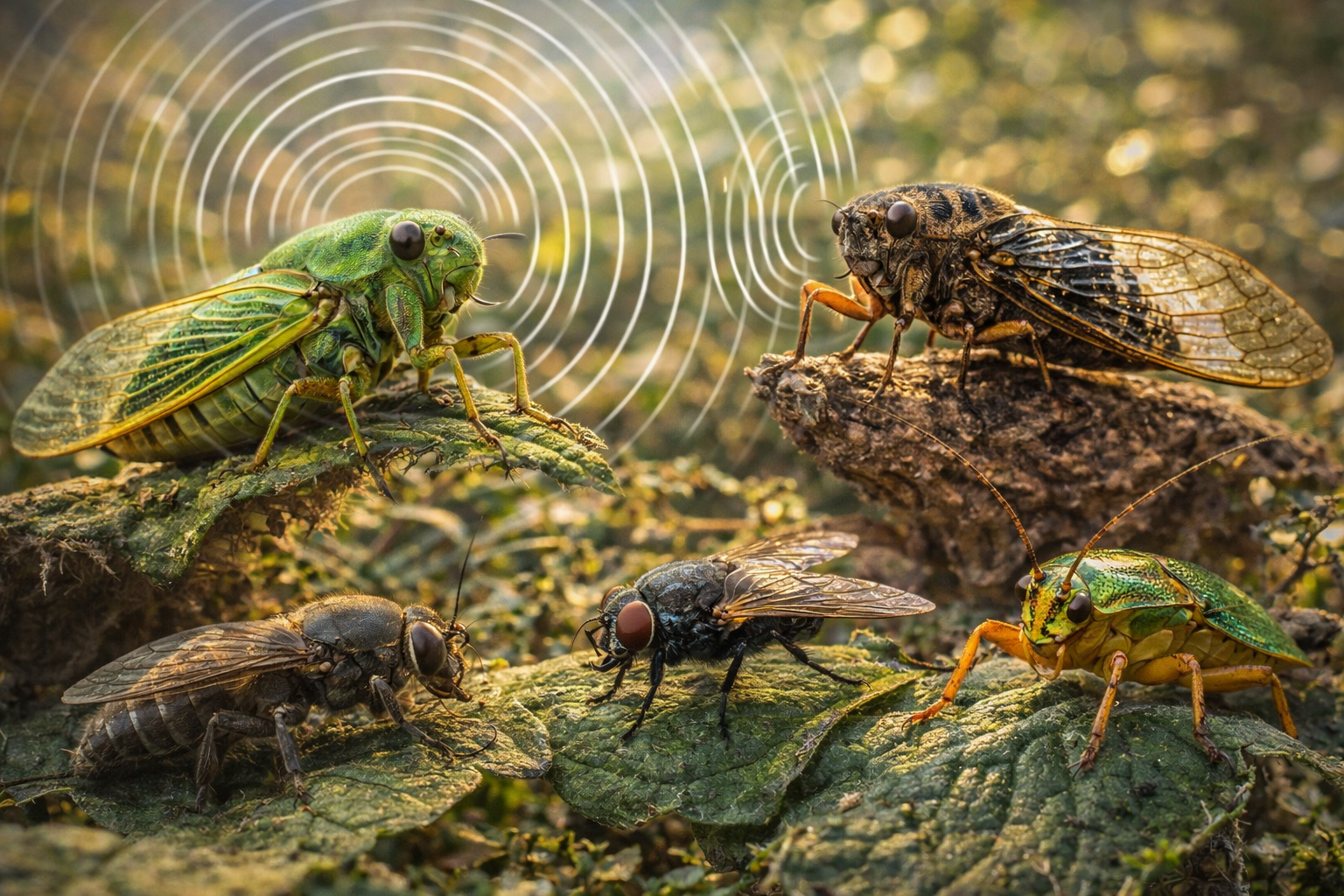
| Part 5 Flies, Cicadas & True Bugs: Sound, Speed & Impact Some insects announce themselves. Others intrude, persist, or quietly shape the rhythms of everyday life. Flies, cicadas, and true bugs may lack the visual glamour of butterflies or beetles, but their influence is immediate, unavoidable, and profound. These insects are defined by sound, speed, and proximity to humans. They thrive in heat, adapt rapidly to changing conditions, and exploit opportunities created by both natural systems and human activity. In doing so, they reveal how deeply insects are woven into daily experience — from summer soundscapes to decomposition and defence. This final part of the series explores five insects whose impact far outweighs their aesthetic reputation. |
| Green Grocer Cicada The green grocer cicada is one of Australia’s most iconic summer insects. With its vivid emerald body and translucent wings, it is as visually striking as it is acoustically dominant. It’s called — a sustained, piercing buzz — is produced by vibrating membranes on the abdomen and amplified by the cicada’s hollow body. This sound serves a single purpose: attracting mates. During peak summer, entire neighbourhoods can resonate with overlapping calls, transforming the air itself into a living chorus. Green grocers spend most of their lives underground as nymphs, emerging only briefly as adults. Their sudden appearance and deafening presence make them powerful symbols of seasonal change. |
| Double Drummer Cicada The double drummer cicada takes sound to its extreme. Recognised as Australia’s loudest insect, it produces calls that rival industrial machinery in volume and can be heard from considerable distances. Large, dark-bodied, and robust, double drummers are built for acoustic dominance. Their calls cut through heat, foliage, and wind, ensuring they are heard by potential mates over vast areas. Like other cicadas, they emerge in synchronised waves, creating sudden, overwhelming soundscapes that define summer days. Their brief adult lives contrast sharply with their long subterranean development, reinforcing the theme of intensity compressed into short windows of time. |
| March Fly (Horse Fly) March flies are among Australia’s most notorious insects. Strong fliers with large eyes and agile flight, they are relentless in pursuit and difficult to evade. Only females bite, requiring blood meals to reproduce. Their bites are painful, delivered by blade-like mouthparts that cut rather than pierce skin. This has earned them widespread dislike among both humans and livestock. Despite this reputation, march flies are part of complex ecological systems. Adults feed on nectar and blood, contributing to pollination, while larvae develop in soil or aquatic environments. They embody the uncomfortable truth that ecological importance does not always align with human comfort. |
| Blowfly Blowflies are often associated with decay, but this association reflects their ecological role rather than moral failing. Drawn to carrion and waste, blowflies are among nature’s most efficient recyclers. Their rapid life cycles allow them to break down organic matter quickly, reducing the spread of disease and returning nutrients to the ecosystem. In medical and forensic science, blowflies have even become valuable tools, providing insights into wound care and time-of-death estimation. Though commonly disliked, blowflies perform essential work at the boundary between life and death — a role few other insects fulfil as effectively. |
| Stink Bug Stink bugs are members of the true bugs, a diverse group defined by piercing mouthparts and chemical defences. When threatened, they release strong-smelling compounds that deter predators and make handling unpleasant. This defensive strategy is highly effective, allowing stink bugs to survive without speed, venom, or strength. Their flattened bodies and shield-like shapes further reinforce their reliance on deterrence over escape. Often encountered on plants or indoors during seasonal changes, stink bugs are reminders that chemical warfare is one of the most successful survival strategies in the insect world. |
| Closing Reflection Flies, cicadas, and true bugs shape the sensory world. They fill the air with sound, move swiftly and persistently, and influence human experience more directly than most insects. Whether through noise, nuisance, or necessary decay, their presence is constant. Together, they complete this exploration of Australia’s insect life — a world of builders, migrants, survivors, predators, and recyclers. Small lives, vast influence. |
| Flies, Cicadas & True Bugs: Sound, Speed & Impact Often overlooked, these insects shape daily life more than most. Green grocer cicada Famous for its piercing summer call and bright green colour. Double drummer cicada Australia’s loudest insect is among the loudest insects in the world. March fly (Horse fly) Painful biters with strong flight and keen eyesight. Blowfly Ecologically important decomposers, despite their reputation. Stink bug Defensive insects are known for releasing strong odours when disturbed. |
| Appendix — Honourable Mentions Sugar ant Paper wasp Bush cockroach (listed earlier but noteworthy) Mosquito Sandfly Leafhopper Giant prickly stick insect Praying mantis Why Australian insects are exceptional High endemism — many exist nowhere else Extreme adaptations — heat, fire, drought, poor soils Ecological importance — pollination, soil health, food webs |
Unless stated, featured images are my own work, created independently or with the assistance of AI.

