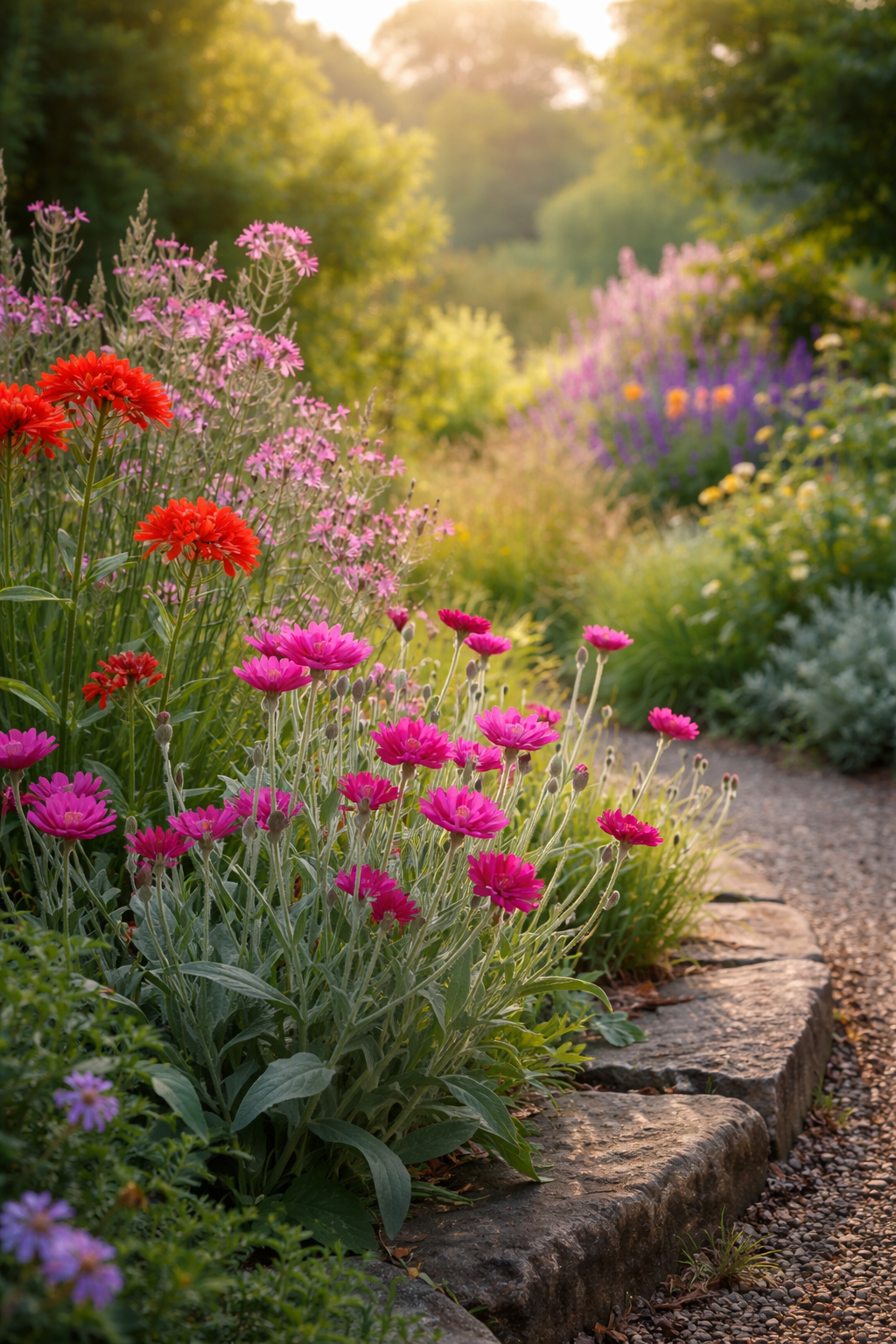
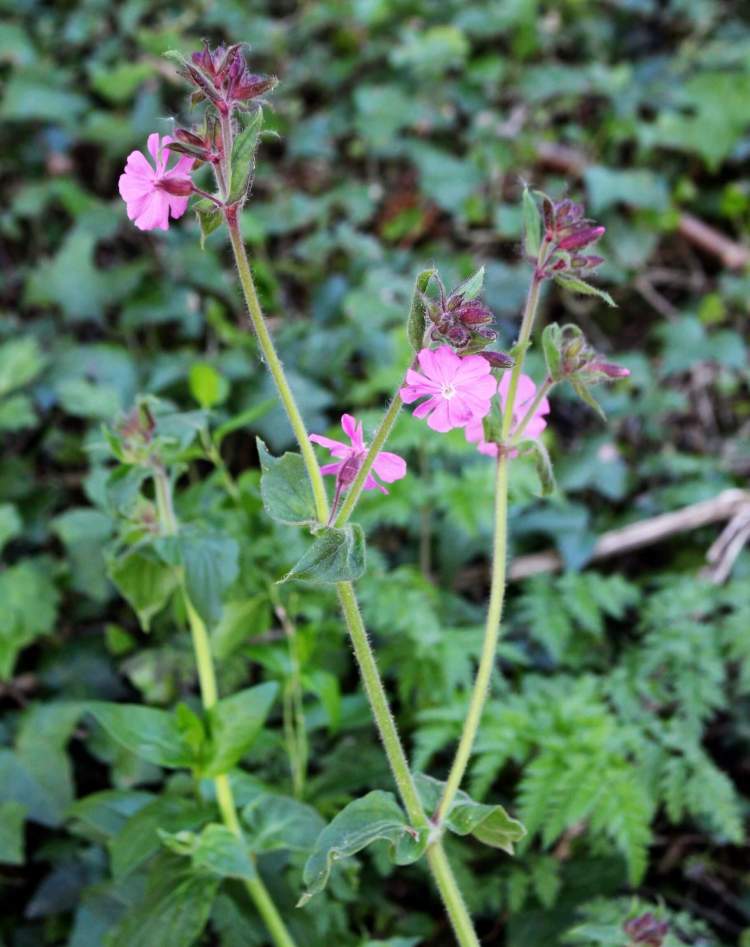
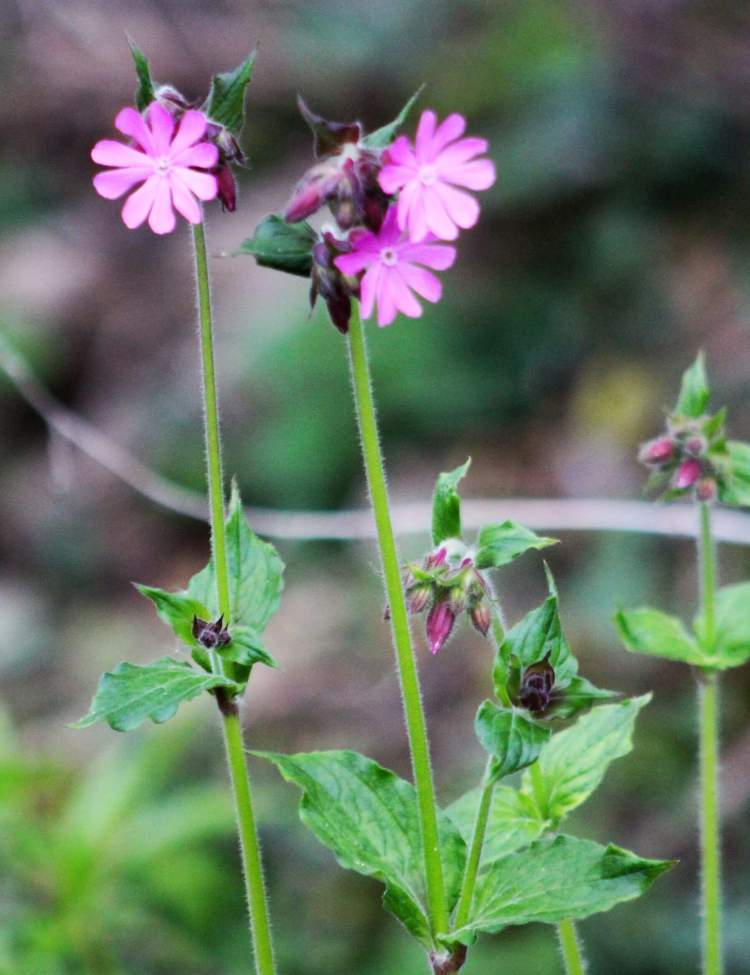
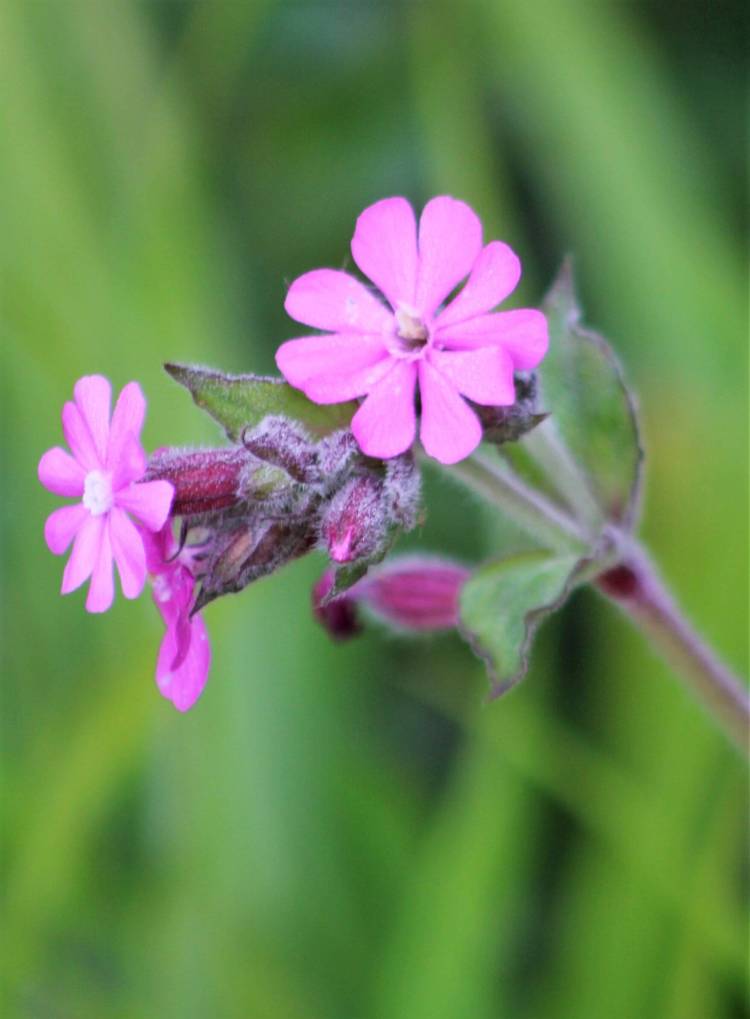
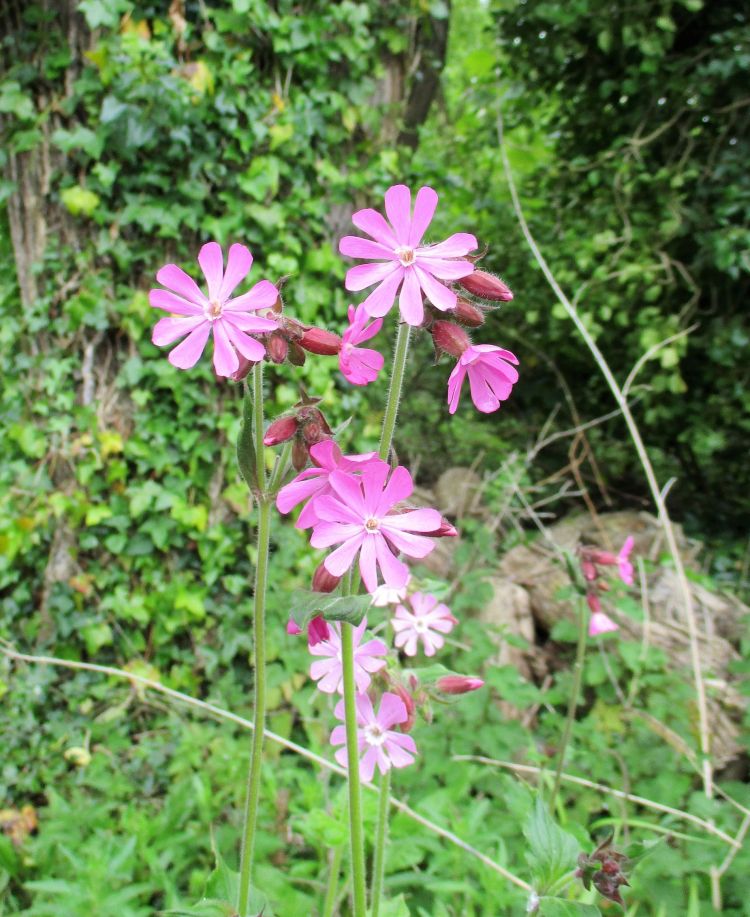
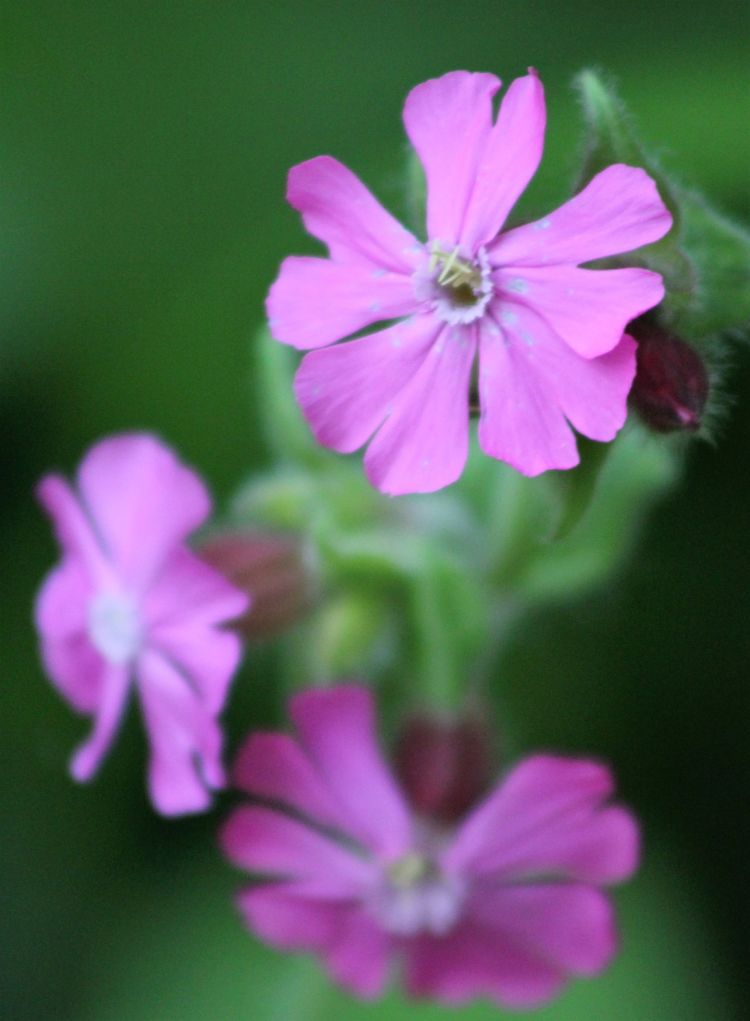
| Lychnis (Campion) Colour That Arrives, Does Its Thing, and Leaves Some plants behave like furniture—arriving, settling, and quietly fulfilling a role for years. Lychnis, on the other hand, appears like a brief flare—a sudden note in the score that’s gone before it fades into the background. You notice campion not because it’s rare, or difficult, or precious, but because it turns up bright, early, and unapologetic. A pink that doesn’t apologize for itself. A scarlet that feels almost out of season. It flowers with the confidence of something that knows it doesn’t need to last. I’ve grown Lychnis in formal borders and scruffier corners, in gravel and clay, in places that were meant to be temporary and places that accidentally became permanent. It never quite settles into the role you imagine for it. That, I’ve come to think, is the point. A plant that understands timing Lychnis is not a long-lived plant. Some varieties behave as biennials, some as short-lived perennials, but none of them feel invested in the long haul. They germinate, grow with intent, flower hard, and then — often — fade away. Gardeners sometimes view this short lifespan as a flaw, often believing that a “good” plant provides value over many years. However, Lychnis challenges this notion by showing that a plant’s worth lies in its timing and the impression it leaves, not in its longevity. In late spring and early summer, when greens still dominate and borders find their rhythm, campion steps forward. Its colour lands like an event—brief but striking, making you notice. I’ve noticed that people tend to remember where Campion was, even after it’s gone. “That bright one near the path.” “The pink by the shed.” It leaves a trace in memory that outlasts the plant itself. Self-seeding is not the same as taking over. Lychnis has a reputation — sometimes deserved — for self-seeding. This can make gardeners nervous. The phrase “self-seeds freely” gets treated as a warning label, as if the plant is planning a hostile takeover. In practice, Lychnis is less dramatic. It scatters lightly, tests a few spots, and mostly accepts rejection. Seedlings appear only where the ground is open, disturbed, or briefly welcoming. They don’t outcompete dense planting or established perennials. What you get instead is a quiet negotiation. A few plants return. A few vanish. The garden edits them back without effort. One year, I’ll have three where I expected one; the next year, none at all. That variability is often described as unreliable, but I think of it as responsive. Lychnis pays attention to conditions rather than insisting on its place. Colour as an event, not a theme It’s tempting to design borders with colours that last all season. Lychnis ignores this. Its silver-leafed pinks and dense scarlets are specific, intense, and brief. Instead, Campion works best when you let it behave like punctuation. A sudden exclamation in an otherwise steady paragraph. When it’s gone, the sentence still makes sense. Lychnis looks awkward if overused—repeated too often or planted too deliberately. It shouldn’t be everywhere. One or two plants lift a whole area; a dozen dilute their impact. This is one of those plants that teaches restraint by misbehaving when you ignore it. What it tolerates (and what it doesn’t) Lychnis is often described as “easy”, which is true in the narrow sense that it doesn’t demand fussing. But ease doesn’t mean indifference. There are limits. It dislikes heavy, waterlogged soil. It copes with poor ground but sulks if winter moisture lingers. It does best where drainage is honest, and competition isn’t too fierce. It doesn’t need pampering. Rich compost, frequent feeding and careful staking produce soft growth and shorter lives. Campion lasts longest when slightly ignored. That’s the choice: push it for show or let it be itself. The latter brings fewer plants, but better ones. The myth of control One common gardening myth is that we are — or should be — in control. With the right planting plan and enough effort, a garden can be made stable, predictable, and permanent. Lychnis quietly undermines this idea. You can sow it, but you can’t entirely decide where it will thrive. You can enjoy it, but you can’t make it stay. And that’s not a failure of technique. It’s a reminder of what gardens actually are: systems in motion, shaped but not governed. I’ve stopped trying to “place” Campion. Now I let it show me where it wants to be, and respond accordingly. Sometimes that means letting it flower in an odd gap. Sometimes it means removing it without ceremony. Both are part of the same conversation. Short-lived doesn’t mean disposable. There’s a subtle difference between plants that are short-lived and plants that are throwaway. Lychnis is firmly in the first category. It’s short time brings real benefits: early nectar, contrasting form and colour, and rhythm. When gone, it leaves space for what’s next. In that sense, it behaves more like an annual than a perennial. You’re not buying a season; you’re witnessing one. I think that’s why Campion sits so comfortably in older gardens and informal spaces. It aligns with the idea that not everything needs to persist to matter. Working with interruption As a working gardener, I’ve learned to appreciate plants that don’t pretend to be permanent solutions. Lychnis reminds me that some contributions are meant to be brief, bright, and then done. It’s not a plant I’d rely on to hold a border together. But it’s one I’d miss if it never appeared at all. When Lychnis works, it feels more like noticing than planting. A flash of colour arrives, acts, and moves on—altering the garden and making you more attentive. |


| About our writing & imagery Many of our articles are written by us, drawing on real experience, reflection, and practical work in gardens and places we know. Some pieces are developed with the assistance of AI, used as drafting and research tools rather than as a voice or authority. Featured images may include our own photography, original AI-generated imagery, or—where noted—images kindly shared by other creators and credited accordingly (for example, via Pixabay). All content is shaped, edited, and published by Earthly Comforts, and the views expressed are our own. |

