| Part 2 |
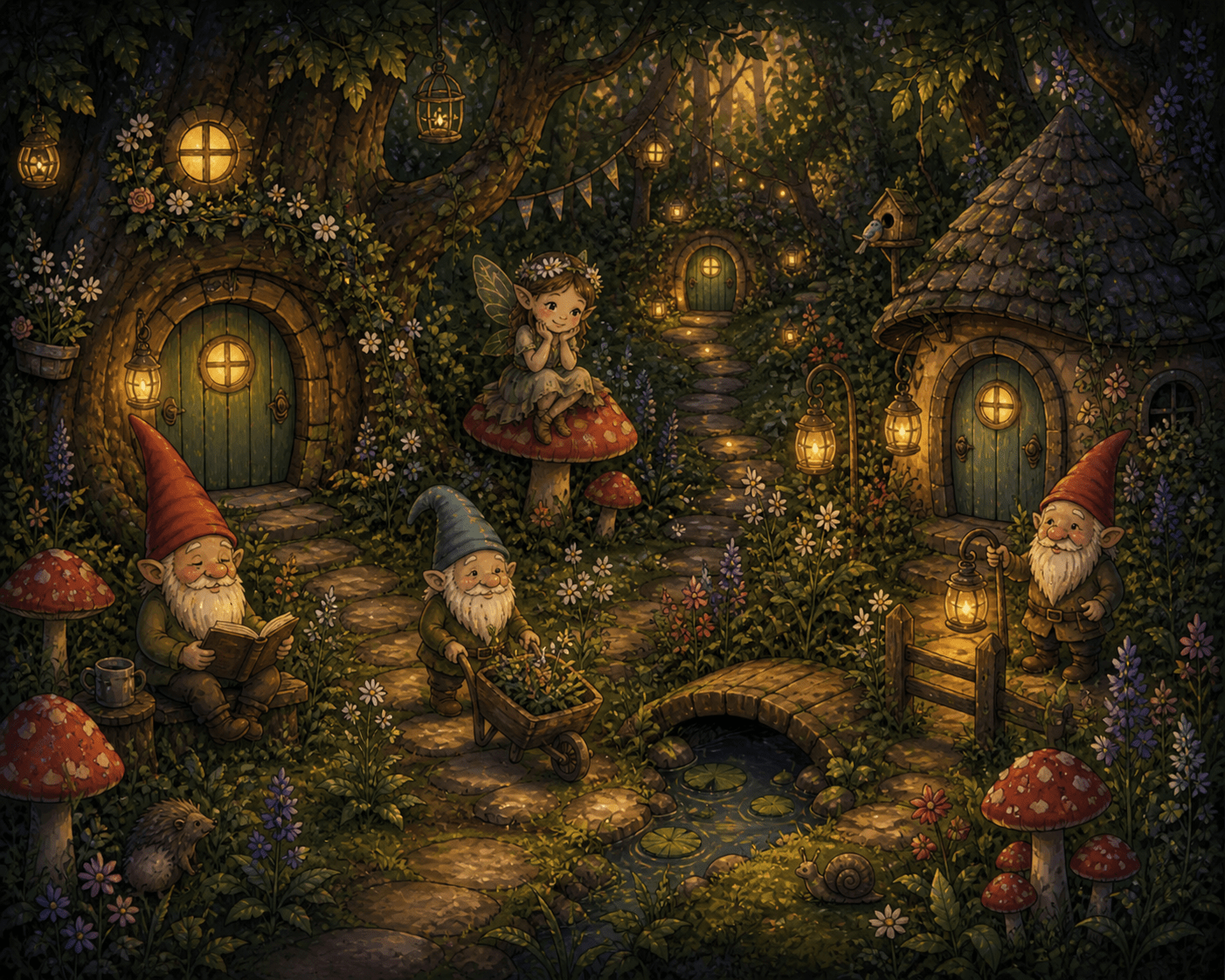
| There’s a point, working in certain gardens, where you realise you’re not just maintaining a space—you’re stepping into something that’s been quietly constructed as a story. Not in an obvious way. No signs, no instructions. But the cues are there. A small door set into the base of a tree. A cluster of toadstools placed just slightly too deliberately to be random. A winding path that narrows and disappears behind planting, even though it doesn’t need to. Objects positioned not for function, but for suggestion. Initially, these gardens may seem theatrical or contrived. But working in them week after week reveals a shift. You start to see that what’s being created isn’t decoration. It’s atmosphere. The instinct to make something hidden Most gardens, particularly in the UK, are built around visibility. You stand at the back door, and you want to see the lawn, the borders, and the main features. There’s a logic to it. Clear lines, accessible spaces, everything legible at a glance. It makes maintenance easier. It keeps things practical. But the gardens that lean into this more whimsical, folkloric direction tend to do the opposite. They obscure. They layer. They hold something back. You don’t see everything at once, and that’s intentional. There are corners that aren’t immediately explained. Areas where planting is allowed to soften edges, where paths don’t quite reveal where they lead until you’re already walking them. That instinct—to create something partially hidden—is not new. It shows up in older gardens, too. Walled gardens with enclosed sections. Victorian layouts with winding routes and concealed seating areas. The idea that a garden should unfold, rather than present itself all at once. The difference now is that the hidden element has taken on a narrative quality. It’s not just about privacy or structure. It’s about suggestion. These elements guide visitors’ experience of the garden, inviting them to engage their imagination and uncover stories through subtle design choices. Where the modern fairy garden comes from What most people now call a “fairy garden” is a relatively recent combination of influences. You can trace parts of it back to Victorian romanticism, where nature was softened, idealised, and given a kind of moral or emotional weight. Gardens became places of retreat, reflection, even healing—not just productivity. Then there’s the influence of literature. Stories where the natural world is not passive, but active. Where small spaces contain entire worlds. Where scale is distorted, and meaning is layered. You see it in the way people now approach even the smallest garden areas. A container becomes a landscape. A corner becomes a scene. A tree base becomes a threshold. It’s easy to dismiss this as a decorative novelty, but that misses what’s actually happening. People are reintroducing imagination into the garden. The quiet purpose behind it Most of the clients I work with who lean into this style wouldn’t necessarily describe it in philosophical terms. They’ll say they like it, that it feels magical, that it makes the space more enjoyable. And that’s fair. But from a working perspective, there are consistent patterns in how these gardens function. They tend to encourage slower movement. You don’t just walk straight across them; you pause, you look, you follow small details. That changes how the space is used. It becomes less about moving through and more about being within. The main result is a space that prioritises experience and presence over quick access. They also tend to be more forgiving in their structure. A tightly formal garden demands precision. Edges must be kept sharp, growth controlled, and symmetry maintained. A whimsical garden allows for variation. Plants can move slightly out of place. Self-seeded growth can be accommodated rather than immediately removed. That doesn’t mean it’s unmanaged. In fact, these gardens often require a careful hand to stop them tipping into disorder. But the management is different. It’s guiding, not enforcing. The relationship with wildlife One of the more grounded aspects of these gardens—something that sits well within your own philosophy—is how they interact with wildlife. Dense planting, layered growth, and the use of natural materials create conditions that are more accommodating to insects, birds, and small mammals. There’s more cover, more food sources, and more variation in microhabitats. This isn’t always the stated intention. Clients rarely say they’re building a fairy garden for biodiversity reasons. But the outcome often leans that way. There’s a practical advantage to that. A garden that supports a range of life tends to regulate itself more effectively. Pest populations are balanced by predators. Soil health improves through organic matter and biological activity. The need for intervention reduces over time. That doesn’t mean it becomes maintenance-free. That’s one of the more persistent myths—that a naturalistic or whimsical garden looks after itself. It doesn’t. It just requires a different kind of attention. Key point: these spaces demand ongoing, careful observation rather than routine intervention. More observation. Less reaction. Challenging the idea of “serious” gardening There’s a quiet assumption in parts of the gardening world that anything leaning into whimsy is somehow less serious. Less skilled. More about aesthetics than substance. I don’t think that holds up in practice. Creating a garden that feels natural while being intentionally shaped is not simple. It requires an understanding of how plants behave over time, how they interact, how they fill space, and how they respond to conditions. It also requires restraint. It’s easier, in many ways, to impose a clear structure and maintain it. Lines, edges, and defined planting schemes. The outcome is predictable. Allowing a garden to feel slightly unpredictable, while still ensuring it functions and remains manageable, is more nuanced. You’re working with movement, not just form. And that’s where these more imaginative gardens often sit. They may appear casual, even playful, but underneath that is a set of decisions that keep the space coherent. The role of objects within the space The addition of small objects—gnomes, doors, toadstools, miniature structures—is where things can tip one way or the other. Used sparingly, they act as points of interest. Small cues that draw attention, that suggest rather than declare. They work best when they’re partially integrated into the garden rather than sitting on top of it. Half-hidden is often more effective than fully visible. When overused, though, they can flatten the space. Too many objects, too clearly placed, and the garden becomes a display rather than an environment. The sense of discovery is lost because everything is immediately obvious. From a maintenance perspective, there’s also a practical consideration. Objects interrupt natural processes. They create areas where moisture collects differently, where growth is restricted or altered. That’s not necessarily a problem, but it needs to be understood. They are part of the system, not separate from it. Working with, rather than against, imagination As a gardener, you’re often balancing your own understanding of what a space needs with the client’s vision of what they want it to be. In more conventional gardens, that’s straightforward. Lawn care, pruning schedules, seasonal work. There’s a shared language. In these more imaginative spaces, the language shifts slightly. You’re not just managing plants. You’re maintaining a feeling. That doesn’t mean compromising on fundamentals. Soil still needs to be healthy. Plants still need to be appropriate for the conditions. Work still needs to be done at the right time. But the approach can be adjusted. Edges don’t always need to be as sharp. Certain self-seeded plants can be allowed to remain if they contribute to the overall feel. Deadwood might be retained in places where it supports both aesthetics and ecology. It becomes a conversation between structure and suggestion. The emotional layer There’s also something quieter happening in these gardens that’s worth acknowledging. They create a sense of comfort. Not in a superficial way, but in how they soften the space. They reduce the sense of control and replace it with something more open-ended. There’s room for interpretation, for imagination, for a slightly different way of relating to the environment. For some clients, that matters more than the practical aspects. The garden becomes a place where they can step out of a more rigid, structured world. Where things are allowed to be a little less defined. That has value, even if it’s not something that can be measured in the usual way. The limits and trade-offs That said, these gardens are not without their challenges. They can become difficult to manage if the balance tips too far towards looseness. Without sufficient structure, planting can compete too much, leading to weaker overall growth. Access can become restricted, making routine maintenance harder. There’s also the risk of aesthetic fatigue. What feels charming initially can become cluttered over time if additions are made without restraint. From a practical standpoint, it’s important to maintain the underlying framework. Clear pathways, manageable planting zones, and a sense of overall cohesion. The imagination sits atop that. Without it, the garden can lose its functionality. A different kind of ownership One of the more interesting aspects of these spaces is how they change the sense of ownership. In a highly controlled garden, the relationship is clear. The owner shapes the space, maintains it, and directs its development. In a more whimsical, layered garden, that relationship becomes slightly less defined. There’s an acknowledgement that the garden has its own direction and will evolve in unexpected ways. The owner’s role shifts from control to participation. Closing reflections You don’t need to believe in fairies, woodland folk, or hidden worlds to understand why these gardens exist. They are, at their core, an expression of something quite simple. A desire to make a space that feels alive. Not just in the biological sense, though that’s part of it. But in the way it invites attention, curiosity, and a slower way of being within it. As gardeners, we can approach that practically. We can ensure the soil is right, the planting appropriate, and the structure sound. We can manage growth, guide development, and keep the space functioning. But there’s also room to recognise the less tangible elements. The way a garden can suggest rather than show. The way it can hold something back. The way, occasionally, it can feel like it’s offering more than it immediately reveals. And whether you interpret that as imagination, atmosphere, or something else entirely is, perhaps, less important than the fact that it’s there. |
| About our writing & imagery Most articles reflect our real gardening experience and reflection. Some use AI in drafting or research, but never for voice or authority. Featured images may show our photos, original AI-generated visuals, or, where stated, credited images shared by others. All content is shaped and edited by Earthly Comforts, expressing our own views. |

