| Notes from the garden on food, resilience, and the years ahead |
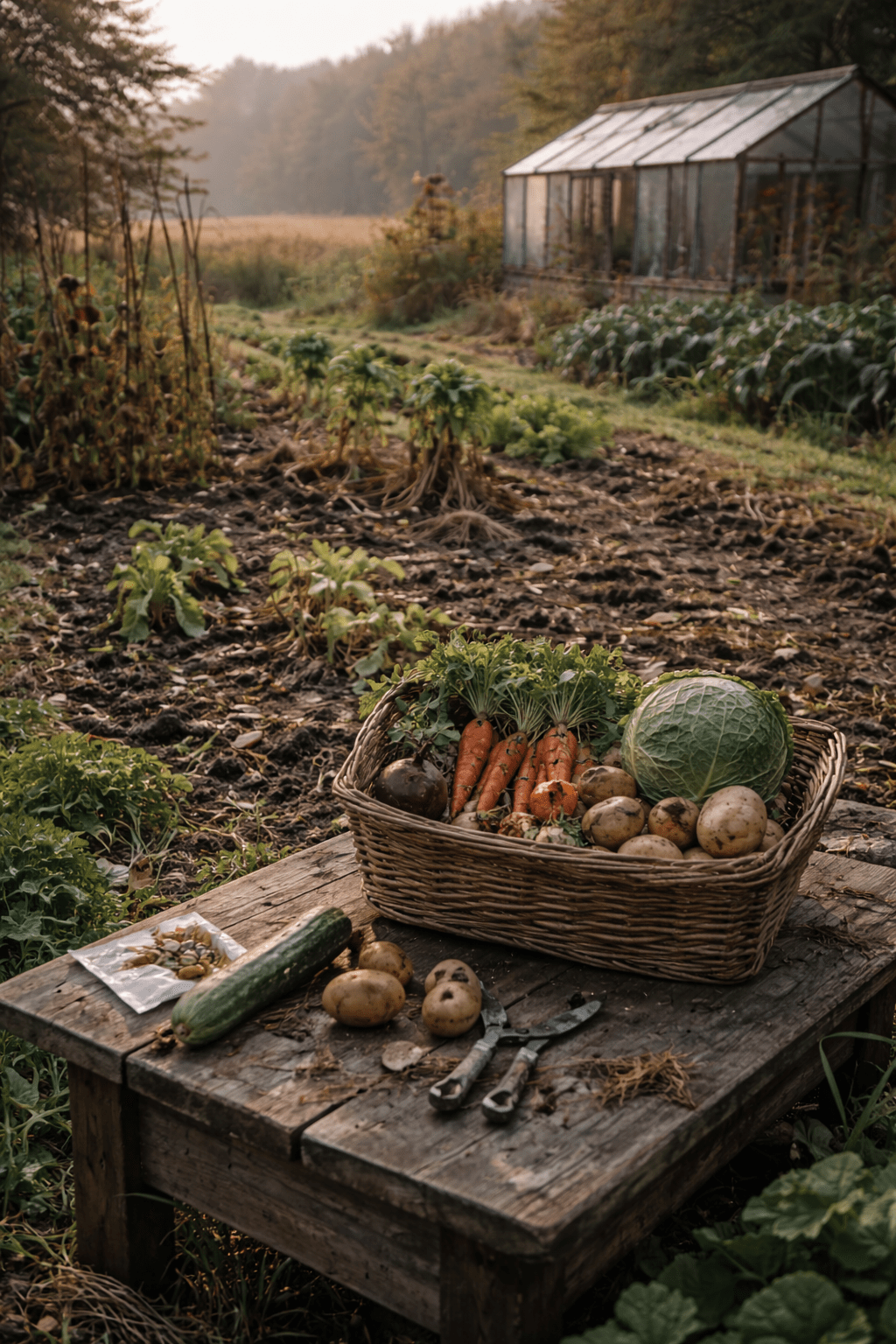
| Scarcity Is Not the Same as Hunger The word ‘scarcity’ makes people uneasy. It carries a moral weight far heavier than its actual meaning. Say it out loud, and many people immediately picture hunger, deprivation, empty cupboards, or historical hardship. It’s a word loaded with fear, memory, and imagination. But scarcity and hunger are not the same thing — and confusing the two makes it harder, not easier, to understand what’s happening now. Gardens are very good at teaching this distinction. Scarcity is about choice; hunger is about absence. In a garden, scarcity shows up all the time. One year, there are too many courgettes and hardly any beans. Another year, the beans do well, and the lettuces struggle. You might have plenty to eat, but not quite what you expected or planned. That is scarcity. Hunger is different. Hunger is when there is not enough food. When calories are missing, not just preferred ingredients. When the body, not the menu, is under strain. Modern food systems in places like the UK are far more likely to experience scarcity than hunger. Fewer options. More substitutions. Seasonal gaps that feel unfamiliar because we’re not used to them. The problem is that many people respond to scarcity as if it were hunger — emotionally, psychologically, sometimes even socially. And that reaction creates more instability than the scarcity itself. Why scarcity feels worse than it is One of the quieter consequences of long-term abundance is that we’ve lost tolerance for limitation. When everything is available all the time, any narrowing feels like failure. A shop without a product feels broken. A missing ingredient feels like an injustice rather than a condition. This is not because people are spoiled. It’s because systems trained us to expect continuity. Scarcity interrupts that expectation and triggers anxiety far out of proportion to its actual impact. Gardeners tend to react differently. When something doesn’t grow, the question isn’t “Why has this been taken from me?” but “What didn’t line up this year?” Weather, soil, timing, variety — something shifted. The response is analysis, not alarm. That mindset doesn’t minimise difficulty. It contextualises it. The internet myth of permanent shortage One of the most persistent online narratives is that scarcity always worsens. That once something becomes harder to get, it will inevitably disappear altogether. Gardens don’t behave like that, and neither do food systems. Scarcity often moves rather than deepens. Pressure in one area eases somewhere else. A crop struggles in one region but does better in another. Diets shift. Alternatives appear. Consumption patterns change. This movement can feel unsettling if you’re expecting stability, but it’s also a sign of adaptation, not collapse. The danger lies in mistaking adaptation for failure. When people respond to scarcity with panic — stockpiling, hoarding, overbuying — they can briefly create the very hunger they fear. Not because food has vanished, but because trust has. Gardens offer a useful corrective here. You don’t pull up every plant because one bed failed. You don’t abandon the whole season because June was poor. You wait. You watch. You adjust. Scarcity invites skill; abundance hides it. Another reason scarcity feels threatening is that it demands competence. Abundance allows passivity. You don’t need to know how to cook without certain ingredients if you’ve never had to. You don’t need to plan flexibly if the plan always works. Scarcity, by contrast, asks something of you. Substitution. Timing. Improvisation. Acceptance. Gardening quietly builds these skills because it never promises completeness. You learn to make meals around what exists, not what was imagined. You learn that a full belly does not require a full menu. This is not about moral virtue. It’s about familiarity. People who have practised working with limits feel less threatened by them. The real risk is not scarcity — it’s inequality. It’s important to be clear-eyed here. Scarcity becomes dangerous when it intersects with poverty, isolation, or poor access. For people already living close to the edge, even small disruptions can tip into hunger. Gardens don’t erase that reality. They simply remind us that scarcity itself is not inherently cruel — it becomes cruel when systems fail to protect the vulnerable. Conflating scarcity with hunger risks flattening these distinctions. It turns every fluctuation into a crisis and obscures where genuine harm is likely to fall. Understanding the difference allows for better responses — social, communal, and personal. Learning to sit with less certainty Perhaps the hardest part of scarcity is not the material adjustment but the psychological one. Scarcity removes guarantees. It introduces uncertainty into decisions that used to feel automatic. What’s for dinner? What’s available this week? What will cost more next month? Gardens normalise this uncertainty. You plant knowing you might not harvest everything you hope for. You plan knowing that the weather may interfere. You accept partial outcomes as standard. That acceptance doesn’t make you passive. It makes you resilient. The challenge for many people now is not learning to live with less, but learning to live with less predictability. Scarcity teaches that skill, whether we like it or not. Living without drama Scarcity does not need to be dramatised to be taken seriously. It is a condition, not a catastrophe. A signal, not a sentence. It asks for attentiveness rather than fear, adaptation rather than outrage. Hunger, when it appears, deserves an urgent response. Scarcity deserves understanding. Gardens help keep those responses proportional. They remind us that limits are not always emergencies, and that not getting exactly what we want is not the same as not getting enough. That distinction matters more now than it has for a long time. |
| About our writing & imagery Many of our articles are written by us, drawing on real experience, reflection, and practical work in gardens and places we know. Some pieces are developed with the assistance of AI as a drafting and research tool. Featured images may include our own photography, original AI-generated imagery, or—where noted—images kindly shared by other creators and credited accordingly (for example, via Pixabay). All content is shaped, edited, and published by Earthly Comforts, and the views expressed are our own. |

