| A 5-Part Series |
| A curated exploration of Britain’s most iconic, curious, and ecologically important insects |
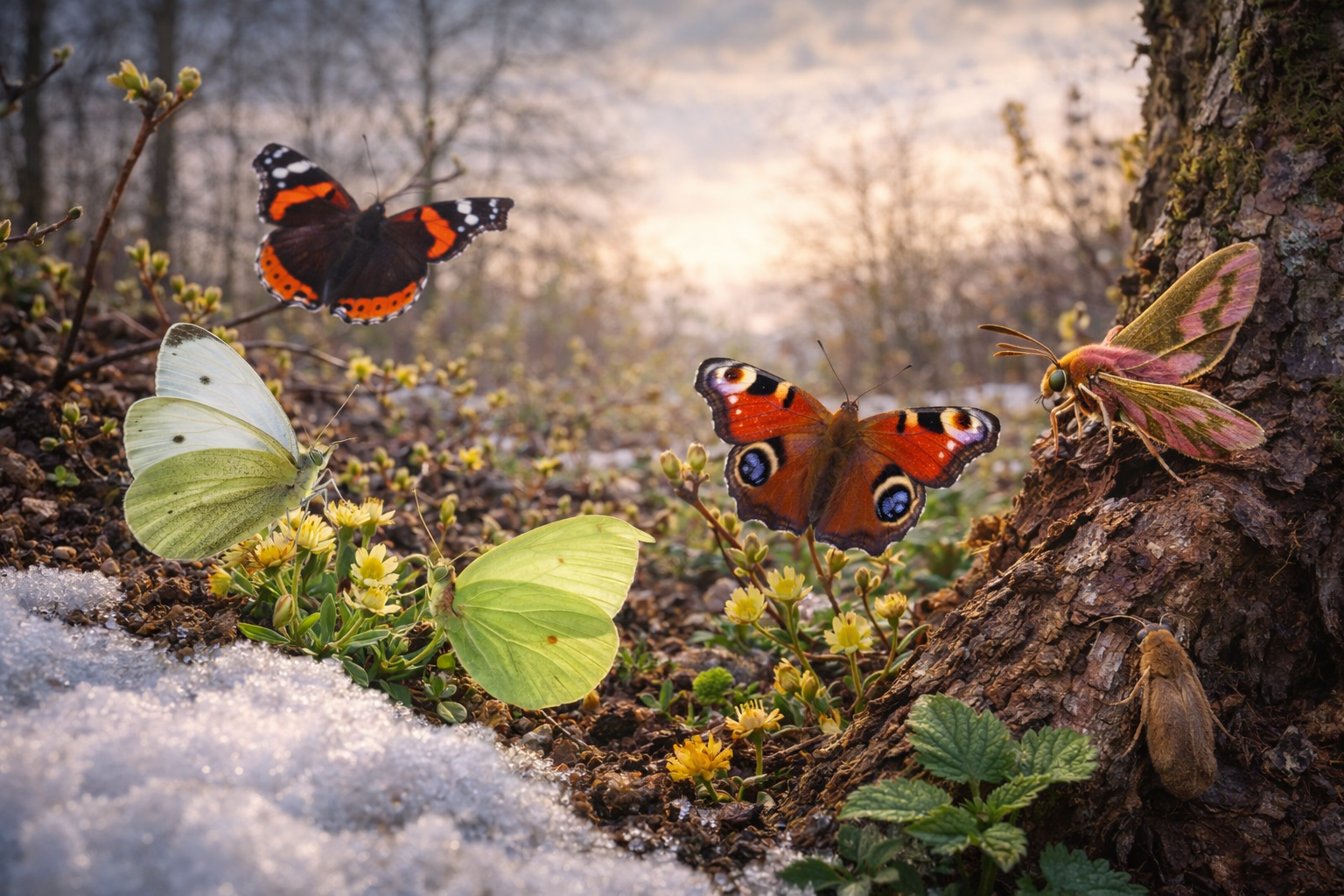
| Part 2 Butterflies & Moths: Indicators of Change Butterflies and moths in the UK are often treated as symbols rather than species — emblems of summer, childhood, or countryside nostalgia. Yet beneath this symbolism lies a more serious truth. These insects respond rapidly to environmental change, making them some of the most closely watched indicators of ecological health in Britain. Shifts in their numbers, timing, or distribution often reflect wider changes in climate, land use, and plant diversity. The large white butterfly is among the most recognisable British species. Common in gardens, allotments, and farmland edges, it thrives wherever brassicas are grown. Its success links human food systems directly to insect life, demonstrating how cultivation practices shape insect populations. While sometimes labelled a pest, the large white is also a reminder that agricultural landscapes remain living ecosystems. The peacock butterfly, with its vivid eye-spot markings, is both resilient and adaptable. Unlike many species, it overwinters as an adult, sheltering in sheds, hollow trees, and outbuildings. Emerging early in spring, often before flowers are abundant, it relies on stored energy to survive. Its continued presence reflects the availability of overwintering sites as much as summer nectar. Red admirals tell a more fluid story. Powerful migrants, they arrive in Britain from continental Europe in varying numbers each year. Warm summers can lead to successful breeding, while cooler years reduce their survival. Their movements are closely tied to weather patterns and long-term climate shifts, making them living markers of atmospheric change. The brimstone butterfly is one of the earliest and most reliable signs of spring. Pale green and leaf-shaped, it emerges as temperatures rise, often weeks before other butterflies appear. Its lifecycle is tightly bound to buckthorn, the sole food plant for its caterpillars. Where buckthorn disappears, brimstones follow — a clear illustration of how plant loss ripples through ecosystems. Moths outnumber butterflies in the UK by a vast margin, yet they are often overlooked. The elephant hawk-moth, large and brightly coloured, challenges the idea that moths are dull or insignificant. Active at dusk and night, it plays a role in pollination while remaining largely unseen by most people. The winter moth tells a quieter, more fragile story. Emerging in the cold months, its wingless females crawl up tree trunks to lay eggs, relying on precise seasonal timing. Disruption to temperature patterns can easily break this cycle, yet the species remains a key part of woodland food webs, supporting birds and other predators. In Britain, butterflies and moths function less as spectacle and more as signals. They reflect changes in weather, land management, and biodiversity with remarkable sensitivity. Long before shifts become obvious to us, these insects are already responding — quietly recording change in their presence, absence, and movement. |
Unless stated, featured images are my own work, created independently or with the assistance of AI.
 The Gardener's Curious Journal
Thank you sharing your knowledge about butterflies. Nice post, Rory.
LikeLiked by 1 person
Thank you Eugenia 🙂
LikeLiked by 1 person
You’re welcome, Rory.
LikeLiked by 1 person