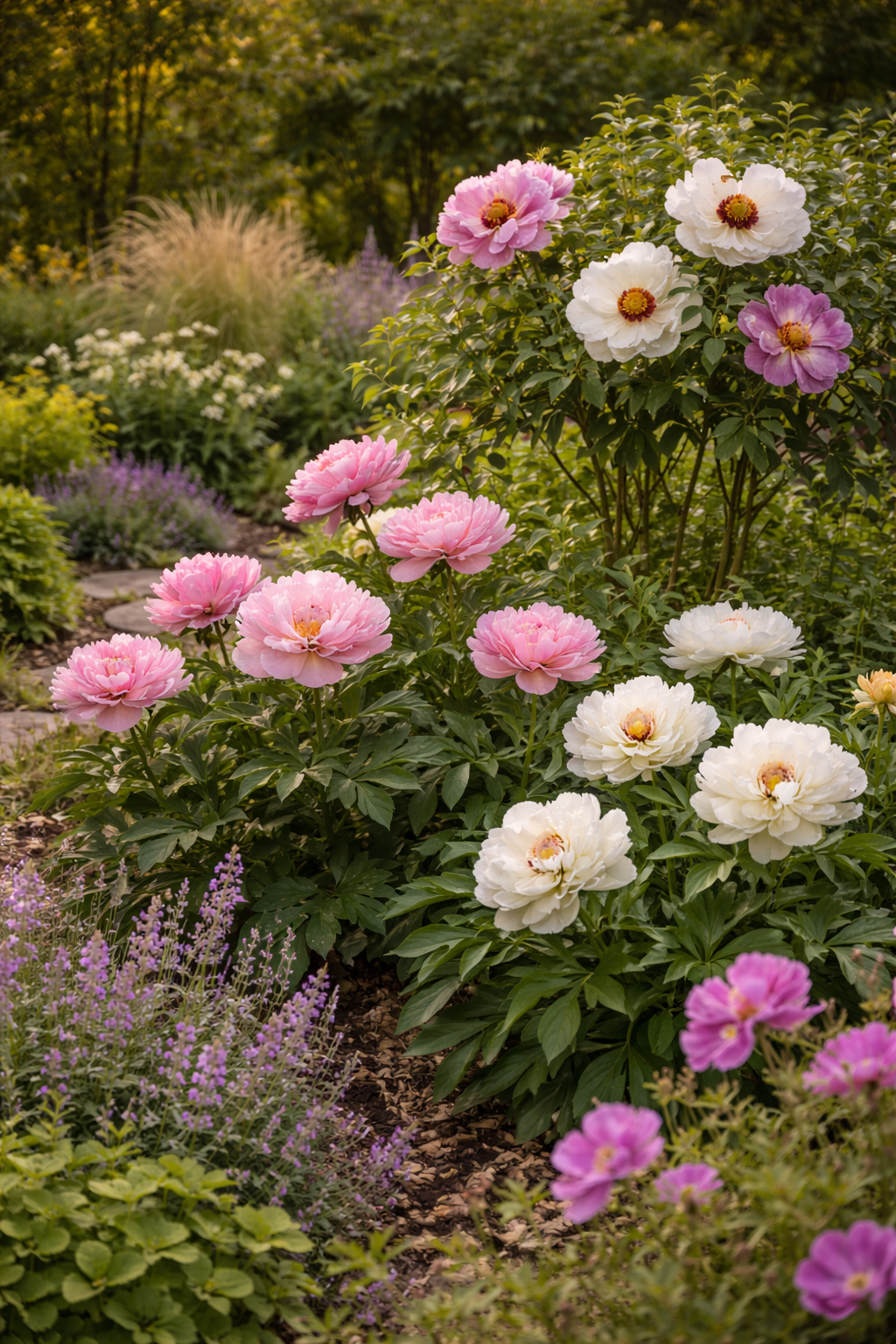
| Peonies arrive with a kind of quiet authority. They don’t shout for attention early in the year, and they don’t rush to prove themselves. For weeks, they sit as tidy mounds of foliage or bare, woody frameworks, doing very little. Then, often within a few days, they transform a garden completely. It’s tempting to see peonies as spectacle plants — all drama, all bloom — but that misses what really makes them enduring. Peonies are about timing, restraint, and longevity. They reward patience more than enthusiasm. When people talk about peonies, they usually mean the big, soft, nodding flowers of late spring and early summer — the classic cottage-garden types. But peonies are not one thing. They sit across a spectrum, from herbaceous perennials that disappear entirely in winter to woody shrubs that persist year-round. Understanding that range changes how you grow them and how you live with them. The common peony: presence through absence Herbaceous peonies (Paeonia lactiflora and related hybrids) are what most people recognise instantly. In winter, they vanish completely, leaving nothing above ground. In spring, they re-emerge, pushing up red-tinged shoots that feel almost tentative at first. Then the leaves unfurl, lush and generous, and suddenly the plant occupies space with confidence. There’s something instructive about that cycle. Herbaceous peonies remind you that absence can be part of presence. For months, they aren’t there at all — and yet their return feels inevitable. They don’t creep or self-seed. They simply wait, then arrive. Their flowers are often large, sometimes absurdly so. Single, semi-double, fully double — the range is enormous. Some nod under their own weight, others hold themselves upright, but all carry a softness that contrasts sharply with their tough constitution. Because, despite appearances, herbaceous peonies are resilient. Once established, they dislike disturbance and will sulk if moved, but they tolerate cold, drought, and neglect better than their romantic image suggests. One grounded observation from practice is that peonies often perform best when they’re slightly ignored. Overfeeding produces lots of leaves and fewer flowers. Constant fiddling disrupts their rhythm. A peony that’s allowed to settle into a stable patch of ground will often improve year on year with no intervention at all. Flowers that teach restraint The brief flowering of herbaceous peonies is divisive: it delights some and frustrates others. Despite their short bloom, their impact is lasting, challenging the preference for continuous color. The short flowering window is their character. Peonies arrive, make their point, and withdraw. The leaves remain, handsome and structural through summer, but the moment has passed. This challenges a common assumption in garden design: that longer flowering is always better. Peonies suggest something different — that intensity, even fleeting, can be enough. In fact, it’s often the reason they stay in memory. A good peony year lingers long after the petals have dropped. The tree peony: permanence and patience Tree peonies (Paeonia suffruticosa and related hybrids)—woody peony shrubs that keep their above-ground stems year-round instead of dying back—sit at the other end of the peony spectrum. They don’t disappear in winter. Their woody framework remains, visible and unapologetic. This alone changes how you relate to them. A tree peony isn’t something that pops up and vanishes. It stays. When in flower, tree peonies are undeniably extravagant. The blooms are huge, often silk-like, held upright rather than nodding. They feel ceremonial — less froth, more form. Yet even here, there’s restraint. The flowers don’t collapse at the first rain, and they don’t rush. They take their time opening, holding, and fading. In practice, tree peonies teach patience more firmly than herbaceous ones. They are slow to establish and strongly dislike being moved. Disturb the roots, and you may wait years for forgiveness — if it comes at all. This makes placement an act of commitment. You plant a tree peony not for this season, but for the garden you imagine five, ten, or twenty years from now. This long view can feel uncomfortable in modern gardening, where rearrangement is common, and change is constant. Tree peonies quietly resist that mindset. They ask you to decide, then stop interfering. Roots, grafts, and misunderstanding Most tree peonies are sold grafted onto herbaceous peony rootstock (the base and roots of a different peony species, used to support the upper part of the plant). This technical detail has real consequences. Early growth may be slow or uneven as the plant establishes its own roots. Gardeners unfamiliar with this process often assume something is wrong. In reality, a settling tree peony may be doing exactly what it needs to do. It’s building foundations rather than showing off. This again highlights a key difference between peonies and many other garden plants: progress is not always visible. There’s a trade-off here worth acknowledging. Peonies — especially tree peonies — don’t reward impatience. If you want a quick impact, they’re the wrong choice. But if you’re willing to wait, they offer something rarer: continuity. Intersectional peonies: the in-betweens Between herbaceous and tree peonies sit the intersectional or Itoh peonies — hybrids that combine aspects of both. They die back in winter like herbaceous peonies, but carry flowers and foliage that echo those of tree peonies. In many ways, they’re an attempt to resolve the tension between spectacle and reliability. They flower for longer than traditional herbaceous peonies and are often sturdier in habit. But even here, the essential peony character remains: slow establishment, dislike of disturbance, and a sense of deliberateness. You don’t rush a peony of any kind without consequences. Space, scale, and honesty Across all types, peonies share certain expectations. They want space. Not necessarily a lot of it, but enough to be themselves. Crowded peonies rarely thrive. They also want stability — soil that isn’t constantly reworked, conditions that don’t fluctuate wildly. This brings us to a broader point. Peonies are often described as romantic plants, but in practice, they are deeply pragmatic. They invest heavily in roots, store energy patiently, and flower when conditions align. They don’t adapt quickly, but they endure. That endurance is why peonies are so often found in old gardens. They outlast trends, owners, and even layouts. A peony planted decades ago may still flower faithfully, long after everything around it has changed. Living with peonies Living with peonies means accepting limits. You can’t move them easily, extend flowering much, or force them to perform on schedule. But in return, you get plants that anchor time. Peonies don’t fill gaps. They mark moments. Whether herbaceous or tree, they contribute not through constant presence, but through rhythm — emergence, flowering, withdrawal, persistence. In a garden culture that often values novelty and control, peonies offer something quietly subversive. They ask you to slow down, to notice, to wait. They remind you that some of the most meaningful garden experiences are not repeatable on demand. Despite different habits, all peonies reward commitment over convenience. If you garden with patience, they remain with you long after their blooms have faded. |
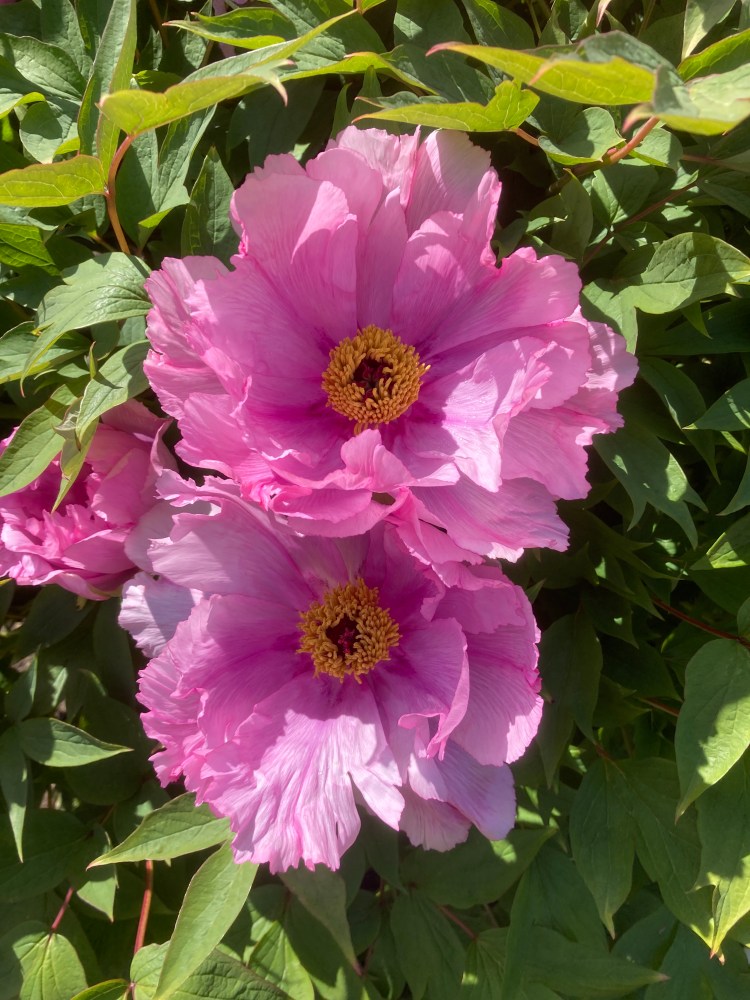
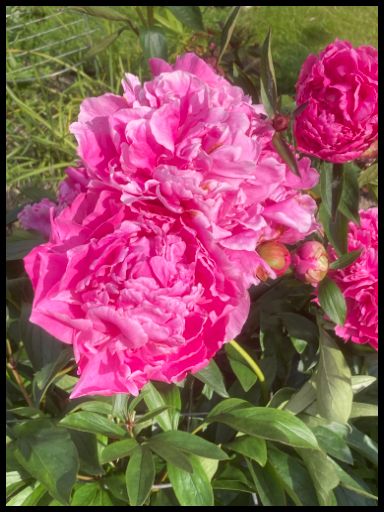
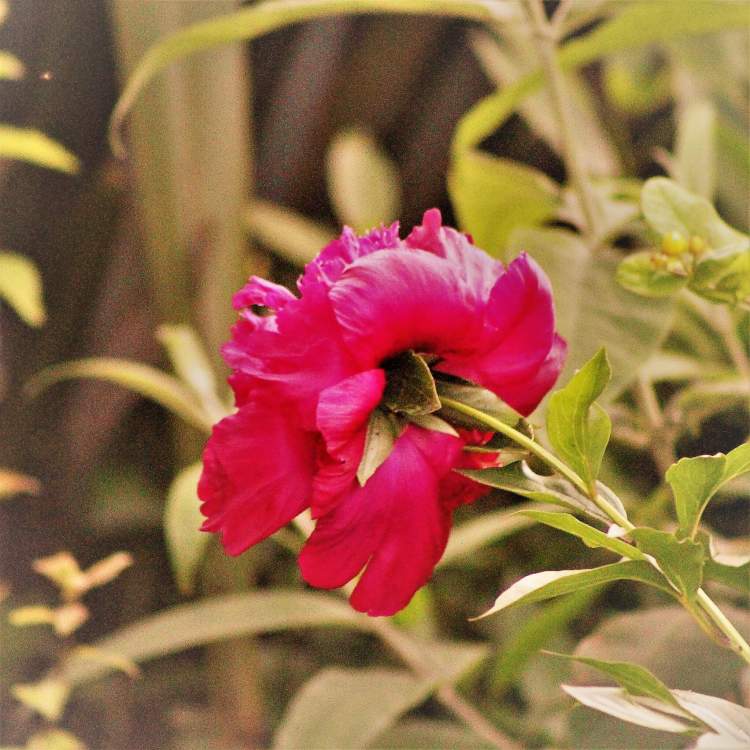
| About our writing & imagery Most articles reflect our real gardening experience and reflection. Some use AI in drafting or research, but never for voice or authority. Featured images may show our photos, original AI-generated visuals, or, where stated, credited images shared by others. All content is shaped and edited by Earthly Comforts, expressing our own views. |


I love peonies. They’re such a gorgeous and cheerful flower.
LikeLiked by 1 person
Hi Eugenia, yes peonies are truly gorgeous, sadly not as long lived in the garden as one might like, but still longer than some.
LikeLiked by 1 person
😊
LikeLiked by 1 person