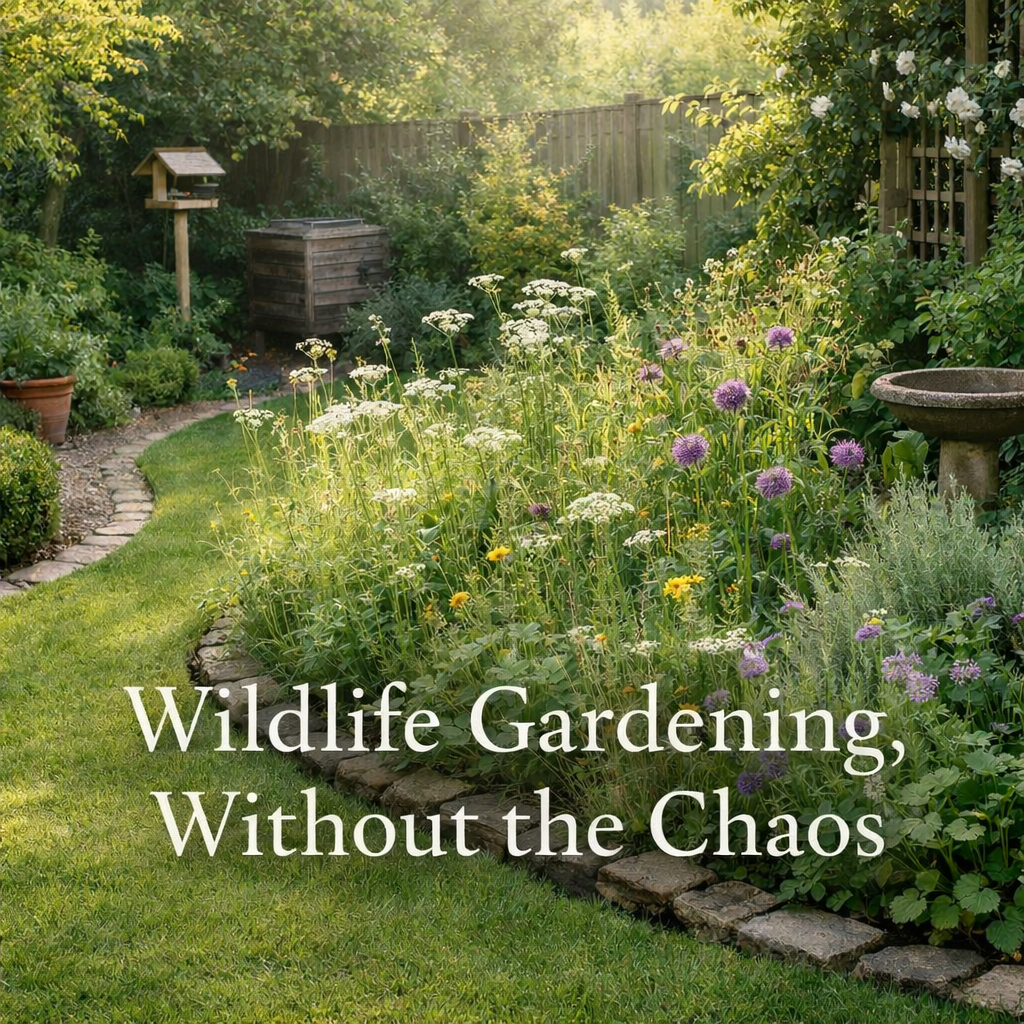
| There is a moment I recognise in almost every first conversation with a new client. It usually arrives halfway through a sentence, after they’ve said something like “We love wildlife, but…” or “I want it natural, just not scruffy.” There’s often a pause after that. A glance towards the garden. Sometimes, an apology, as if they’re confessing to something slightly embarrassing. They’re worried they’re about to be judged. Somewhere along the line, gardening for wildlife picked up a reputation for messiness. Not the gentle, lived-in sort of mess—more the impression of abandonment. Long grass leaning sideways. Nettles in the wrong places. Feeders that haven’t been cleaned since last winter. Compost heaps that have quietly become something else entirely. There is a persistent belief that a garden can’t be both orderly and alive. This series challenges that belief directly. The most effective wildlife gardens balance human order with natural life, thriving in real spaces where limits exist. You can support wildlife and keep a garden intentionally and generously without letting it go feral. In many cases, restraint is what makes it work. The problem with the extremes Gardening culture has a habit of swinging between poles. On one side, the clipped lawn, swept paths, and borders kept in a state of permanent rehearsal—nothing allowed to linger too long. On the other hand, a reactionary wildness that rejects anything resembling order, sometimes with a kind of moral intensity. Neither extreme reflects how gardens actually function. A garden is not a field, and it’s not a museum exhibit either. It’s a managed, human-scale environment, shaped by time, habit, and compromise. Most wildlife that successfully lives alongside us—hedgehogs, birds, insects, amphibians—doesn’t need theatrical wilderness. It needs continuity. Shelter. Predictable disturbance. A sense that the ground beneath it won’t radically change every fortnight. What unsettles wildlife most is not mowing or pruning in itself, but randomness. Sudden clear-outs. Over-enthusiastic seasonal resets. The belief that if something hasn’t been “done” recently, it must be wrong. Ironically, chaos often comes not from neglect, but from too much intervention, applied without thought. Order as an ecological signal One of the quiet truths I’ve learned is that order communicates care. Not just to neighbours or passers-by, but to the people who live with the garden every day. When edges are clean, paths clear, and boundaries defined, the wilder elements are given permission to exist. A long border looks intentional when its edge is sharp. Tall grass feels deliberate when it’s framed. Even decay—fallen leaves, seed heads, rough corners—reads differently when it’s contained. This matters because people need to feel comfortable with a garden before they will tolerate its wilder moments. A garden that looks neglected invites intervention. A garden that looks considered invites patience. Wildlife benefits from patience more than from novelty. Key takeaway: thoughtful, consistent care supports wildlife best. Weeds, plants, and the danger of labels One of the laziest habits we’ve inherited is the word weed. It’s a blunt instrument, used to end conversations rather than open them. In practice, the question is never whether a plant is a weed, but whether it is doing something useful, harmful, or simply taking up space another plant might use better. Some plants feed insects early in the year when little else is available. Others dominate, shade out diversity, and quietly exhaust the soil. Some appear for a season and vanish. Others return with intent. Keeping everything because it is “good for wildlife” is as unthinking as removing everything because it looks untidy. Both avoid the harder work of paying attention. In gardens that function well ecologically, someone is making decisions. Often gently. Often late rather than early. But decisions nonetheless. Feeding wildlife without creating dependence. There is kindness in feeding birds, and there is also risk. Over-feeding, poorly timed feeding, or feeding without maintenance can cause more problems than they solve. Disease spreads easily where hygiene is ignored. Dominant species can edge out quieter ones. Natural foraging patterns can be disrupted. What surprises people is how little intervention is often needed. A garden with seed heads left standing, berries allowed to ripen, and insects encouraged into the soil provides food long before a feeder is filled. Feeding can be supportive during lean times, best when it complements the garden’s natural offerings. Support, not substitution, is the principle that keeps returning. Key takeaway: enhance, don’t replace, natural processes. Compost, decay, and unease Compost makes people nervous. Rats, smells, the sense of something being allowed to run away from them. Yet compost is simply decay with boundaries. Problems arise when boundaries are absent. A well-managed compost system is not a free-for-all. It is layered, aerated, and fed with intent. It sits where it belongs. It is neither hidden nor allowed to sprawl. When that balance is struck, compost becomes one of the quiet engines of a living garden—feeding soil life, holding moisture, and closing a loop that otherwise leaks nutrients away. Fear usually enters when compost is treated as an afterthought. Wildlife responds better when it is treated as infrastructure. Takeaway: Well-managed compost is vital for healthy wildlife gardens. Rewilding, reconsidered The word rewilding has done useful work in larger landscapes. In gardens, it often causes confusion. A town garden cannot return to some imagined pre-human state. It exists in relationship to roads, drains, fences, and people. To pretend otherwise is to misunderstand both ecology and responsibility. What a garden can do is soften its edges. Reduce unnecessary disturbance. Allow cycles to complete. Provide continuity year to year. That is not rewilding in the grand sense, but it is ecological care. The most effective wildlife gardens I see are not the wildest-looking ones. They are the ones that are edited thoughtfully and left alone at the right moments. Working with limits, not against them Every garden has constraints: size, soil, light, neighbours, and time. Pretending these don’t exist leads to frustration. Working within them leads to stability. There is a quiet maturity in accepting that a garden can only do so much. That not every space needs to perform every function. That some compromises are not failures but adaptations. Wildlife responds well to stable systems. So do people. Remember: stability benefits both wildlife and humans in the garden. A different kind of success The success of a wildlife-friendly garden is rarely dramatic. It does not announce itself with spectacle. It reveals itself slowly: a regular visitor at dusk, fewer aphid outbreaks over time, soil that darkens and softens, birds that return to the same shrub year after year. It looks cared for. And it is. Care is not chaos—it is attention, restraint, and consistency. It’s knowing when to act and when to leave things alone. You do not have to choose between order and a living garden—true wildlife gardening is both. |
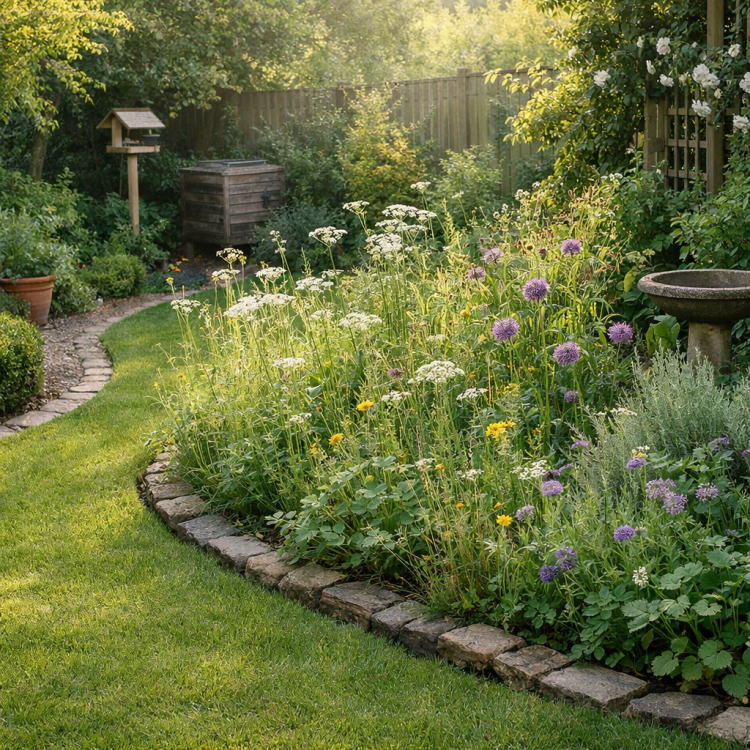
| About our writing & imagery Most articles reflect our real gardening experience and reflection. Some use AI in drafting or research, but never for voice or authority. Featured images may show our photos, original AI-generated visuals, or, where stated, credited images shared by others. All content is shaped and edited by Earthly Comforts, expressing our own views. |

