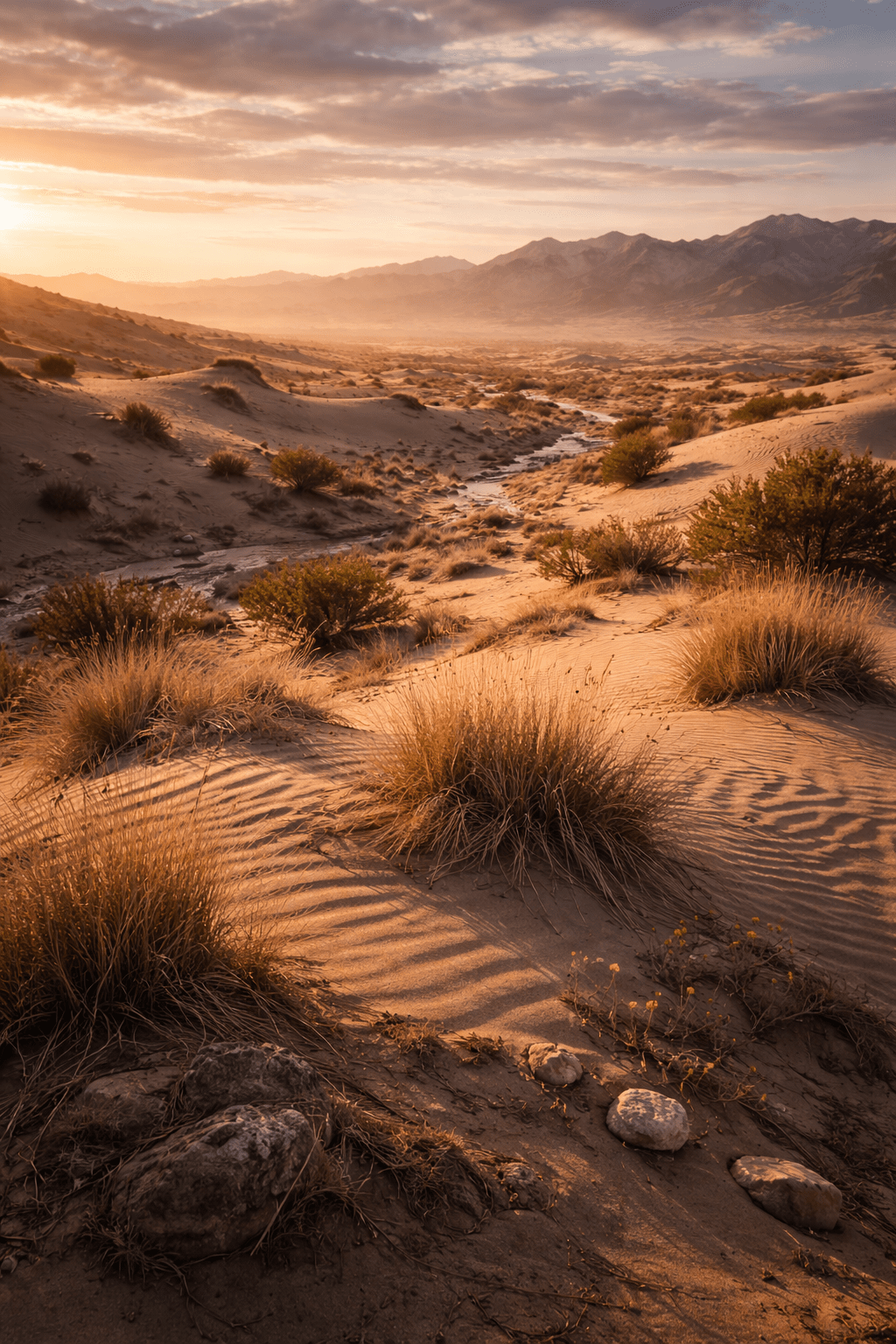
| Episode 5 Deserts: Limits, Refusal, and Survival Without Growth Deserts are routinely misunderstood because they refuse to perform. They do not reward effort with abundance, nor do they respond kindly to optimism. As a result, they are often framed as failures — landscapes that have gone wrong, places waiting to be corrected by water, technology, or persistence. This is a projection. Deserts are not broken systems. They are finished ones. What defines a desert is not emptiness, but constraint. Water arrives rarely and unpredictably. Heat is constant. Energy is expensive. In response, life does something that makes modern humans deeply uncomfortable: it stops trying to grow. Plants reduce their surface area. Animals shift activity into the night or burrow away from extremes. Growth happens briefly, decisively, and then stops again. Dormancy is not a pause between successes — it is the primary strategy. There is a common internet myth that deserts “bloom” when rain arrives, as if this is a glimpse of what they could be if only conditions improved. In reality, these bursts of life are not signs of potential abundance. They are precisely tuned responses to a rare opportunity. The desert does not aspire to become something else. It expresses itself fully in restraint. This is where many attempts at improvement fail. Irrigation creates the illusion of success — crops grow, settlements expand, productivity rises. But the underlying logic of the desert remains unchanged. Salts accumulate. Aquifers drain. Infrastructure ages faster than expected. Eventually, the system reasserts its limits, often abruptly. Gardening in dry soil teaches the same lesson, only in smaller, more immediate ways. You can water endlessly and still lose plants if the soil structure is wrong or the heat is relentless. You learn quickly that effort does not equal effectiveness. The skill lies in choosing what not to push. Deserts operate on refusal. They refuse continuous productivity. They refuse density. They refuse rescue narratives. This refusal is not hostile. It is informative. After control, deserts expand in some regions and stabilise in others. What matters is not whether they are green, but whether their boundaries are respected. Mismanagement makes deserts brittle — soil crusts break, erosion accelerates, and recovery stretches into decades. Respect allows them to endure, quietly functional, and biologically precise. There is a temptation to read deserts as warnings of collapse. They are better read as lessons in restraint. They show what happens when energy is scarce, and honesty becomes non-negotiable. No amount of intention overrides physics. In a world where human control weakens, deserts will not suddenly become kind. But they will remain legible. They tell you exactly what they can support, and nothing more. That clarity is rare. And it is valuable. |
| About our writing & imagery Many of our articles are written by us, drawing on real experience, reflection, and practical work in gardens and places we know. Some pieces are developed with the assistance of AI, used as a drafting and research tool rather than a voice or authority. Featured images may include our own photography, original AI-generated imagery, or—where noted—images kindly shared by other creators and credited accordingly (for example, via Pixabay). All content is shaped, edited, and published by Earthly Comforts, and the views expressed are our own. |

