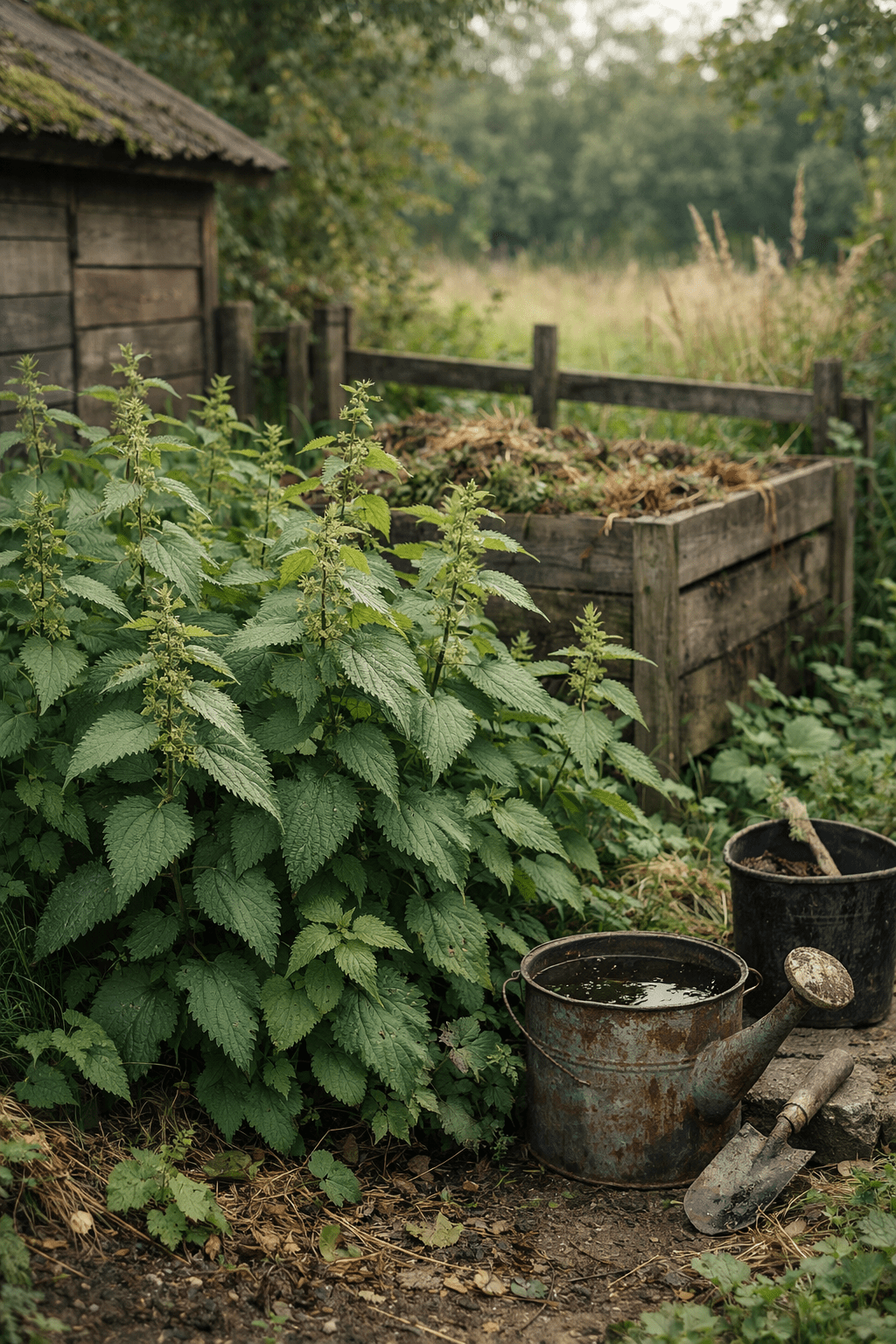
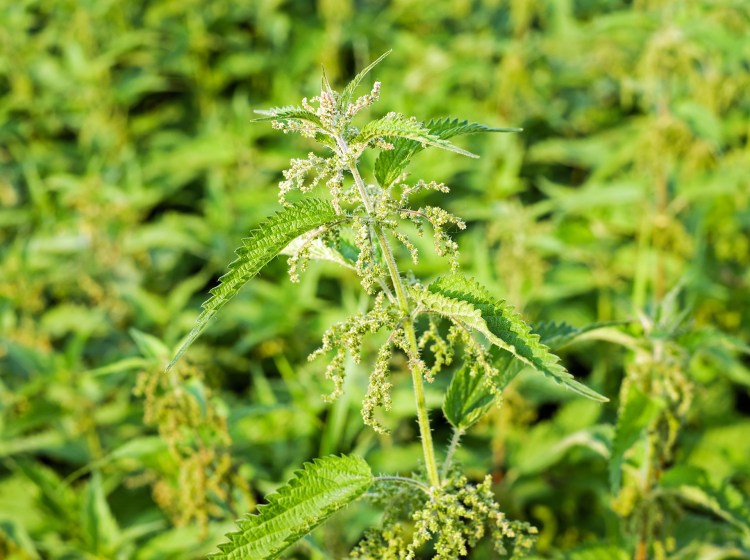
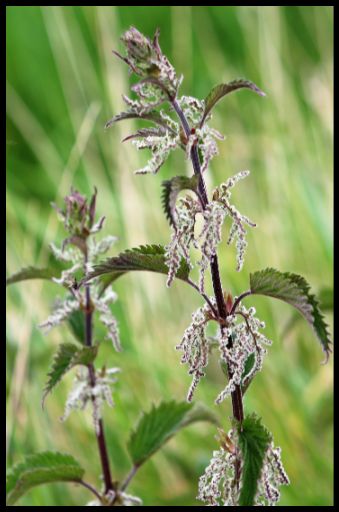
| The Plant That Refuses to Be Managed There are plants we actively choose and place, and others that arrive entirely on their own terms. Nettles belong firmly in the second category. No one ever plans a nettle bed or sketches it into a design. They appear uninvited, most often where effort has eased, or attention has drifted — behind sheds, along fence lines, beside compost heaps, or at the edges of allotments where something once happened and then quietly stopped. Their presence is often read as a rebuke, a sign that something has gone wrong or been left undone. Yet over time — and primarily when you work outdoors for a living — that interpretation begins to soften. Nettles start to look less like a gardening failure and more like a different phase of gardening. They are not ornamental plants. They do not soften space or reward the eye in conventional ways. They don’t politely bloom and fade, and they certainly don’t wait for permission. And yet, whether a gardener acknowledges it or not, nettles are among the most valuable plants many gardens will ever host. This piece is not about celebrating nettles in the way the internet tends to celebrate things, with exaggerated claims, miracle feeds, or quick fixes. It’s about understanding what nettles actually do, what they indicate about a place, and what they require in return. Nettles can be extraordinarily generous, but only once you stop trying to dominate them and start paying attention to how they operate. Where Nettles Appear (and Why That Matters) Nettles do not appear at random. They establish themselves where soil is already rich or actively becoming so — nitrogen-heavy, biologically alive, often compacted but fertile. Old manure piles, former livestock areas, accumulated garden waste, or ground that has been disturbed and then left alone all create ideal conditions. Nettles are not creating fertility here; they are responding to it. When I encounter nettles in a client’s garden, I rarely see neglect in the way it’s commonly assumed. More often, I see potential. Nettles don’t invent richness — they reveal it. They are opportunists, but intelligent ones, acting as a quiet soil report that tells you what has been happening beneath the surface. This is frequently misunderstood. Nettles are often associated with laziness or poor maintenance, but in reality, they often indicate the opposite: past effort, accumulated organic matter, and time. They thrive where material has been allowed to break down properly. You don’t find nettles in dead ground, and that alone should give pause before reaching for eradication. The Sting as a Boundary For most people, the sting is what defines nettles. It’s the part remembered most clearly and often taken most personally. But the sting is not malice; it is design. Nettles protect themselves efficiently and with minimal energy, using microscopic needles filled with irritants. Touch them without care, and you are reminded, immediately and unmistakably, that not everything in a garden exists for human convenience. What is often overlooked, though, is how easily that sting can be neutralised. Crush the leaves, wilt them, dry them, cook them, or ferment them, and the sting disappears entirely. The same plant that repels careless contact becomes edible, drinkable, and nourishing once handled with intention. Nettles are not hostile; they are conditional. That distinction feels useful, both horticulturally and otherwise. Nettles as a Human Plant (Without the Romance) There is a persistent tendency to romanticise nettles as a kind of wild superfood, often wrapped in detox and cleansing language. That framing does more harm than good. Nettles are not magic. They are food. Young nettle tops contain minerals in meaningful quantities — iron, calcium, magnesium, potassium, and silica among them. They emerge early in the year, when cultivated greens are scarce, and bodies are often depleted. Historically, that timing mattered, and it still does if you’re paying attention to seasonal rhythms rather than supermarket availability. Nettle tea, when properly made rather than briefly waved at with a teabag, is not a comfort drink. It is earthy, green, and faintly vegetal. It doesn’t stimulate or soothe dramatically. Instead, it steadies things over time. People who drink nettle tea regularly often struggle to articulate its effects precisely because they are subtle: fewer aches, better skin, less water retention, a general sense of things functioning as they should. In a culture that equates effectiveness with immediacy, that subtlety is often mistaken for uselessness. Nettles quietly disagrees. A Useful Distinction: Tea vs Infusion It’s worth slowing down here, because this is where confusion often creeps in. A casual cup of nettle tea — a short steep, gently brewed — functions as nourishment. A long-steeped infusion, left for hours, is something else entirely. It is closer to food extraction than to a drink taken for pleasure, and the difference matters. Strong infusions draw far more minerals into the water and are not something to gulp absent-mindedly. They are usually taken occasionally, diluted, or as part of a considered routine rather than a daily habit. This isn’t about unnecessary caution; it’s about respecting strength. Nettles have no interest in being fashionable. They work best when used with moderation and understanding. Nettles in the Kitchen: Practical, Not Precious Once cooked, nettles behave like a deeper, darker version of spinach. They don’t want to dominate a dish or be treated as something precious. They work best folded into soups, stews, pestos, or breads — places where substance matters more than show. Timing is critical. Only young tops are worth harvesting. Once nettles flower, their texture changes and they become tougher, less generous. Like many plants, they offer their best early, rewarding attentiveness while quietly punishing assumption. This pattern repeats itself across nearly every way nettles are used. Nettles as Fertiliser: What They Actually Do Nettle fertiliser is where myth takes hold most firmly. Fermented nettle feed is not a balanced fertiliser, nor is it a universal solution suitable for every plant at any time. Anyone claiming otherwise is selling certainty where none exists. What nettle fertiliser reliably provides is nitrogen, biological activity, and vigour. Used early in the season and properly diluted, it supports lawns, leafy crops, and plants emerging from dormancy. Used carelessly, late in the season, or on flowering plants, it can create precisely the problems it is later blamed for: soft growth, poor flowering, and imbalance. The smell — infamous and unavoidable — is not incidental. Fermentation is happening. Life is multiplying. That process is the point. One of the quieter benefits of making nettle feed is not what it feeds, but what it teaches the gardener. You can’t rush it, disguise it, or ignore its limits. You have to observe and respond. That alone makes it valuable. Nettles and the Myth of “Feeding Plants” There is a broader assumption worth challenging here: that fertilisers feed plants directly in a simple, linear way. In reality, particularly in soil-based systems, much of what we are feeding is microbial life. Nettle feed supports bacteria and fungi that, in turn, make nutrients available to plants. This process is slower, messier, and far more context-dependent than bottled feeds suggest. Nettles fit naturally into this model because they come from the same ecosystem to which they are returned. They are not imported or extracted elsewhere and shipped back. They close a loop, and that loop matters more than any individual nutrient value printed on a label. Nettles in Compost and Mulch Chopped nettles disappear quickly in compost heaps, breaking down fast and contributing nitrogen and trace minerals. They behave similarly to grass clippings but with greater depth. Used as a rough mulch — always wilted first — nettles can suppress other weeds while gradually returning nutrients to the soil surface. Again, timing is everything. Fresh, seeding nettles create problems. Managed nettles reduce them. This isn’t contradictory; it’s contextual. Wildlife and Nettles: An Unequal Exchange Nettles support far more life than their footprint suggests. Several butterfly species rely entirely on them. Remove nettles, and those species simply don’t appear. This is not abstract ecology. You see it clearly in gardens where nettles are allowed a corner compared to those where they are eradicated. One hums with activity; the other looks tidy and strangely quiet. The exchange is unequal in the best possible way. Nettles give far more than they take. The Problem with Eradication One of the most persistent myths in gardening is that control equals success. Nettles resist that logic. Dig them out incompletely, and they return stronger. Cut them repeatedly without intention, and they spread. Spraying them often damages the soil more than the plant. Nettles teach a different lesson: containment rather than conquest. A managed nettle patch, cut at the right time, kept where it belongs, and harvested deliberately, is far more helpful than any campaign to wipe them out. Nettles as a Mirror Something is revealing in the way people talk about nettles. They are often framed in terms of frustration, embarrassment, or even shame: I should deal with those. I’ve let it go. I know it looks bad. But nettles are not a moral failing. They are a sign that life has found a way to grow vigorously without instruction, in a culture obsessed with neatness and control, which can feel unsettling. Nettles don’t ask what we want from a space. They show us what is possible. Observations from Real Practice In practical terms, a few patterns repeat themselves. Gardens with nettles almost always have better soil beneath them than gardens without. When nettles are cleared thoughtfully, what remains is often remarkably productive ground. Clients who learn to tolerate a small nettle area tend to grow more confident as gardeners overall; allowing one thing to exist outside strict control changes how everything else is approached. And nettle fertiliser works best when the gardener understands why they are using it, not just that they are. Blind application leads to disappointment. Intentional use leads to consistency. None of this is complicated, but it does require patience. Letting Conclusions Emerge If there is a conclusion here, it is not that everyone should love nettles, eat them, or brew them endlessly in bins at the back of the garden. It is simply that nettles deserve to be understood before they are removed. They tell you about your soil. They support wildlife. They nourish people and plants alike. They insist on respect rather than affection. Nettles are not a miracle. They are in a relationship. And like most relationships worth having, they improve once you stop trying to control them and start paying attention. |
| About our writing & imagery Most articles reflect our real gardening experience and reflection. Some use AI in drafting or research, but never for voice or authority. Featured images may show our photos, original AI-generated visuals, or, where stated, credited images shared by others. All content is shaped and edited by Earthly Comforts, expressing our own views. |

