| Notes from the garden on food, resilience, and the years ahead |
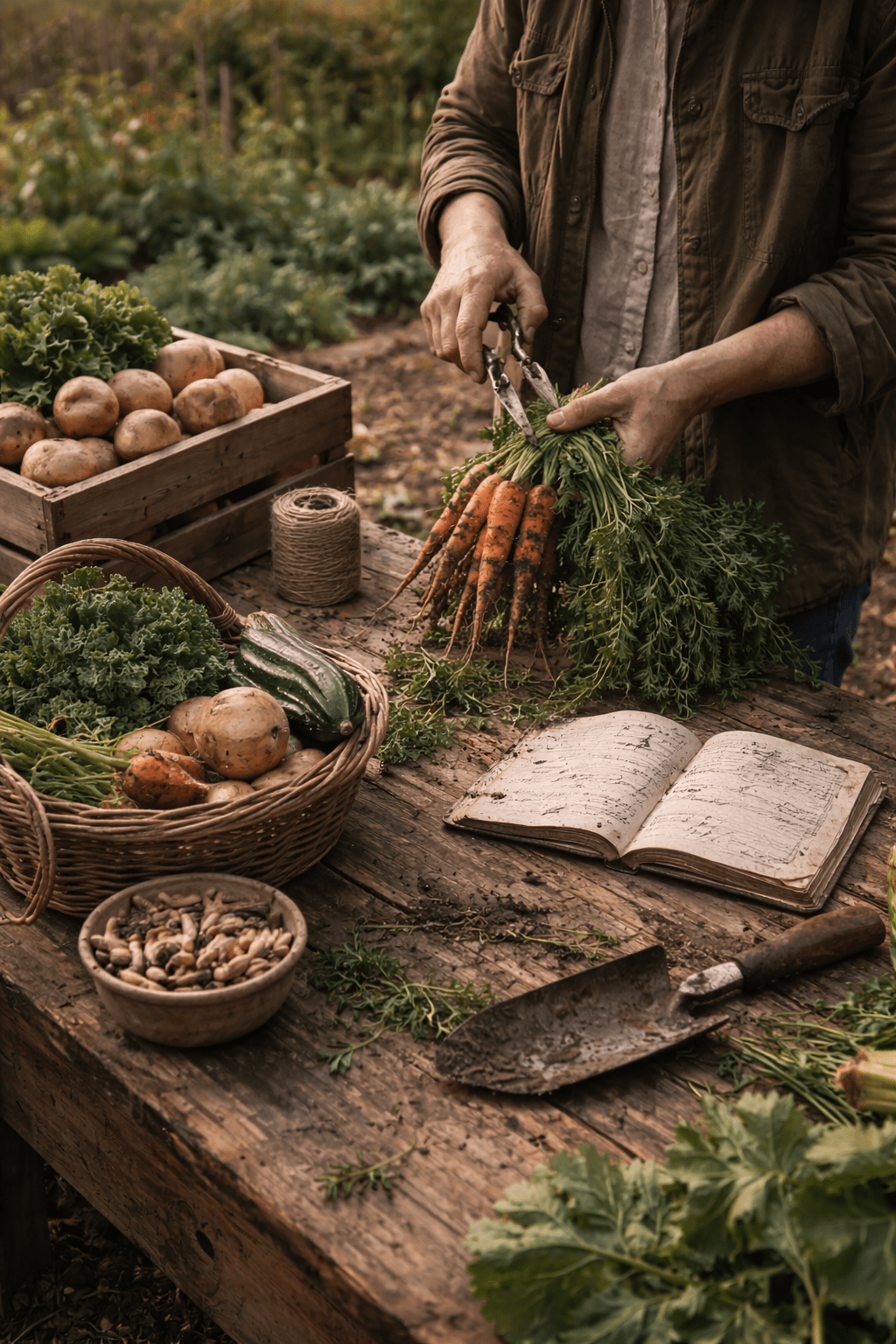
| The Quiet Return of Skill For a long time, skill went missing without anyone quite noticing. Not all skills, of course. But the everyday kind. The sort that lives in hands and habits rather than qualifications. Knowing how to make do. Knowing how to adjust. Knowing how to keep something going without replacing it. Abundance didn’t remove skill deliberately. It simply made it optional. And when something becomes optional for long enough, it fades. What’s happening now — slowly, unevenly — is its return. Skill was replaced by access. In an abundant system, access matters more than ability. You don’t need to know how to cook if food arrives prepared. You don’t need to know how to grow food if food arrives year-round. You don’t need to know how to repair if replacement is cheaper and faster. Skill still exists, but it’s no longer required to function. You can live well enough without it. Gardens sit slightly outside this logic. Even ornamental ones demand a baseline of competence. Timing matters. Observation matters. Neglect has consequences. You can outsource some of it, but not all of it. That’s why gardening quietly preserves skills that disappear elsewhere. Not out of nostalgia, but necessity. The return is quiet because it isn’t ideological. There’s a tendency to frame the return of skill as a movement. Back-to-basics. Slow living. Self-reliance. A corrective to modern life. In reality, what’s happening is far less dramatic. People are relearning skills not because they want to reject abundance, but because abundance no longer covers every gap. Things don’t arrive as expected. Ingredients change. Costs fluctuate. Systems hesitate. Skill fills the pauses. It’s not about identity. It’s about continuity. Gardens demonstrate this beautifully. No one grows food to make a statement. They do it because it works — imperfectly, partially, but reliably enough to matter. Skill thrives under constraint, not comfort. One myth worth setting aside is that skill flourishes best when people have time and resources. Often, it’s the opposite. Constraint sharpens attention. It forces prioritisation. It reveals what actually matters. Skills develop not because someone wants to be proficient, but because they need to be functional. Gardens apply constraint naturally. Space is limited. The weather is uncontrollable. Time is seasonal. You learn quickly which efforts are worth repeating and which are indulgent. That learning doesn’t feel like mastery. It feels like an adjustment. And adjustment is the most transferable skill of all. What skills are returning The skills coming back aren’t heroic. They’re small, practical, and cumulative. Knowing how to cook without a plan. Knowing how to substitute without resentment. Knowing how to grow a few reliable things well rather than many things badly. Knowing how to notice problems early rather than fix them late. These skills don’t announce themselves. They show up as reduced panic, fewer dead ends, and smoother days. In gardens, you see it when someone stops fighting conditions and starts working with them. When they stop asking how to make a plant behave and start asking where it belongs. The same shift is happening quietly in kitchens, households, and communities. Skill is slower than solutions — and more durable. Modern systems favour solutions. Products, services, fixes. Skills take longer. They don’t scale neatly. They can’t be downloaded or delivered overnight. That makes them unfashionable. But skills endure in ways solutions don’t. They travel across contexts. They adapt to circumstances. They remain useful when systems stall or misfire. Gardens reward skill precisely because they don’t offer solutions on demand. There is no button to press when the weather turns. No refund for poor timing. Only learning. That learning accumulates quietly, season by season. The dignity of competence There’s an understated dignity in knowing how to do things. Not expertise, necessarily. Just competence. The confidence that you can respond to what’s in front of you without outsourcing every decision. Gardening restores this dignity because it offers immediate feedback. Things either grow or they don’t. You adjust. You improve. You learn to trust your judgement. As food systems become less predictable, that trust becomes valuable. Not because it guarantees success, but because it reduces dependence on guarantees. People with skills don’t need certainty. They need conditions. Skill reconnects people to systems. One of the less obvious effects of skill returning is that it reconnects people to the systems they live within. When you know how something works — even partially — you stop treating it as abstract. Food becomes seasonal again. Materials become finite. Labour becomes visible. Gardens teach this relentlessly. You see how much effort goes into small yields. You feel the impact of the weather. You notice how long things actually take. That awareness doesn’t make people puritanical. It makes them proportionate. Not going backwards — going deeper. It’s important to be clear about this. The return of skill is not a rejection of modernity. It’s a deepening of it. We are not undoing progress. We are rediscovering capacities that were temporarily obscured by abundance. Skill doesn’t replace systems. It supports them. It provides flexibility when systems falter. It smooths transitions. It absorbs shocks. Gardens have always functioned this way — not as total solutions, but as buffers. Places where knowledge is stored in practice rather than policy. Ending where we began This series began with a missing fish. Not a crisis. Not a catastrophe. Just a small interruption that prompted attention. What followed wasn’t a story about loss, but about adjustment. About noticing how systems behave under strain. About recognising that uncertainty does not automatically lead to hardship, but it does reward preparedness of a particular kind. The kind that lives in skill. Gardens don’t promise abundance. They promise participation. And participation, it turns out, is enough. |
| About our writing & imagery Many of our articles are written by us, drawing on real experience, reflection, and practical work in gardens and places we know. Some pieces are developed with the assistance of AI as a drafting and research tool. Featured images may include our own photography, original AI-generated imagery, or—where noted—images kindly shared by other creators and credited accordingly (for example, via Pixabay). All content is shaped, edited, and published by Earthly Comforts, and the views expressed are our own. |

