| … as a Progressive Move Forward |
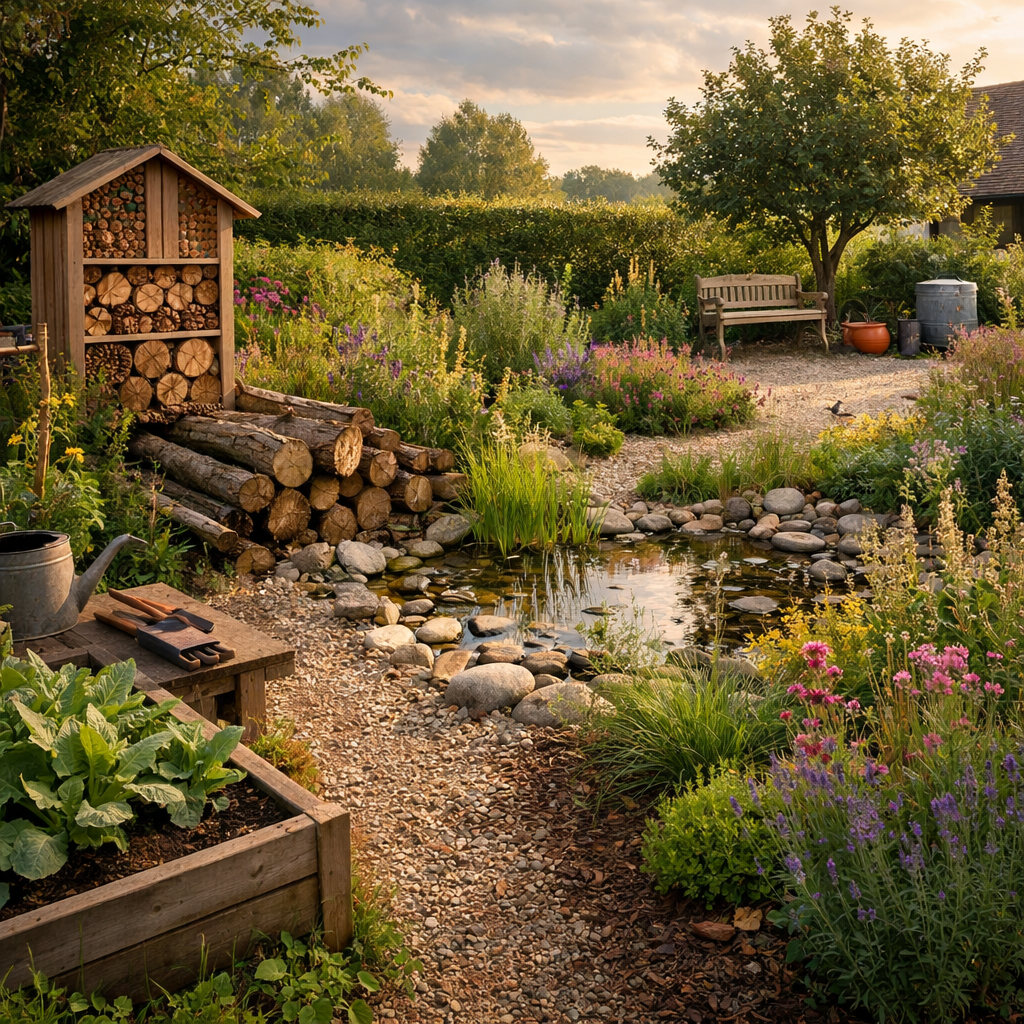
| There is a quiet shift happening in professional gardening. It isn’t loud enough to make headlines, and it certainly doesn’t announce itself as a revolution. It looks, at first glance, like small decisions made on damp mornings. A change of plant choice here. A slightly altered mowing regime there. A conversation with a client about shade that wasn’t there five years ago. A border redesigned not for fashion, but for endurance. If I were to give that shift a name, I would call it adaptive gardening. Not adaptive in the sense of gadgets or gimmicks. Not adaptive, as in reactive panic. But adaptive as a posture — a willingness to adjust practice in response to climate, client, soil, labour, ecology and time. It is not an aesthetic. It is a method of thinking. For professional gardening services, this way of thinking is not merely interesting; it is essential. It is progressive. It is essential. The garden no longer behaves as it did Anyone who has worked outdoors consistently over the last decade will recognise that seasons are no longer as reliable as we once assumed. Spring may stall. Summer may scorch. Autumn may linger strangely warm. Rain arrives not as gentle persistence but as violent punctuation. Professional gardening services built on predictable cycles struggle under that irregularity. Traditional schedules — prune here, feed there, mow weekly without fail — can feel slightly out of joint with what the garden is actually doing. Adaptive gardening begins with observation rather than adherence. It asks: what is happening now, in this soil, on this street, under this particular sky? It resists the temptation to follow inherited routines when evidence suggests alteration. A lawn may not need weekly cutting in drought, no matter what a calendar suggests. A border might benefit more from mulch than from feeding. A hedge might be left fractionally later to protect nesting activity, even if that complicates the diary. This does not make the gardener indecisive. It makes them responsive. And responsiveness, in a changing climate, is not a weakness. It is competence. Professional services must adapt, not just gardens. There is a subtle distinction worth drawing. Adaptive gardening is not simply about designing resilient gardens. It is about designing resilient gardening services. Many professional operations still depend heavily on a narrow band of work: mowing during growth months, hedge cutting at prescribed intervals, and large autumn clearances. When growth slows, revenue slows; when the weather interrupts, schedules collapse. An adaptive service model recognises that reliance on a single seasonal pattern is fragile. That might mean diversifying into soil conditioning, structural pruning, winter planting, orchard care, rainwater management or greenhouse maintenance. It might mean offering shorter, more focused visits for small urban gardens rather than committing to only large contracts. It might involve working with clients on phased redesigns that reduce long-term maintenance demands. The point is not expansion for its own sake. It is balance. A business that understands dormancy will not panic in winter. A service built around resilience rather than speed will not exhaust itself in summer. In this sense, adaptive gardening is both ecological and economic. Soil as the quiet centre For all the talk of plants, colour and form, most adaptation begins below ground. Healthy soil buffers extremes. It retains moisture in drought and drains effectively in heavy rain. It supports root systems that can withstand temperature swings. It moderates the need for artificial inputs. Yet soil remains oddly neglected in many professional contracts. It is not glamorous. It does not photograph well. Clients do not always see it. Adaptive gardening re-centres soil as infrastructure. This might involve incorporating regular mulching rather than endless feeding. It may mean reducing compaction by reconsidering access routes. It can involve leaving certain organic residues to decompose naturally rather than over-clearing for tidiness. There is sometimes an assumption that a professional service must remove everything — every fallen leaf, every twig — to demonstrate value. In reality, strategic retention often serves the garden better. An adaptive gardener learns to explain that distinction gently. Tidiness is not always synonymous with health. Challenging the myth of perfection Professional gardening has, at times, been shaped by a slightly anxious pursuit of perfection. Crisp edges. Uniform lawns. Borders without blemish. The aesthetic is understandable. Many clients associate neatness with care. But there is a myth woven into that pursuit: that control equals quality. Adaptive gardening questions this. It does not abandon standards. It does not permit neglect. But it recognises that a slight irregularity is not failure. Clover in a lawn during drought may offer resilience. Self-seeded plants appearing in useful gaps may save both cost and resources. A less frequently cut area may support pollinators without compromising overall form. Professional services can lead this cultural shift rather than merely responding to it. When a gardener models calm acceptance of seasonal variation, clients often follow. The anxiety reduces. The garden breathes. In my experience, most people are not wedded to perfection. They are wedded to reassurance. Once they understand that adaptation is intentional rather than careless, trust grows. Introducing adaptive gardening to clients Introducing this philosophy requires conversation rather than proclamation. One does not arrive and declare that the garden must change because the climate has shifted. Instead, one notices aloud. “The soil dried earlier this year.” “The roses struggled in that exposed corner.” “The lawn held on better where we mulched.” Small observations accumulate. Over time, a client begins to see patterns rather than isolated incidents. From there, adaptation becomes collaborative. The lawn may be reduced slightly and replaced with deeper planting. A thirsty border may be reworked gradually with more resilient species. Irrigation may be reconsidered, not as a default solution but as a measured response. The professional’s role is not to dictate. It is to interpret. Adaptation introduced slowly often proves more durable than radical redesign. Gardens, like people, adjust better to steady shifts than to sudden upheaval. Labour, energy and human adaptation Adaptive gardening also concerns the human body. Professional gardening is physical work. It demands strength, stamina and repetition. An adaptive service considers the longevity of its team. It recognises that constant heavy clearance work, week after week, is not sustainable. Diversifying tasks across seasons balances strain. Integrating lighter, precision-based work alongside heavier tasks extends working life. Investing in appropriate tools — not flashy machinery, but thoughtful equipment — reduces injury. There is an unspoken myth that professionalism requires a relentless pace. In truth, professionalism requires durability. A gardener who intends to work decades rather than seasons must adapt not only the gardens they tend, but the way they tend them. Technology without dependence It would be disingenuous to ignore technology altogether. Battery-powered equipment, moisture sensors, improved weather forecasting — these tools can assist adaptation. But adaptive gardening is not defined by technological sophistication. It is defined by judgment. A moisture meter can confirm dryness; it cannot replace observation. Forecast data can predict rain; it cannot interpret the microclimate beneath a particular hedge. Technology, used sparingly, supports adaptation. It does not replace it. Professional services should remain cautious of over-investment in tools that promise efficiency but undermine attentiveness. Speed is not always the same as effectiveness. Ecological integration as long-term thinking Adaptive gardening acknowledges that gardens do not exist in isolation. Urban plots, rural edges, and small courtyards — all participate in broader ecological systems. Professional services that reduce chemical reliance, extend flowering periods, preserve habitat pockets and manage water responsibly are not engaging in trend-driven behaviour. They are investing in long-term stability. This does not require radical rewilding. It requires subtle integration. A log pile positioned discreetly behind shrubs. A mixed hedge replacing a single-species screen. A mowing regime adjusted to allow brief flowering in low-traffic areas. Such measures may appear minor. Over time, they accumulate. And importantly, they often reduce maintenance pressure rather than increase it. Healthier ecological systems demand fewer emergency interventions. The economic case for adaptation Some may wonder whether adaptive gardening is financially viable. It is more viable than rigid traditional models. Clients increasingly understand environmental uncertainty. They see water restrictions, extreme weather, and rising costs. A professional who demonstrates foresight and resilience becomes valuable. Adaptation also reduces reactive work. Fewer plant failures mean fewer replacements. Improved soil health reduces the need for constant input. Balanced maintenance spreads workload more evenly across the year. There are limits, of course. Not every client will wish to alter established aesthetics. Not every site can be redesigned extensively. Some properties demand formal precision. Adaptation must respect context. But even within formal frameworks, small adjustments can strengthen durability without compromising character. Gradual transformation rather than sudden reinvention For professional services considering this shift, the introduction need not be dramatic. It might begin with reviewing planting schemes for resilience. It may involve incorporating seasonal soil improvement into existing contracts. It could mean discussing water management during routine visits. Adaptive gardening is progressive not because it rejects the past, but because it refines it. Traditional horticultural knowledge remains invaluable. What changes is the rigidity with which it is applied. An adaptive professional service keeps learning. It observes outcomes. It adjusts course. That posture of humility — the willingness to say “this no longer serves as well as it once did” — marks genuine progression. A quieter future for professional gardening If I imagine the professional gardening sector ten years from now, I suspect the most successful services will not be those chasing spectacle. They will be those offering steadiness. Gardens that survive heatwaves without crisis. Borders that require less intervention. Clients who understand the rhythms of their own soil. Teams that work sustainably rather than heroically. Adaptive gardening does not seek applause. It seeks continuity. It is, in many ways, a return to attentiveness — to watching the sky, feeling the soil, listening to what is happening rather than imposing what once worked. For professional services, that attentiveness is both a moral and practical evolution. It respects the garden as a living system. It respects the client as a collaborator. It respects the gardener as long-term steward rather than short-term fixer. Progress is often misunderstood as novelty. In truth, progress in gardening may be deeper listening. Adaptive gardening is not a style to be marketed aggressively. It is a habit to be cultivated patiently. And perhaps that is its quiet strength. |
| Most articles reflect our real gardening experience and reflection. Some use AI in drafting or research, but never for voice or authority. Featured images may show our photos, original AI-generated visuals, or, where stated, credited images shared by others. All content is shaped and edited by Earthly Comforts, expressing our own views. |

