| A 5-Part Series |
| A curated exploration of Malaysia’s most iconic, curious, and ecologically important insects |
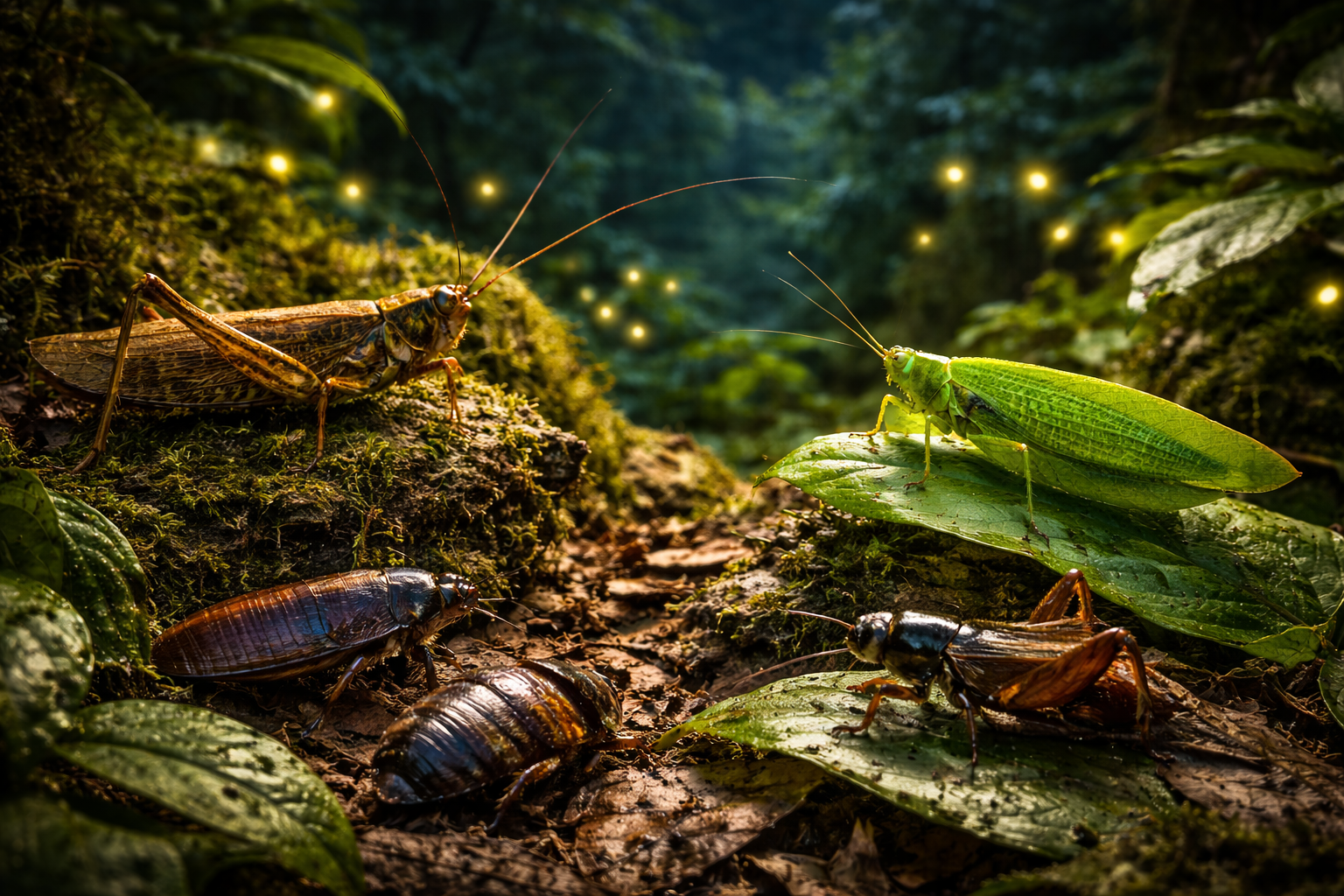
| Part 4 Grasshoppers, Crickets & Roaches: Sound and Survival Sound is one of the most defining features of Malaysian nights. As daylight fades, forests, villages, and field edges fill with layered calls that rise, overlap, and fade in response to humidity, rainfall, and vegetation density. In dense environments where visibility is limited and movement is often concealed, sound becomes the primary means by which insects navigate space, defend territory, and locate one another. Grasshoppers, crickets, and their relatives form the backbone of this nocturnal soundscape. Their calls are not random noise but structured signals that shift with environmental conditions. After rain, when vegetation surges and moisture levels rise, sound intensity increases noticeably. On drier nights, calls thin out and become more localised. The soundscape itself acts as a live indicator of ecological conditions. Katydids are among the most effective users of sound. Their leaf-like bodies allow them to remain visually hidden even at close range. Instead of defending physical territory, they establish acoustic boundaries through sustained calling. Competing males adjust timing, pitch, and rhythm to avoid overlap, creating an ordered sound pattern that spreads across the canopy and understory. Often, a katydid is heard long before it is ever seen. Grasshoppers dominate more open spaces. They respond quickly to rainfall, with populations rising rapidly when grasses and low vegetation flourish. Their calls reflect abundance. As numbers increase, predators follow, and the system stabilises. The sound of grasshoppers is therefore temporary but predictable, closely tied to plant growth cycles rather than fixed seasons. Field crickets live close to human habitation. Their calls spill into villages, gardens, and roadside edges, becoming part of everyday nightlife. For many rural communities, cricket song marks time more reliably than clocks, changing subtly as night deepens or weather shifts. Their presence reflects tolerance of human disturbance rather than avoidance. Bush cockroaches occupy a different role entirely. Living outdoors rather than indoors, they feed on leaf litter, fallen plant matter, and decaying organic material. Unlike domestic pest species, they contribute directly to decomposition. Their activity supports soil health and nutrient cycling, particularly in areas with constant leaf fall. Giant cockroaches move slowly and deliberately. Largely nocturnal, they remain hidden during the day and emerge to recycle organic waste under the cover of darkness. Their role is ecological rather than invasive, processing material that would otherwise accumulate. Together, this group reminds us that sound is not background. It is information. In Malaysian forests and settlements alike, hearing often precedes seeing, and listening reveals patterns that the eye alone cannot detect. |
| About our writing & imagery Many of our articles are written by us, drawing on real experience, reflection, and practical work in gardens and places we know. Some pieces are developed with the assistance of AI as a drafting and research tool. Featured images may include our own photography, original AI-generated imagery, or—where noted—images kindly shared by other creators and credited accordingly (for example, via Pixabay). All content is shaped, edited, and published by Earthly Comforts, and the views expressed are our own. |

