| The Hunt |
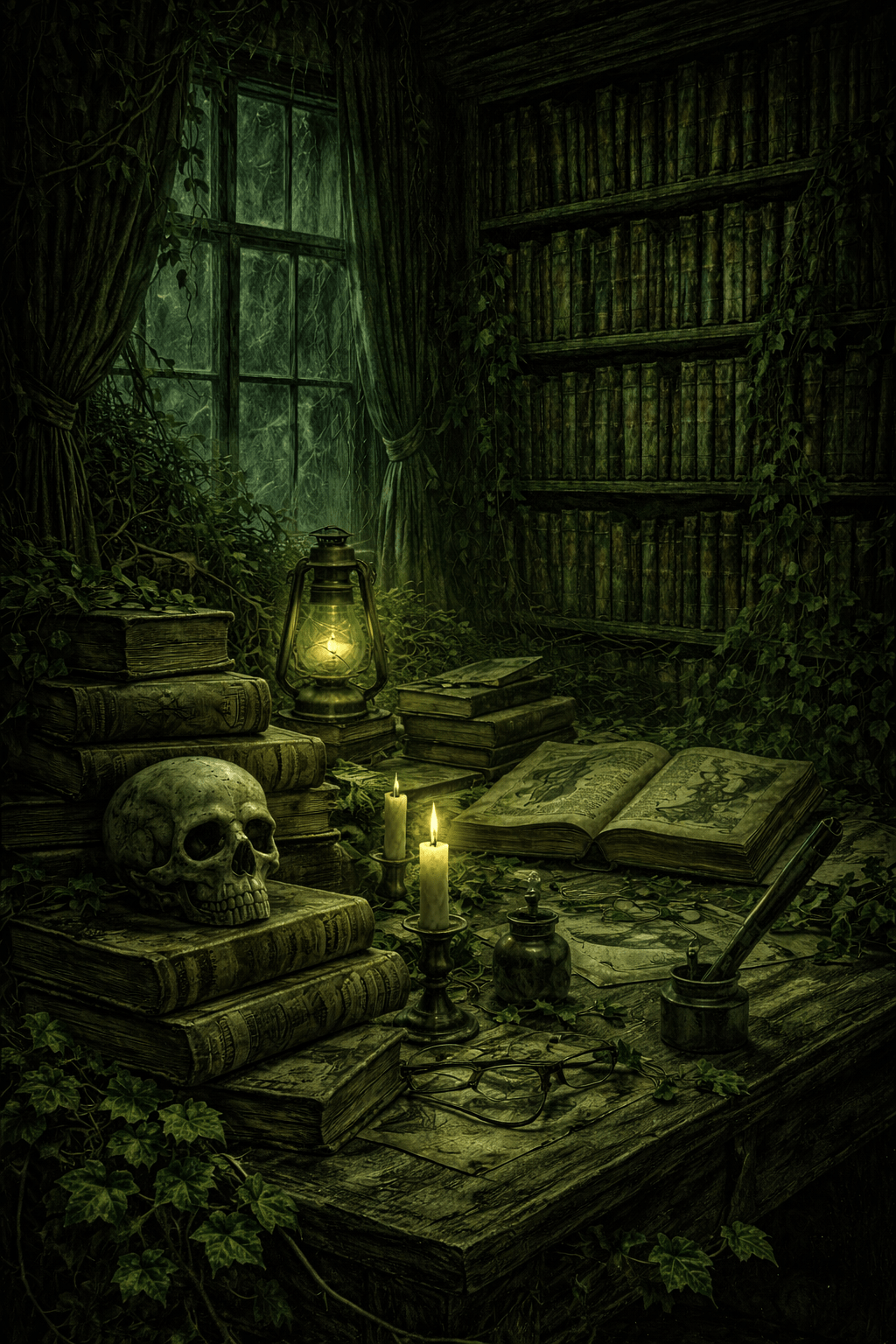
| At some point, reading stopped being passive. I didn’t notice the shift immediately. There was no decision, no declaration that something had changed. It simply became clear that reading one book was no longer enough. A single volume felt incomplete, as though it were only a fragment of something larger I couldn’t yet see — part of a structure that extended beyond the edges of the shelf. This is often where people use the word “obsession” retrospectively, usually with a half-smile. I’ve never found that especially accurate. Obsession implies frenzy, loss of proportion, a kind of heat. What developed instead was cooler than that. Slower. More deliberate. It had more in common with tracking than collecting, with returning to the same ground repeatedly and noticing what had shifted. I began to recognise series. Not just titles or authors, but structures: numbered spines, recurring editors, familiar layouts, patterns of typography and cover design that signalled membership of a particular lineage. Once you notice these things, you can’t unsee them. A single book would appear and immediately announce what was missing around it. Presence made absence visible. That awareness changed everything. Second-hand bookshops became places of attention rather than places to browse. You learned to scan shelves not for names, but for sequences. A Fontana volume is misplaced. A Pan number you already owned, but in a different edition. A New English Library paperback with the right thickness and the wrong number. The shelves were no longer static displays. They were shifting arrangements, always in partial flux. Market stalls were different again. Less predictable. More exposed to chance. Cardboard boxes under trestle tables, books stacked horizontally, spines hidden, covers scuffed and curled. You learned to flip quickly, efficiently, without ceremony. Rain could ruin a find. So could hesitation. Someone else might already be halfway through the same box. Conditions mattered. There was another place, quieter than all the rest, where the hunt took on a different character entirely—church halls. Jumble sales lacked any outward signs of promise. Folding tables. Fluorescent lighting. The smell of tea, dust, and old coats. Books appeared in uneven piles, mixed with instruction manuals, atlases from defunct countries, and children’s annuals missing their dust jackets. Nothing announced itself as worth attention. That was precisely why it worked. You learned not to rush. To pick up each book without expectation. To feel the paper, glance at the spine, and register a number almost subconsciously. Most of the time, there was nothing. Then, suddenly, there was something — a volume that did not belong in that room at all. Something out of its usual habitat. Finding a horror paperback in a church hall jumble sale carried a particular thrill. It felt illicit, though nothing about it actually was. The contrast did the work. A book that had once unsettled or disturbed someone now sat quietly beside donated hymn books and outdated cookery guides. Context altered perception. These finds were never pristine. They were softened by use, often marked, occasionally smelling faintly of someone else’s house. You were aware, as you held them, that this book had already lived a life before reaching you. It had been read, then set aside, then surrendered — not because it was valuable, but because it no longer fit where it had been. That history mattered. Things move when their conditions change. There was something uniquely satisfying about rescuing a missing volume from a place like that. No competition. No performance. Just recognition. There was a quiet sense that this was precisely where you were meant to be looking at that moment. Attention aligning with opportunity. The price hardly mattered. Coins passed across a table without comment. The book went into a carrier bag heavier than its plastic suggested it would. These discoveries stayed with me longer than most, perhaps because they were unexpected. Perhaps because they felt earned in a different way — not through persistence alone, but through patience. Through being willing to look carefully in places where nothing much was meant to be found. In those moments, the hunt felt less like tracking and more like listening as though the books surfaced when the conditions were right, indifferent to the systems we built around them. WH Smith sat at the other end of the spectrum. Clean. Organised. Predictable. It wasn’t where you searched for the past, but where you kept pace with the present. New volumes arrived on schedule. You learned the timing. You learned which rack to visit first. It was less about discovery and more about maintenance — about tending to continuity. Between these environments, a rhythm developed. You didn’t always find what you were looking for. Most of the time, you didn’t. That was part of the discipline. The hunt trained patience in a way nothing else quite did. You carried lists in your head. Numbers. Missing links. You remembered which volume you’d last seen three towns ago, and whether it was worth returning for if nothing better emerged. There was satisfaction in restraint. Completing a series was never about display. It was about resolution. Sliding the final book into place brought a quiet sense of order, not triumph. The shelf settled. Something incomplete found its shape again. The physicality of this mattered more than I realised at the time. Books have weight. They occupy space. They alter the room they inhabit. Carrying them home and temporarily stacking them on the floor until the shelves could bear the strain reinforced the sense that this was not abstract. You were building something that required accommodation. Growth demanded structure. It’s easy now to forget how much of this depended on memory. There were no databases to consult on the fly. No quick searches to confirm whether a volume existed or whether you had imagined it. You learned by repetition. By comparison. By absence. Sometimes you weren’t even sure whether what you were hunting for was real until you found it. That uncertainty sharpened the experience. It made discovery feel earned rather than delivered. When a missing volume finally appeared — battered, mispriced, unassuming — it didn’t feel like luck. It felt like recognition. The cover art played its part here, though not in the way people often assume. It wasn’t about spectacle or shock. The covers that held my attention longest were restrained. Suggestive. Often slightly wrong in a way that was difficult to articulate. Dark pulp imagery still works on me for precisely this reason. The shadows do most of the work. The sense that the image knows something it isn’t going to explain. These illustrations imply rather than instruct. They withhold. They trust the viewer to notice what isn’t immediately visible. Back then, these covers weren’t design objects. They were signals. You learned to read them instinctively. A particular colour palette. A specific quality of line. The difference between menace and melodrama is visible before you open the book. Visual cues became environmental cues. This visual literacy developed alongside the textual one. You began to anticipate tone before the first page. That didn’t spoil the experience. It prepared you for it. One common myth about collecting is that it’s about accumulation for its own sake. In reality, accumulation was a by-product. The real activity was attention. Memory. Return. You didn’t just visit a shop once. You returned. You noted changes. You learned which stock moved quickly and which lingered. You built an internal map of likely finds. This kind of knowledge doesn’t come from enthusiasm alone. It comes from repetition. From inhabiting a place long enough to understand its patterns. It also comes with limits. Space was finite. Money was finite. Choices had to be made. Not every book could come home. Some had to be left behind — either because you already owned that number or because it didn’t belong to the system you were quietly building. That restraint mattered. It prevented the collection from becoming indiscriminate. It kept the structure coherent. Over time, the hunt began to shape how I thought about stories themselves. The series revealed development. You could see how editors’ tastes shifted. How themes emerged and faded. How social anxieties filtered into horror in different decades — sometimes bluntly, sometimes obliquely. You began to recognise cycles. Reading out of sequence became its own education. A story from the sixties next to one from the late seventies made differences visible without commentary. You felt the temperature change. In tone. In confidence. In what was permitted. This wasn’t an academic comparison. It was lived. Another assumption often made about collecting is that it’s solitary. In practice, it wasn’t entirely. You learned to read people as well as shelves. A stallholder who nodded when you asked about horror. A bookseller who quietly set something aside because they knew you would be interested: small exchanges, brief acknowledgements. These interactions reinforced the sense that this was an ecosystem of sorts — loosely connected, sustained by recognition rather than performance. No one was curating identity. You were trying to complete something that mattered privately. Looking back, I can see that the hunt taught me practical things, though I wouldn’t have named them at the time. It taught me patience. Discernment. How to live with absence without immediately replacing it. How to wait. It also taught me that value isn’t always apparent at the point of encounter. Some of the books that mattered most were the least impressive on the outside. Cheap paper. Unremarkable covers. No sense of prestige. Their importance only revealed itself later, through rereading or through how they connected to other texts on the shelf. The hunt rewarded attention rather than urgency. It’s worth saying, too, that not everything was found. Some series resisted completion. Some volumes remained elusive. At the time, this felt like a failure of effort. With distance, it feels more like part of the experience’s integrity. Not everything yields. Incompleteness prevented the collection from becoming static. There was always something unresolved. Something is still out there. The hunt never truly ended; it paused and resumed in cycles. Eventually, of course, the scale changed. Shelves filled. Floors disappeared beneath temporary stacks. The physical presence of the books became unavoidable. What had begun as a pursuit was now territory. That shift belongs to the next part of the story. But it’s worth noting here that the hunt was never about ownership alone. It was about learning how to look. How to return. How to recognise subtle shifts in familiar ground. How to understand that patterns reveal themselves only over time. Those habits did not vanish when the books stopped arriving. They stayed. |
| About our writing & imagery Most articles reflect our real gardening experience and reflection. Some use AI in drafting or research, but never for voice or authority. Featured images may show our photos, original AI-generated visuals, or, where stated, credited images shared by others. All content is shaped and edited by Earthly Comforts, expressing our own views. |

