| — and the Quiet Complexity Behind Them |
| Tomatoes carry a kind of mythology in British gardens. They are both ordinary and aspirational. Almost everyone has grown them at some point — in a greenhouse, on a patio, in a grow bag wedged against a warm wall. Yet few crops generate quite so much discussion about feeding, pruning, pinching, watering, blight, flavour, and variety choice. Tomatoes appear simple until they are not. The truth is that tomatoes are generous plants, but they are also expressive. They respond quickly to care and just as quickly to neglect. They reward attention to detail without demanding perfection. And perhaps most importantly, the world of tomatoes is far broader than the standard supermarket red would suggest. Growing tomatoes well is less about rigid technique and more about understanding their temperament. |
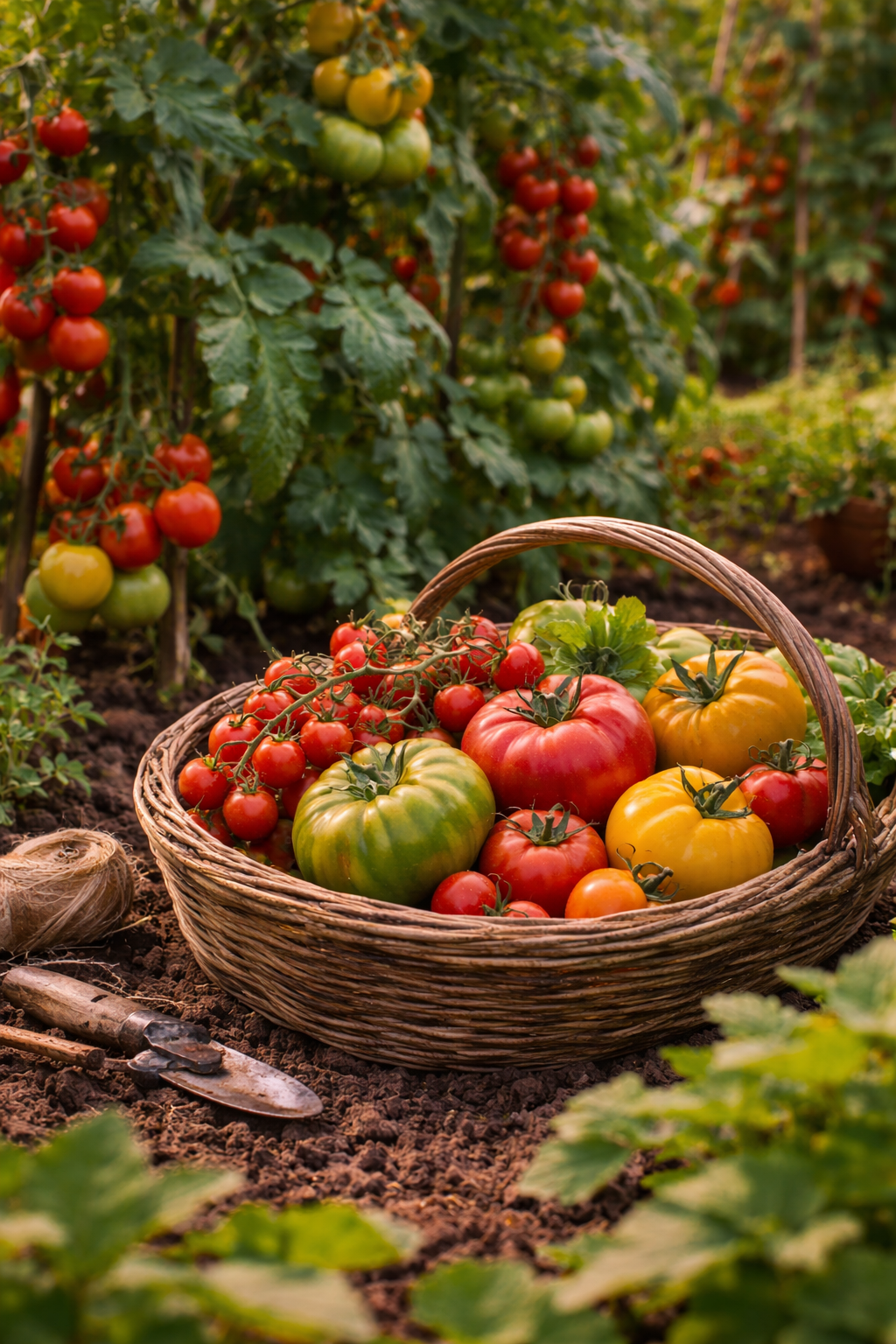
| Warmth Is the Starting Point Tomatoes require warmth and light, neither of which is typical in British weather. Focus on providing these conditions above all; this fundamental need should guide every tomato-growing decision. In much of the UK, greenhouses yield the most reliable results. Under cover, temperatures stay stable, rainfall is managed, and fruit ripens consistently. Outdoor growing is possible, especially in sheltered, sunny spots, but riskier. Cold nights and persistent rain slow growth and increase the risk of disease. The temptation each spring is to sow too early. Seedlings grow rapidly in warm conditions but become leggy when light is insufficient. A plant raised too soon may struggle later. Timing matters more than eagerness. Tomatoes resent cold roots. Planting out before the soil has warmed significantly sets them back. They do not forgive chill easily. Patience in May often makes the difference between sturdy growth and a season of recovery. Soil, Compost, and Feeding Tomatoes are hungry plants. Their foliage grows quickly, and fruit production demands energy. However, feeding without structure is counterproductive. They prefer soil rich in organic matter but well-drained. In open ground, compost incorporated before planting provides steady nutrition. In containers, high-quality compost is essential, as limited volume restricts root exploration. A common mistake is overfeeding nitrogen-rich fertiliser too early. This grows foliage but delays fruiting. Once flowering and fruit set begin, balanced or potash-rich feed supports fruit, not leaves. Consistent watering is vital: irregular watering leads to split fruit and blossom end rot. Water deeply and steadily at the base for healthy fruit. Reliable moisture is key to tomato success. Tomatoes respond to rhythm. They do not thrive under extremes. Indeterminate and Determinate — A Crucial Distinction One of the quiet complexities of tomato growing lies in plant type. Indeterminate (cordon) varieties grow upward and need support: canes, strings, or frames. Pinching out side shoots channels energy into fruit. Managed well, they produce over a long season. Determinate, or bush varieties, grow to a set height and produce fruit in a more concentrated period. They require less pruning and are well-suited to containers and smaller spaces. Know whether your tomato is a bush or a cordon. A clear understanding of plant type avoids pruning confusion and ensures the right support; this distinction is crucial for effective care. Neither is inherently better. They suit different spaces and temperaments. Pruning and Airflow Pruning tomatoes is simpler than it seems. For cordons, remove side shoots from leaf axils to direct energy to the main stem and fruit, improving airflow and space. Bush types need little pruning—just remove yellowing or soil-contact leaves. Airflow matters more than many beginners expect. Dense foliage traps moisture, increasing the likelihood of fungal problems. Spacing plants generously and avoiding overcrowding prevents many issues before they arise. Aim for balance: maintain enough foliage for photosynthesis, but sufficient openness for health and airflow. Striking this balance is key to healthy plants. The Many Faces of Tomato Varieties If tomatoes have mythology, much of it resides in their variety range. Cherry tomatoes are often most reliable for beginners. They ripen quickly, tolerate small mistakes, and yield abundantly. ‘Gardener’s Delight’ endures for good reason: reliable flavour and resilience. Plum tomatoes, with their dense flesh and lower moisture content, are excellent for sauces and other cooking applications. They require similar care but are rewarded with substance rather than juiciness. Beefsteak tomatoes are larger, often slower to ripen, and sometimes more demanding in warmth and feeding. When grown well, their flavour is exceptional, but they benefit from stable conditions. Heritage or heirloom varieties introduce even greater diversity — striped skins, deep purple tones, green-when-ripe fruit, unusual shapes. These often prioritise flavour over uniformity. They may be slightly more variable in yield, but reward the attentive grower with nuance. Variety choice is contextual, not just aesthetic. Small patios fit bush cherries; greenhouses suit tall cordons; cooks favour plums for sauces. Let intended use—salads, cooking, or snacks—guide variety and growing method choices. Matching what you grow to how you’ll use tomatoes is essential for satisfaction and productivity. Outdoor Growing and Blight In the UK, blight remains the principal anxiety around outdoor tomatoes. Prolonged damp weather encourages its spread, often rapidly and devastatingly. Resistant varieties are available and worth considering for outdoor plots. However, no variety is entirely immune under sustained pressure. The most practical mitigation is airflow and shelter. Growing tomatoes against a sunny wall under an overhang, where foliage remains drier, can extend their season. Avoiding overhead watering also reduces leaf wetness. Yet it is important not to view blight as an inevitable catastrophe. Some seasons are kind. Others are not. Outdoor tomato growing requires acceptance of variability. Greenhouses reduce risk but introduce their own challenges of ventilation and heat management. Harvesting and Flavour Tomatoes develop their best flavour on the vine. Harvesting at full colour and slight softness enhances sweetness and complexity. The difference between a sun-ripened tomato and one harvested early is profound. Sugar concentration increases with full ripening. Aroma develops. Growing tomatoes lets you appreciate their true taste, a reward unique to home gardening. Rediscovering genuine tomato flavour is one of the most important outcomes. Regular harvesting encourages continued fruit production. Removing overripe or damaged fruit prevents the spread of disease and maintains plant energy. A Gentle Correction There is a tendency to treat tomatoes as demanding prima donnas. In reality, they are simply expressive. They react visibly to environmental conditions. They don’t need constant attention; just warmth, feeding after fruiting, consistent watering, and airflow. Much of the anxiety around tomato growing stems from making it more complicated than it needs to be. Also, not all tomatoes are interchangeable. Variety choice significantly affects success and satisfaction. A watery supermarket tomato and a well-grown heritage cherry are clearly distinguishable. Growing your own shows this distinction. Closing Reflections Tomatoes, familiar yet varied, are generous but sensitive to imbalance. To grow tomatoes well: start with warmth, enrich but don’t overload soil, water steadily, know your type, prune purposefully, not obsessively. Choose tomato varieties that fit your available space and match your taste preferences. This single step ensures better results and greater enjoyment from your plants. Cutting into a fully ripe tomato, its fragrance rising, you see why gardeners persist year after year. Not because they are easy. But because they are worth it. |
| About our writing & imagery Most articles reflect our real gardening experience and reflection. Some use AI in drafting or research, but never for voice or authority. Featured images may show our photos, original AI-generated visuals, or, where stated, credited images shared by others. All content is shaped and edited by Earthly Comforts, expressing our own views. |


I love home-grown tomatoes! Thank you for the informative post, Rory.
LikeLiked by 1 person
Hey Eugenia, yes home growns are the best.
LikeLiked by 1 person
😊🍅
LikeLiked by 1 person