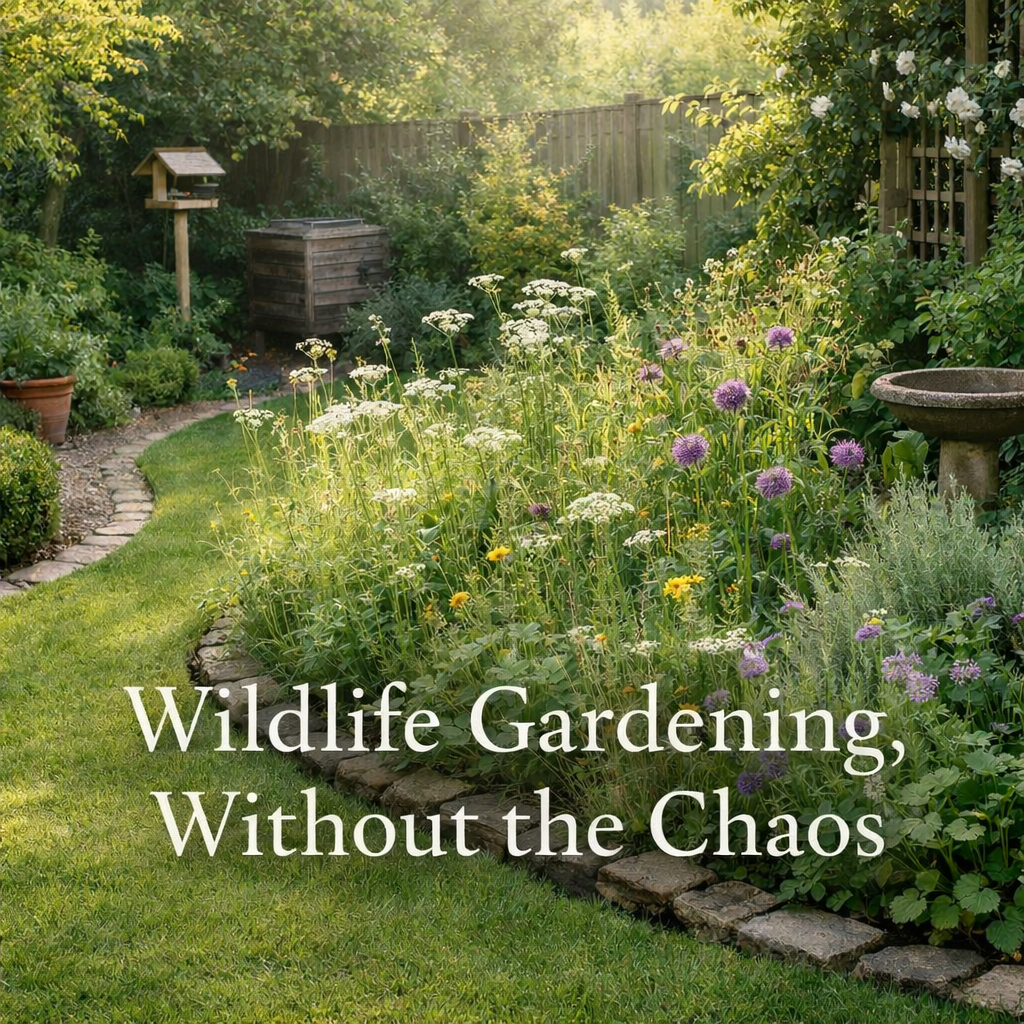
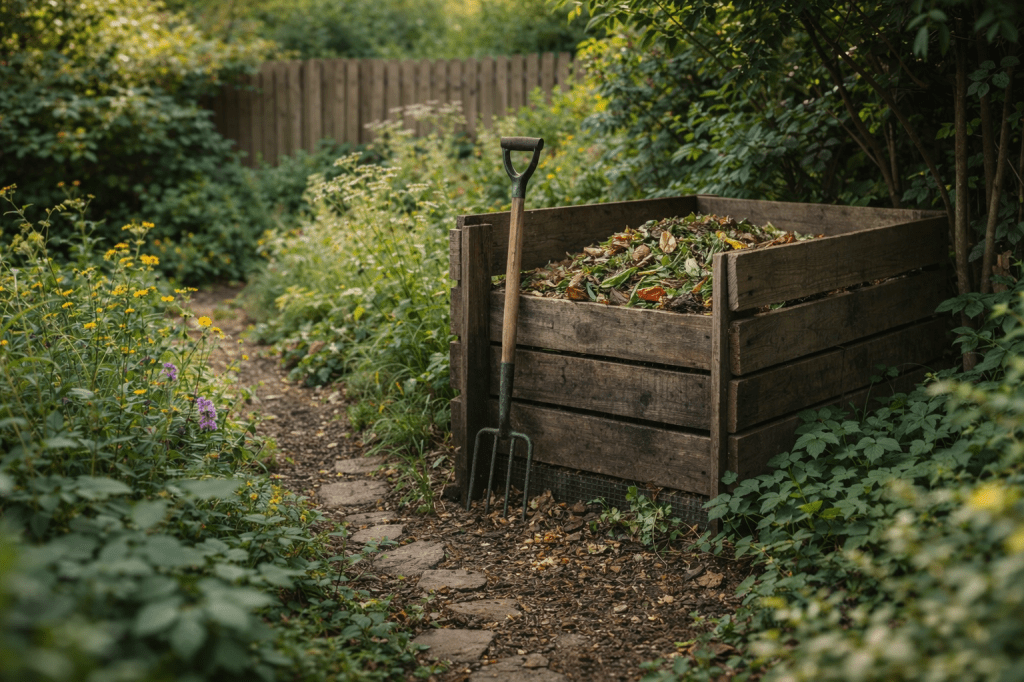
| Compost Without Rats Compost is where many people’s confidence frays. They start well. A bin appears. Peelings go in. Leaves follow. There’s a sense—initially—of virtue. Waste returns to soil. Cycles close. The garden feels complete. Then something shifts. The lid doesn’t quite sit right anymore. The material inside sinks unevenly. There’s movement where there wasn’t before. Or worse, absence—things disappearing overnight that shouldn’t. Rats are often a concern for composters, even before any appear. When rats appear, composting can feel like a risk rather than care. Why compost attracts anxiety Part of the problem is cultural. Compost occupies an awkward space between the garden and what we’d rather not think about. It smells occasionally. It decays openly. It refuses to stay neat. In wildlife gardening circles, compost is often seen as a moral good: if you compost, you’re doing the right thing. Less often discussed is that compost is a managed system, not just a benign heap of goodness. Left unmanaged, compost does exactly what nature intends. It breaks things down. It attracts organisms suited to decay. Some of those organisms are welcome. Some are neutral. A few cause problems when they move closer to houses than anyone planned. Rats are drawn by predictable warmth and food in poorly managed compost, not by compost itself. That difference is important. Rats are not garden villains — but they are neighbours. Rats already live in most towns. Gardens and compost don’t create them, nor do they magically attract them. Compost can offer consistency. And consistency is what allows animals to establish territory. A warm heap with regular cooked food, bread, or oily scraps becomes reliable. Gaps below offer safety. The issue isn’t the rat; it’s the system created. Blaming the animal hides the real cause. Compost as infrastructure, not gesture One of the most useful shifts people can make is to stop thinking of compost as a gesture and start thinking of it as infrastructure. Infrastructure needs design. It has limits. It works by allowing certain things and not others. A compost system that works in a town garden: Knows where it sits Knows what it accepts Knows how it breathes Knows how it closes When these conditions are met, the key takeaway is that compost becomes less appealing to rats—intentional management removes opportunity. What actually attracts rats (and what doesn’t) This is where myth creeps in. People often assume rats are drawn to vegetable peelings or garden waste. In reality, most raw plant matter is of little interest to them. What attracts rats is: Cooked food Bread, pasta, rice Meat, fish, dairy Oils and fats Large volumes of easily accessible scraps Equally important is access. Compost that sits directly on bare soil without a base, or that allows tunnelling beneath it, creates opportunities. By contrast, compost made primarily of garden waste, properly layered and kept aerated, is rarely worth the effort for a rat. It doesn’t offer enough reward for the energy required. Rats often signal missing boundaries, not failed composting. Air is your quiet ally. Air is one of compost’s least understood elements. People focus on inputs, but how compost breathes is equally vital. Well-aerated compost heats up. Heat accelerates breakdown. Heat discourages habitation. Rats prefer cool, stable environments where tunnels don’t collapse, and temperatures don’t fluctuate dramatically. A compacted, anaerobic heap is comfortable. A regularly turned, layered one is not. This doesn’t mean compost must be constantly disturbed. It means it must not settle into stasis. Stasis is what attracts attention. Location matters more than volume. A surprising number of compost problems stem from where the bin is placed. Tucked hard against fences. Hidden behind sheds. Backed onto walls where nothing can be seen or checked easily. These locations feel discreet, but they also remove visibility. Out of sight, compost is often out of mind. Placing compost where it can be accessed easily, observed casually, and adjusted without effort changes behaviour. People are more likely to add appropriate material, notice an imbalance, and intervene early. Rats thrive in spaces people forget. Containment without paranoia There is a tendency to overcorrect once rats are mentioned. Heavy-duty bins. Sealed systems. Everything is locked down to the point where compost stops functioning properly. This usually leads to a different set of problems: slow breakdown, smells, soggy material, and frustration. Effective containment is not about total exclusion; it’s about sensible resistance. Solid bases. Fine mesh where necessary. Lids that fit properly. Structures that don’t shift or collapse. The key takeaway: the aim is to reduce rat invasion, not create impenetrable defences. Composting is selective by nature. One of the quieter truths of composting is that it requires judgment. Not everything belongs in every system. Not every scrap needs to be composted at home. Municipal food waste programs exist for a reason. Something is better handled elsewhere. Choosing not to compost certain items is not a failure of commitment. It is an understanding of scale. Wildlife gardening without chaos often involves knowing when not to close a loop yourself. When compost goes wrong Problems rarely arrive fully formed. There are usually signs: persistent disturbance, unexplained collapse, material vanishing faster than expected, and tunnels appearing beneath. Responding early is easier than dealing with an established issue. That response does not need to be dramatic. Often, it involves removing certain inputs, rebuilding the structure, and rebalancing moisture and air. Ignoring early signs lets problems become established. Again, consistency is the deciding factor. Compost as part of a wider system Compost does not exist in isolation. Its success depends on how the rest of the garden functions. Leaf litter left elsewhere reduces pressure on the heap. Mulching beds reduces waste volume. Allowing material to decompose in situ spreads resources rather than concentrating them. When everything organic ends up in one place, that place becomes important. Distributing decay is often more effective than centralising it. The fear of “doing it wrong” Many people abandon composting not because it failed, but because they felt they were failing. Fear of rats becomes fear of judgment. The bin disappears. Waste goes back into black bags. The garden loses a quiet engine of fertility. This is a loss worth noticing. Composting is not about perfection. It is about understanding limits, adjusting habits, and accepting that decay is a process, not a product. Takeaway: A compost system that works most of the time is effective and successful. Living with decay, not fighting it At its heart, compost asks for a different relationship with mess. Not indifference, but tolerance. Not chaos, but acceptance that breakdown is not tidy work. Rats exploit breakdown when it becomes predictable and unmanaged. They are not drawn to care; they are drawn to opportunity. When compost is treated as part of the garden’s structure—observed, adjusted, respected—it loses that opportunity. A quiet confidence The gardens where compost works best are not the most virtuous or the most heavily defended. They are the ones where people understand what their system can handle and act accordingly. No drama. No panic. No mythology. Just attention. Compost without rats is not a trick but a practice. The key takeaway: Consistent, attentive management prevents major issues from arising. Which, in many ways, is the same principle this whole series keeps returning to. |
| About our writing & imagery Most articles reflect our real gardening experience and reflection. Some use AI in drafting or research, but never for voice or authority. Featured images may show our photos, original AI-generated visuals, or, where stated, credited images shared by others. All content is shaped and edited by Earthly Comforts, expressing our own views. |

