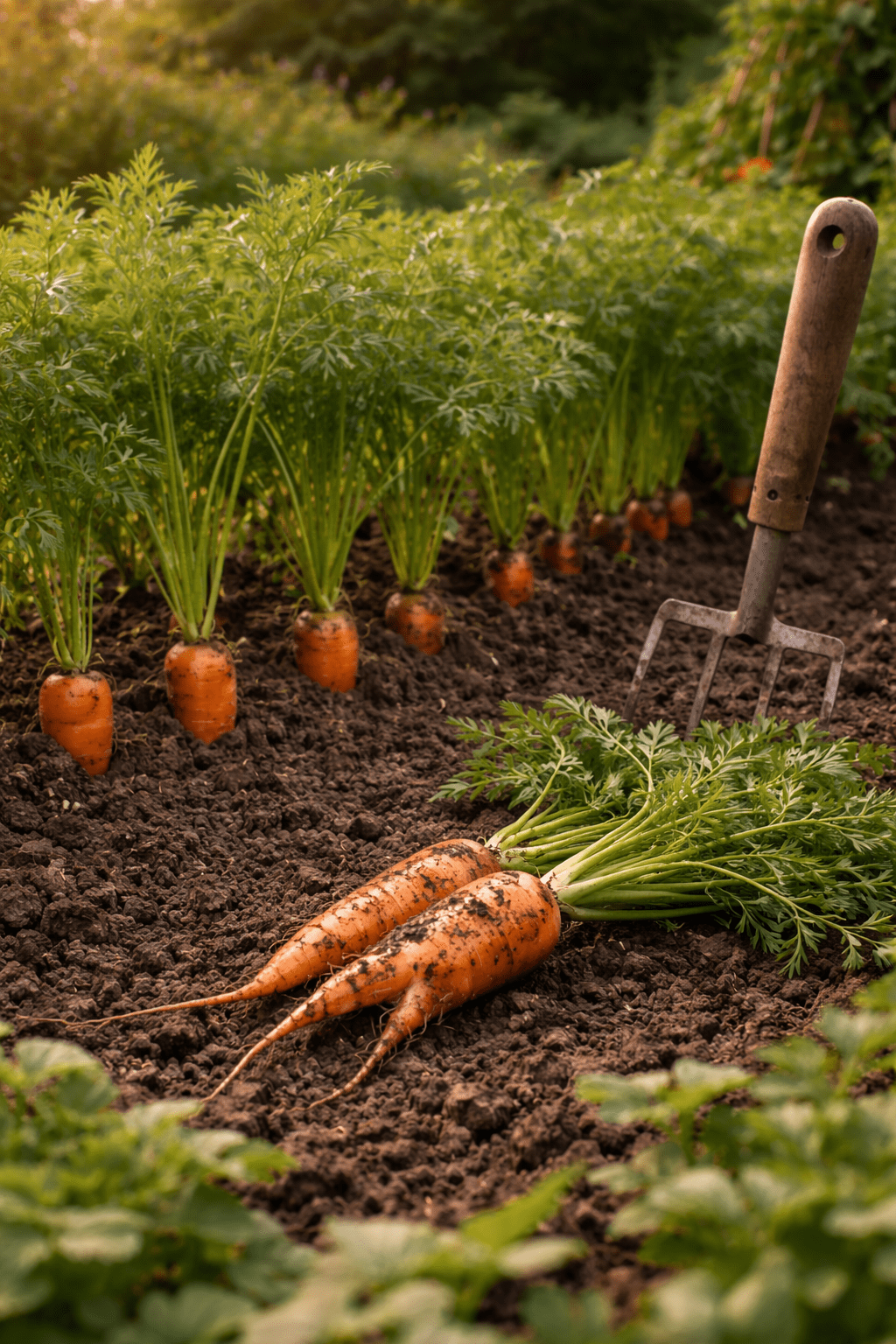
| — and Why They Grow Wonky |
| Carrots have an unfortunate reputation. They are often introduced to beginners as simple, wholesome vegetables — a straightforward row in loose soil, a dependable harvest. Yet they have a way of humbling even careful growers. Forked roots, twisted shapes, stunted growth, and the occasional carrot that looks more like an anatomical diagram than something for the kitchen. It is tempting to blame poor seed, bad luck, or hidden pests. In reality, carrots are honest plants. They respond directly to the soil you offer them and the conditions you maintain. When they grow straight and well-formed, it is rarely accidental. When they grow wonky, they are telling you something. Understanding carrots begins with understanding soil structure. |
| The Soil Beneath the Myth Carrots are taproots. That single central root wants to travel downwards in a smooth, uninterrupted line. It does not want to negotiate stones, compacted clay, undecomposed organic matter, or sudden shifts between textures. The common advice is to create “fine, stone-free soil,” which sounds simple but is often misunderstood. Many gardeners assume this means digging deeply and pulverising everything. In doing so, they sometimes create a surface that is fluffy on top but dense beneath, encouraging roots to fork when they meet resistance. The aim is not powder; it is consistency. Carrots prefer soil that is friable from surface to depth — open enough to allow penetration, yet stable enough to hold moisture evenly. Heavy clay can grow good carrots if it is gradually improved with compost over time. Very sandy soil can work if moisture is retained and nutrients are sufficient. What causes wonkiness more than anything else is obstruction. Stones deflect roots. Fresh manure creates uneven nutrient pockets that encourage splitting. Compacted layers force the root to branch. A carrot does not twist out of spite. It twists because it encounters something it cannot pass through. Fresh Manure and the Forking Problem One of the oldest pieces of advice in vegetable gardening remains true: do not sow carrots in freshly manured ground. Fresh manure contains lumps of partially decomposed material and concentrated nutrients. As the root encounters these, it often divides. The result is a forked carrot. This does not mean carrots dislike fertility. They benefit from soil enriched with compost in previous seasons. The distinction is timing. Well-rotted organic matter incorporated months earlier improves structure without creating irregular pockets. To clarify: for best results, always plan to grow carrots in beds amended with compost last year, not in beds amended just before sowing. Sowing with Intention Carrot seed is fine and light. Sow shallow, keep consistently moist. Uneven watering causes patchy emergence, leading gardeners to resow and disturb roots. Thin sowing reduces disturbance. Crowded seedlings require thinning, and rough thinning can damage neighbouring roots, causing irregular growth. Spacing matters more than beginners often realise. A carrot growing too close to another is forced to compete, sometimes bending around its neighbour. Modest spacing allows straight development. There is also patience involved. Carrots germinate more slowly than radishes or lettuce. The soil surface must remain gently moist but not waterlogged. In dry weather, lightly cover rows with fleece until emergence to stabilise moisture without compaction. Key takeaway: the earliest weeks after sowing are critical; once the taproot sets its direction, root shape is mostly determined. Containers and Raised Beds If native soil is heavy, containers or raised beds offer an alternative. Deep containers filled with uniform compost let carrots grow freely. However, lumps or compacted pockets still deflect roots as stones do. Raised beds can help improve drainage and allow for more careful soil preparation. Yet they are not magic. If filled hastily with mixed materials, they produce the same distortions. Key takeaway: Maintain a continuous, consistent soil texture from the surface to depth, regardless of the growing method. Watering and Growth Stability Carrots need consistent, not excessive, watering. Irregular moisture — prolonged dryness followed by heavy watering — can cause splitting. The root swells rapidly after drought, and the outer skin cannot always accommodate the sudden expansion. Mulching lightly once seedlings are established helps stabilise conditions. In sandy soil, especially, moisture can fluctuate quickly without protection. Carrots are called low-maintenance only if the soil and watering are stable. Early neglect is magnified underground. Accepting Imperfection It is worth challenging a quiet assumption here. A carrot that forks or twists is not a failure. It may not resemble supermarket uniformity, but it remains edible. Much of the anxiety around “wonky” carrots is aesthetic rather than agricultural. Uniform carrots are produced under controlled soil conditions and consistent spacing. Home gardens rarely provide laboratory precision. Takeaway: focus first on growing flavourful, good-textured carrots, not ones that look perfect, as taste matters more than appearance. There is a philosophical lesson here. Vegetables grown in real soil carry evidence of that soil. Some irregularity is simply honesty. Carrot Fly and Protection Another concern with carrots is carrot fly, particularly in certain regions. Carrot flies are attracted to the scent released when foliage is disturbed. Thinning in still air and avoiding crushing leaves reduces attraction. In vulnerable areas, protective barriers, such as fine-mesh screens, can be effective. However, carrot fly damage is often localised and seasonal. It should not deter beginners from attempting carrots altogether. Main takeaway: Soil preparation is still the most important factor in carrot success, more than pest protection. Varieties and Expectation Not all carrots are long and tapered. Some varieties are bred for shorter roots and tolerate heavier soils better. Choosing a variety suited to your soil type reduces disappointment. Shorter, stump-rooted carrots perform well in shallower or moderately heavy ground. Long, slender types demand a deeper, consistent texture. Key takeaway: match carrot variety to your soil for better results—this is practical, not negative. A Broader Perspective Growing carrots teaches subtle discipline. It requires thinking ahead about soil preparation. It demands restraint with fresh manure. It rewards careful watering and measured thinning. It reminds the gardener that what happens beneath the surface matters more than what is visible above. Carrots are not difficult in temperament. They are precise in their requirements. Straight, well-shaped carrots are the result of preparation, not luck. Wonky carrots result from interruption. Closing Reflections To grow good carrots, focus less on technique and more on the environment. Prepare the soil gradually, not in a rush. Avoid fresh manure. Sow thinly. Maintain steady moisture. Accept that perfection is relative. If you do these things, most carrots will grow reasonably straight. Some will not. Those that twist will still taste of the soil they came from. The most important takeaway: measure your carrot-growing success by flavour, not perfect shape. And flavour, unlike shape, rarely lies. |
| About our writing & imagery Most articles reflect our real gardening experience and reflection. Some use AI in drafting or research, but never for voice or authority. Featured images may show our photos, original AI-generated visuals, or, where stated, credited images shared by others. All content is shaped and edited by Earthly Comforts, expressing our own views. |

