| The Difference Between Care and Control |
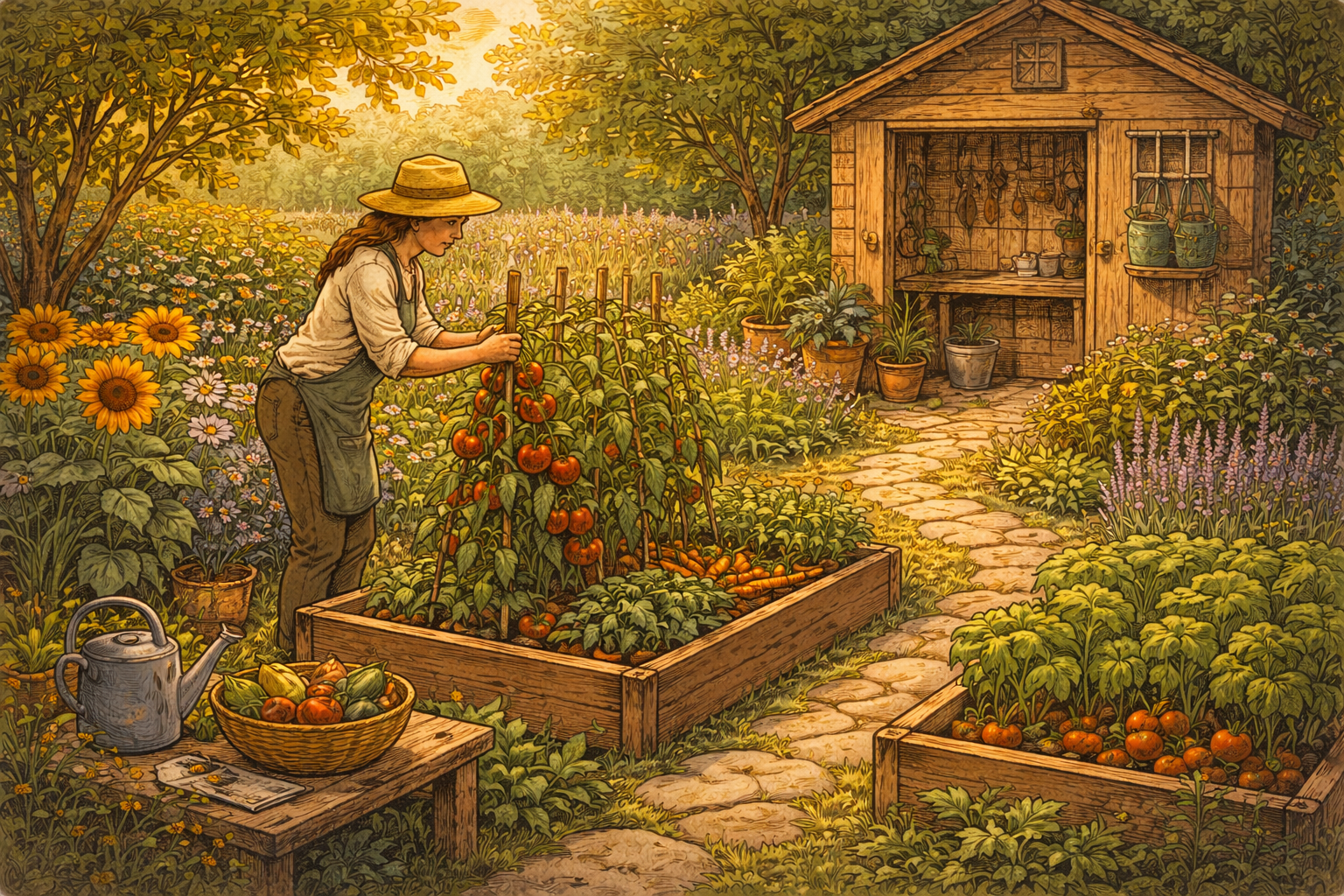
| For a long time, I treated care and control as the same impulse. If something mattered, you intervened. You adjusted. You corrected. You stayed on top of it. Letting go felt irresponsible. Stepping back felt like a risk. Gardening taught me otherwise. The most apparent distinction between care and control isn’t intention, but tolerance. Care allows things to express themselves within limits. Control tries to eliminate deviation. One works with variability. The other fights it. This difference becomes obvious when you work with living systems. Plants do not respond well to domination. Over-pruning weakens them. Overfeeding makes growth soft and unstable. Too many orders remove resilience. Control creates fragility by narrowing the range of acceptable outcomes. Care, by contrast, widens that range. It accepts that not everything will be even, symmetrical, or predictable. It prioritises health over appearance. Structure over neatness. Continuity over compliance. One myth worth challenging is the idea that greater involvement leads to better results. In reality, excessive intervention often masks insecurity. The need to manage every outcome suggests a lack of trust in the system, in time, or in one’s own ability to respond later. Gardening forces you to confront this because the consequences are visible. A controlled garden may look impressive for a while, but it often demands constant effort to maintain. The moment attention lapses, problems surge. A cared-for garden absorbs variation. It adjusts. It forgives. This distinction applies beyond gardens. In work, control often looks like micromanagement. In homes, it appears rigid. In routines, it appears to be inflexibility. The intention is usually protection. The result is often strain. I’ve noticed that care pays attention to thresholds. It steps in before harm occurs, but not before expression is allowed. Control ignores thresholds. It operates on fear of deviation rather than understanding of limits. There’s also a difference in how each feels. Control is tiring. It demands vigilance. Care requires awareness, but not constant enforcement. It trusts feedback rather than resisting it. One of the practical lessons gardening offers is learning when to stop adjusting. There is a point where further intervention doesn’t improve outcomes. It simply satisfies the urge to act. Recognising that point is a skill, not a lack of effort. Control struggles with time. It wants immediate alignment. Care understands lag. It accepts that changes take seasons to settle. That response is delayed. Those results emerge gradually. This has changed how I view responsibility. Responsibility doesn’t mean preventing all disorder. It means setting conditions that allow systems to function without constant correction. It means being present enough to respond, but not so intrusive that you interfere with natural regulation. I’ve seen gardens controlled into exhaustion. Plants are propped up instead of allowed to strengthen. Lawns fed into dependency—structures held together by attention rather than integrity. When care is replaced by control, systems become brittle. Letting go of control doesn’t mean neglect. It means choosing where influence is genuinely helpful. It means distinguishing between discomfort and damage. Not every untidy moment is a problem. Not every deviation needs fixing. The difference between care and control becomes clearer with time. Care leaves space for surprise. Control leaves no margin. One builds resilience. The other builds reliance. Gardening taught me that the healthiest systems are not the most orderly ones, but the ones with room to move. They hold together not because they’re restrained, but because they’re supported. That lesson has a way of spreading. Once you see it in soil and plants, you start seeing it elsewhere — in work, in relationships, in how you treat your own time. Care, properly understood, is not about holding tighter. It’s about knowing when to loosen your grip. |
| About our writing & imagery Most articles reflect our real gardening experience and reflection. Some use AI in drafting or research, but never for voice or authority. Featured images may show our photos, original AI-generated visuals, or, where stated, credited images shared by others. All content is shaped and edited by Earthly Comforts, expressing our own views. |


2026 has become the year I learned that care is infinitely eferable to control. This was a steep learning curve for me, caused by having all control over anything being removed.
I have always struggled to maintain control over my life, despite some abysmal failures, which should have taught me something, but somehow didn’t. This year I have had to learn to live without some important things, like basic health and reliable help, which led to some ground breaking realities.
Caring doesn’t sound as strong as control, but control is so easily lost…
LikeLiked by 1 person