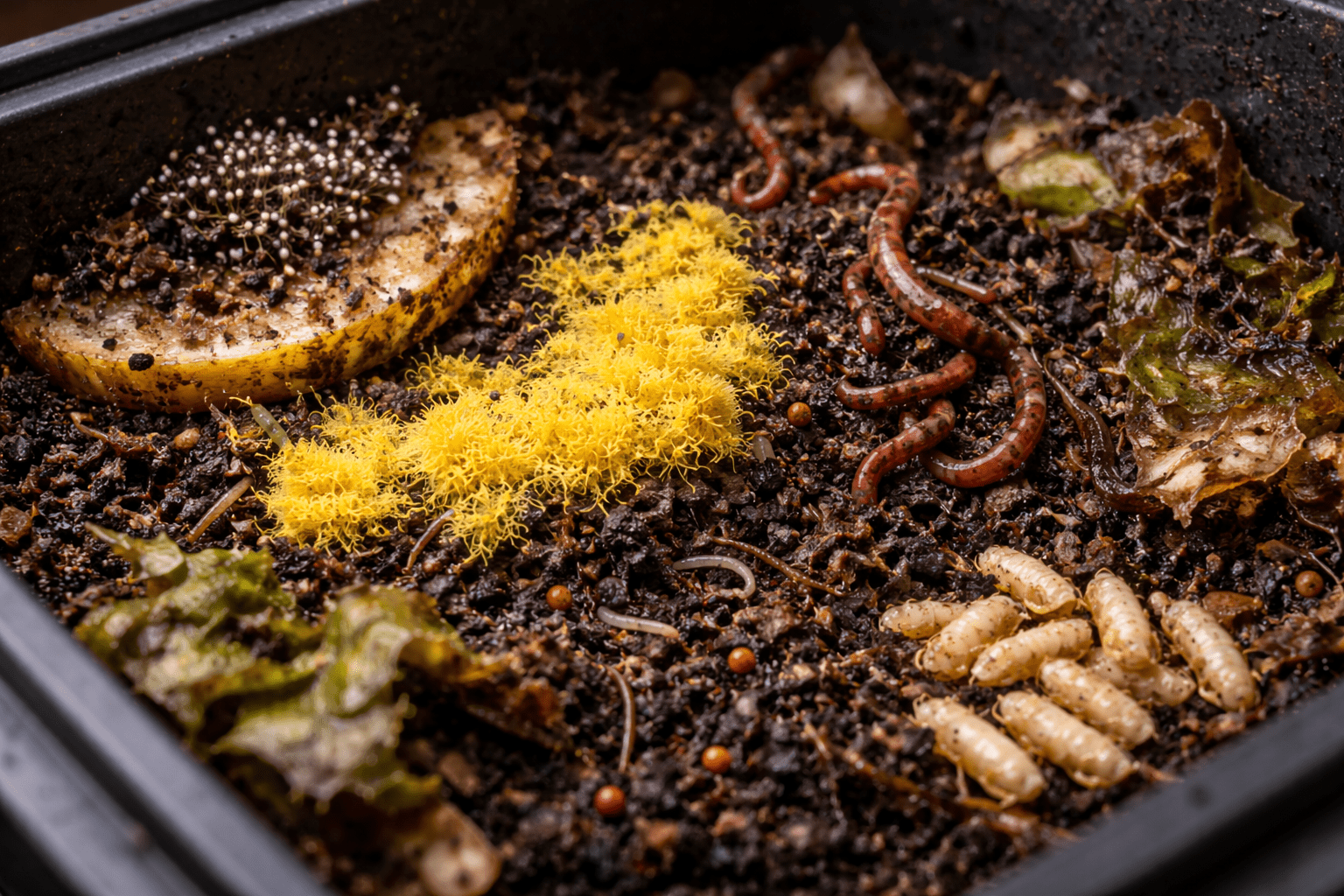
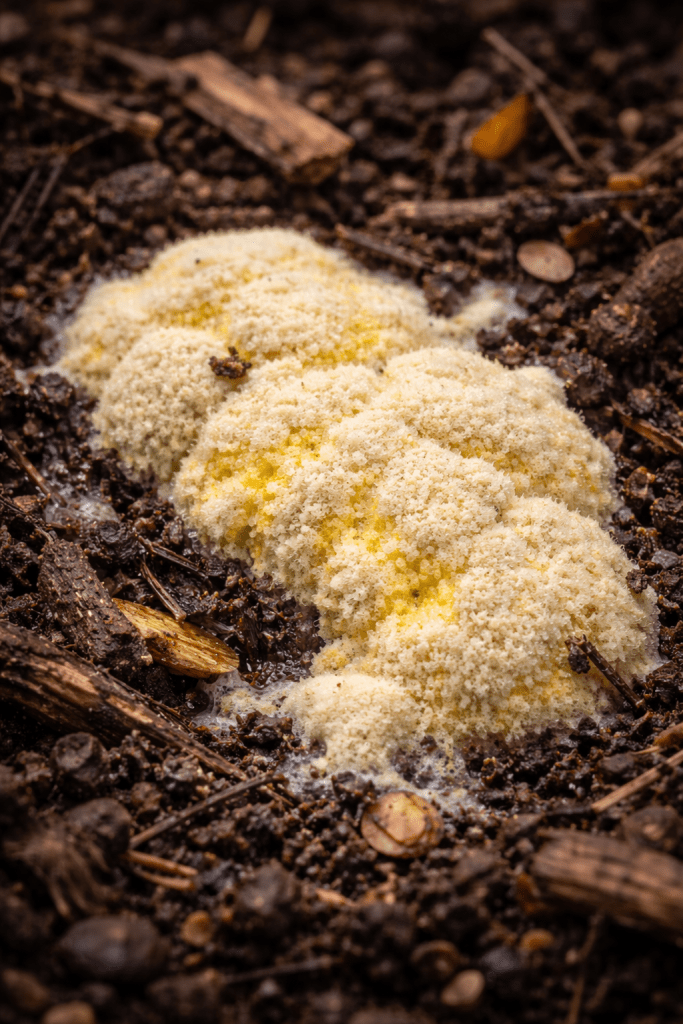
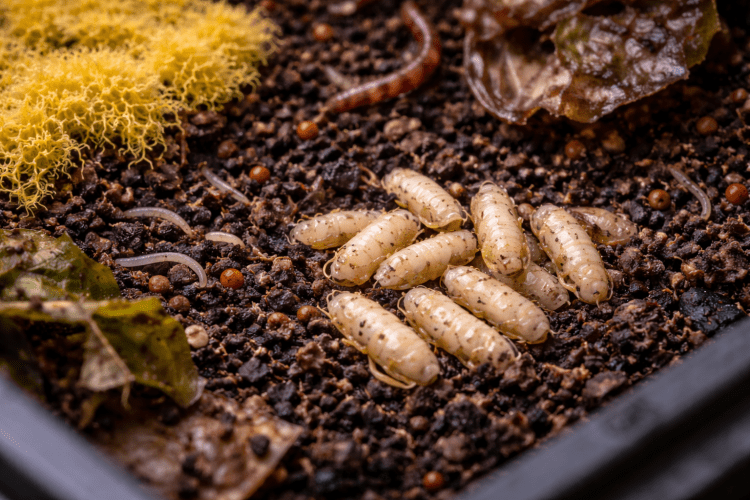
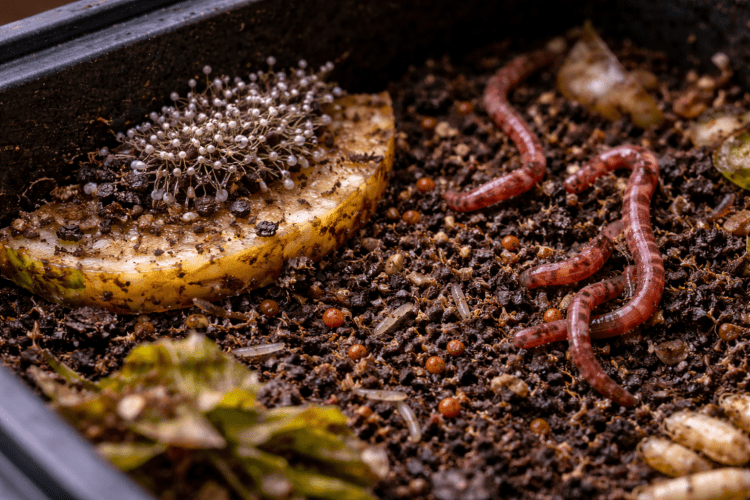
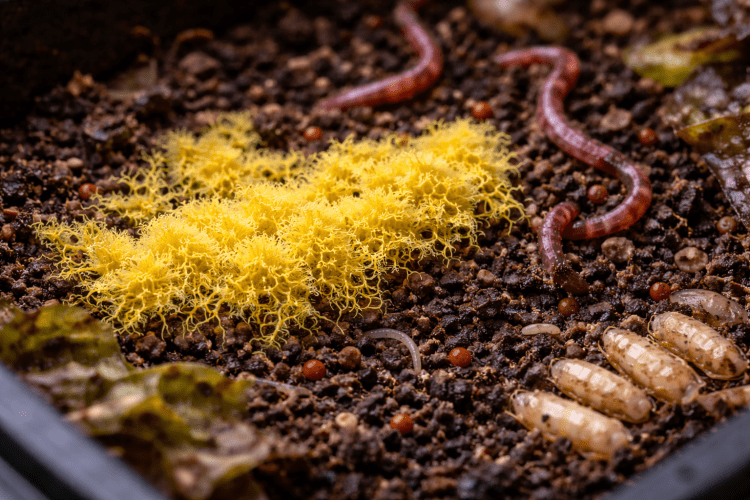
| Other Life At some point, every worm farm stops feeling like a private arrangement between you and the worms. Something else appears. Sometimes it’s noticed immediately — a scatter of pale bodies, a moving sheen, a sudden bloom of colour where there was none before. Sometimes it’s only recognised in retrospect, once anxiety has already set in. This is usually the moment people decide something has gone wrong, even when the system itself is doing exactly what it was built to do. Worm farms are not sealed environments. They are open systems with porous boundaries. Food arrives from elsewhere. Microbes arrive on scraps, on cardboard, on hands. Invertebrates arrive opportunistically, following moisture, warmth, and decay. Expecting worms to work alone is a misunderstanding of how decomposition functions. They are participants in a crowded process, not sole operators. Mites are often the first visitors to cause concern. They tend to arrive quietly, multiplying until they become impossible to ignore. Their presence feels accusatory, as though they are evidence of poor management. In reality, mites respond to the same conditions worms do: moisture, food availability, and stability. Their numbers rise when conditions favour them, not because they intend harm. Most mites found in worm farms are benign, grazing on fungi and bacteria rather than competing directly with worms. Their population spikes often reflect abundance rather than imbalance. The discomfort they provoke is largely human. We are unsettled by creatures that appear suddenly and move in ways we did not expect. Tiny white worms provoke a similar reaction. They are usually noticed because they don’t behave like composting worms. They congregate in slick, wet areas, moving in dense clusters that feel wrong simply because they are unfamiliar. These worms tend to thrive in acidic, overly moist conditions, and their presence often coincides with bins that have been fed heavily or compacted unintentionally. They are not a threat in themselves. They are an indicator species, pointing towards conditions that suit them better than they suit the composting worms. Removing them directly rarely changes anything. Adjusting the environment does. Maggots inspire a stronger response, perhaps because they are harder to view neutrally. Their sudden appearance feels like a breach. In most cases, they arrive when food has been added in a form or quantity that attracts flies before worms can engage with it. This is not a moral failing or a hygiene lapse; it is a timing issue. Worms do not rush fresh material. Flies do. When maggots appear, they are often doing the same preliminary work that microbes and worms would eventually do for themselves. The discomfort they cause doesn’t reflect their function; it only reflects our preferences. That said, their presence usually suggests feeding practices that would benefit from moderation. Fungi tend to be treated with less alarm, though they provoke confusion of a different sort. White threads, powdery blooms, dense mats appearing on food or bedding. Fungi are foundational decomposers, breaking down complex materials that worms cannot process directly. Their presence is not incidental; it is essential. In a healthy worm farm, fungi rise and fall in cycles, responding to moisture, temperature, and available material. Attempts to suppress them often do more harm than good, disrupting the very processes worms depend on. A bin without fungi is not clean. It is incomplete. Slime moulds, particularly the bright yellow forms that occasionally appear, provoke a more visceral reaction. Their sudden colour and unfamiliar texture feel alien, almost theatrical. They are often interpreted as a sign of rot or neglect. In reality, slime moulds are temporary organisms responding to very specific conditions: moisture, organic material, and a brief window of opportunity. They appear, perform their strange work, and vanish again. Their presence tells you that decomposition is active and dynamic. Panic intervention at this stage usually interrupts a process that would otherwise resolve itself quietly. What unites all of these arrivals is not danger, but context. They do not arrive at random. They respond to conditions created within the bin. This is why treating them as invaders rarely leads to improvement. Removing organisms without addressing the environment that favoured them is an exercise in frustration. The system will simply invite them back. Worm farming repeatedly teaches this lesson: outcomes are shaped by conditions, not by control. There is also a broader cultural discomfort at play. Many people approach worm farming with an unspoken desire for neatness. The bin should be dark but orderly, active but contained, alive but predictable. Other life disrupts that fantasy. It reminds us that decomposition is messy, plural, and largely indifferent to our preferences. Worm farms expose the tension between wanting nature to work for us and wanting it to behave itself while doing so. Learning to live with other life is one of the quiet thresholds in worm farming. Early on, unfamiliar organisms feel like threats because they represent a loss of control. Over time, they become information. A bloom of mites suggests abundance and moisture. A patch of fungi indicates active breakdown. A brief visit from maggots highlights feeding practices that might benefit from adjustment. The emotional response softens as the interpretive skill grows. This does not mean every appearance should be ignored. There are moments when intervention is appropriate — prolonged anaerobic conditions, persistent saturation, extreme imbalances that leave worms struggling. The difficulty is that reacting too quickly prevents you from learning which fluctuations are normal. Systems that are never allowed to wobble never teach you how they recover. It’s also worth acknowledging that some people simply don’t enjoy this aspect of worm farming. The presence of other organisms is not something everyone wishes to accommodate, and there is no virtue in forcing yourself to tolerate what you find genuinely distressing. Worm farming is an intimate practice. It brings you into contact with processes most people prefer to keep abstract. Choosing not to continue is not failure. It is honesty. For those who stay, something subtle shifts. Other life becomes less alarming and more familiar. The bin feels less like a project and more like a place. You stop asking whether what you’re seeing is good or bad, and start asking what it’s responding to. That change in question makes all the difference. The worms do not require exclusivity. They require conditions that allow them to coexist. In the end, other life is not a complication layered onto worm farming. It is the context in which worm farming happens at all. To expect worms without companions is to misunderstand their role. They work best as part of a crowd, moving within a web of organisms that together dismantle what we no longer need. Accepting that web, rather than trying to tidy it away, is one of the deeper lessons the bin offers. When you stop seeing other life as interference, the system becomes easier to live with. Less dramatic. Less fragile. The worms continue their work, largely indifferent to your concerns, supported by processes that were never meant to be solitary. And in learning to tolerate that complexity, you begin to see decomposition not as something to manage, but as something to make room for. |
| About our writing & imagery Many of our articles are written by us, drawing on real experience, reflection, and practical work in gardens and places we know. Some pieces are developed with the assistance of AI, used as drafting and research tools rather than as a voice or authority. Featured images may include our own photography, original AI-generated imagery, or—where noted—images kindly shared by other creators and credited accordingly (for example, via Pixabay). All content is shaped, edited, and published by Earthly Comforts, and the views expressed are our own. |

