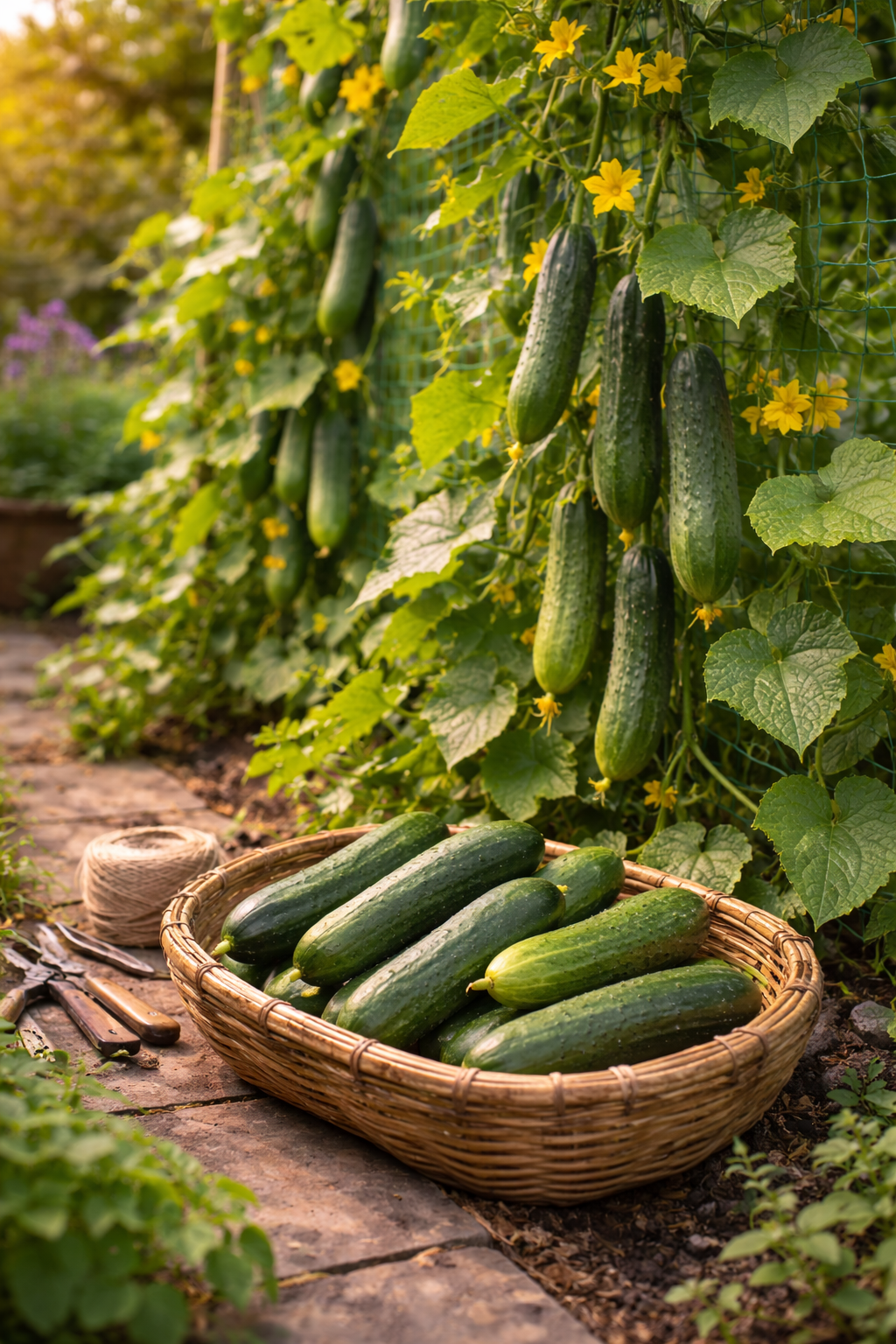
| The Best Way to Grow Cucumbers |
| Cucumbers divide opinion quietly. Some gardeners grow them every year without a second thought. Others try once, encounter bitterness or mildew, and quietly decide they are more trouble than they are worth. Cucumbers are neither difficult nor effortless. They’re particular: understand their needs, and they reward you; ignore them, and they sulk. The best way to grow cucumbers centres on three essentials: steady warmth, consistent moisture, and thoughtful support. |
| Know Which Cucumber You’re Growing Before sowing anything, it helps to understand that not all cucumbers behave the same way. Greenhouse cucumbers are long, smooth-skinned varieties grown under cover. These require stable warmth and protection from wind. Most are all-female varieties, meaning they do not need pollination to set fruit. Outdoor ridge cucumbers are shorter, often slightly ridged, and bred for British weather. These varieties tolerate temperature fluctuations and require insect pollination to produce fruit. The mistake many gardeners make is treating them all the same. They are related, but their preferences differ. If you have a greenhouse or polytunnel, choose greenhouse cucumbers for the best results. For open ground or containers, rely on ridge varieties bred for outdoor conditions. Warmth First, Not Hurry Cucumbers are not early risers. They resent cold soil and cool nights. Sowing too early, particularly outdoors, is the fastest route to disappointment. Start seeds indoors in mid to late spring. A warm windowsill or an unheated greenhouse is sufficient once temperatures stabilise. They germinate readily in warmth and grow quickly. What they dislike is stagnation — warmth without light. If seedlings stretch, it is usually because they were sown too early into insufficient light. Transplant only once nights are reliably mild. Cold shock sets them back significantly. Patience in May prevents frustration in June. Soil That Holds and Drains Cucumbers are thirsty plants, but they dislike sitting in water. They prefer rich, well-drained, moisture-retentive soil. A bed improved with compost works well. In containers, use quality compost with extra organic matter for steady hydration. Their roots are shallow but spreading. A container at least 30–40cm deep is advisable; larger is preferable if possible. One of the most common causes of bitterness in cucumbers is inconsistent watering. Allowing plants to dry severely between waterings stresses them. Even moisture keeps the flavour mild. Mulching once the soil has warmed helps regulate this balance. Support and Airflow Cucumbers sprawl naturally, but training them vertically has advantages. Vertical growth improves airflow, reduces disease, and keeps fruit clean. Simple canes, netting, or trellis work well. In a greenhouse, string supports tied to overhead structures allow plants to climb upward. Outdoors, a modest trellis against a sunny fence is effective. Good airflow reduces late-season powdery mildew. Space plants as carefully as you feed them. Spacing matters; crowded plants get sick more often than those spaced properly. Feeding Without Overfeeding Cucumbers are relatively heavy feeders once fruiting begins. In fertile soil, early feeding isn’t needed. Once flowering and fruit set start, use regular liquid feed high in potash for steady production. Overfeeding with nitrogen-rich fertiliser results in abundant foliage and fewer fruits. Aim for sustained growth by carefully balancing nutrients and avoiding excess foliage. Pollination and Flowering Greenhouse cucumbers are often parthenocarpic — they set fruit without pollination. Outdoor ridge cucumbers rely on insects. To avoid cross-pollination between types, keep greenhouse doors closed during flowering or select compatible varieties. In smaller gardens, bees and other pollinators usually handle the task effectively. If the fruit doesn’t swell after flowers appear, check pollination and watering before adjusting feed. Pruning and Management Greenhouse cucumbers benefit from light pruning to control growth and encourage fruiting. Removing side shoots beyond a certain height prevents congestion. Outdoor varieties generally require less intervention but may benefit from removing overly vigorous side growth in confined spaces. Pruning should maintain airflow and easy harvest access, not impose rigid structure. Remove yellowing or diseased leaves promptly to reduce the spread. Harvesting for Quality Cucumbers are best harvested before they become over-mature. Large fruit may appear impressive, but often develops a tougher skin and a less refined flavour. Regular picking encourages continued production. Use clean scissors or secateurs rather than twisting fruit from the vine, which can damage stems. Pick cucumbers often for the highest yield and best flavour. Managing Common Problems Powdery mildew often appears late in the season, particularly in warm, dry spells. Good airflow and steady watering mitigate risk. Once established, remove affected leaves to slow the spread. Cucumber beetle is less common in the UK than elsewhere, but aphids may appear on tender growth. Prompt removal or washing off with water is usually sufficient. Most issues arise from stress — cold, drought, overcrowding. Plants that are consistently cared for handle stress better than those that receive inconsistent care. A Gentle Reframing There is a tendency to think of cucumbers as greenhouse luxuries. Yet wide outdoor varieties perform beautifully in British summers, particularly in sheltered areas such as patios and raised beds. Some believe cucumbers need constant attention. They don’t; they just need consistency. Warmth at the start. Even moisture throughout. Support as they climb. Regular harvesting. With their needs met, cucumbers are rewarding and easy to manage. Closing Reflections Growing cucumbers well is less about technical precision and more about rhythm. Do not rush them into cold soil. Do not allow them to swing between drought and flood. Do not crowd them. Do not leave fruit to age too long. If you meet these simple conditions, cucumbers reward you with crisp, refreshing harvests through summer. There is a particular satisfaction in slicing a cucumber still cool from early morning shade — firm, fragrant, uncomplicated. The best way to grow cucumbers is to respect their clear preferences. Cucumbers make their point clear. |
| About our writing & imagery Most articles reflect our real gardening experience and reflection. Some use AI in drafting or research, but never for voice or authority. Featured images may show our photos, original AI-generated visuals, or, where stated, credited images shared by others. All content is shaped and edited by Earthly Comforts, expressing our own views. |

