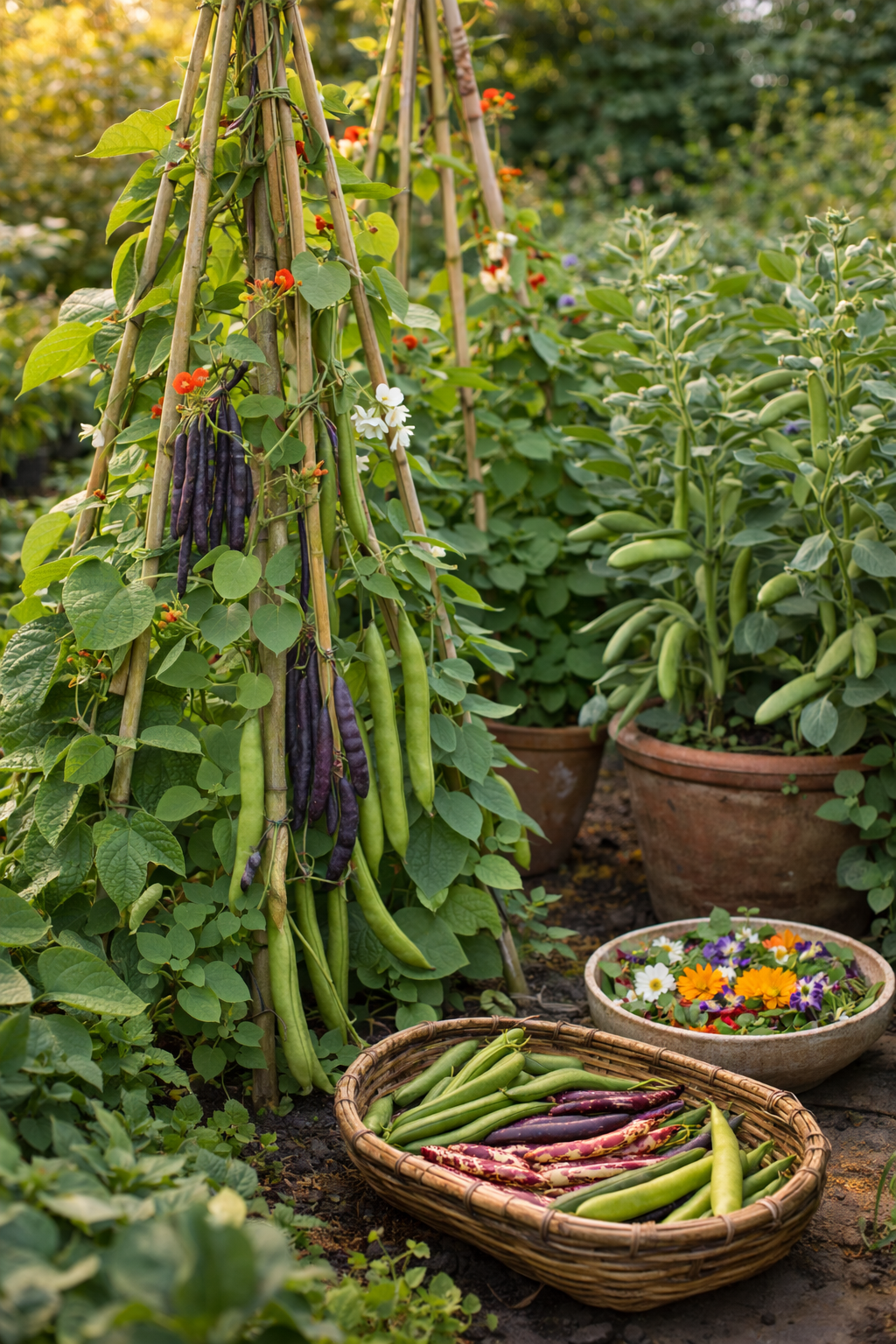
| How to Grow Beans (All Varieties) |
| Beans are among the most democratic crops in the garden. They do not require elaborate infrastructure, heated propagation, or obsessive soil chemistry. They ask for warmth, support (sometimes), and reasonable soil. In return, they give steadily, often generously, and sometimes surprisingly beautifully. Yet “beans” is a broad word. French beans, runner beans, broad beans, borlotti, flageolet, climbing beans, dwarf beans, drying beans — they share a family resemblance, but their habits differ. To grow beans well, it helps to understand not just how to sow them, but how they behave. |
| The Family at a Glance Broad beans are outliers, preferring cool conditions and sowing in autumn or early spring. They stand upright unaided and bear thick pods on sturdy stems. French beans and runner beans love warmth, resenting cold soil and flourishing in summer. There are dwarf, compact types and enthusiastic climbers within both. Shelling and drying beans—borlotti, cannellini, haricot—are grown mainly for the beans, not the green pods. They share fundamentals, but timing and temperament differ. Soil: Generous, Not Excessive Beans are legumes—plants that can form relationships with specific soil bacteria known as rhizobia. These bacteria help the beans capture nitrogen from the air and convert it into a form the plants can use. In simple terms, beans contribute to soil fertility rather than deplete it. This might suggest they need little feeding. This is only partially true. Beans prefer fertile soil that is not overfed. Rich compost added before sowing supports steady growth. Excess nitrogen, however, encourages lush leaf growth at the expense of pods. Good drainage outweighs richness. Beans in cold, wet ground risk seed rot instead of germination. No dramatic preparation needed: compost and a level rake suffice. Sowing: Timing Is Everything The most common failure with beans is sowing too early. Broad beans tolerate cool soil and can be sown as early as late autumn (in mild areas) or as early as early spring. They establish quietly through winter and surge once light increases. French and runner beans need warmth. Sowing too soon can lead to staling or rotting; wait until late spring after frost risk. You can start them in modules (small pots or cells) under cover to gain a slight head start, but they dislike root disturbance. Plant out carefully and without delay once conditions suit. Bean seeds are bold and do not need delicate handling. Structure and Support Variety drives support needs. Broad beans stand unaided, though simple string supports help in exposed places. Dwarf French beans form compact bushes and need little support. Climbing French and runner beans need support. Grow them up canes in wigwams or rows. Sturdy supports prevent wind damage and make harvest easier. Runner beans, vigorous climbers, rise quickly with height and warmth. Climbing beans add beauty by creating green walls, softening plots, and attracting pollinators. Watering: Steady, Not Sporadic Beans need steady moisture, especially during flowering and pod formation. Dry spells cause flowers to drop and pods to fail, especially for runner beans in hot summers. Water deeply at the base, not lightly. Mulch once the soil warms to retain moisture and steady conditions. Container beans need closer monitoring. As with all container crops, steady watering prevents stress. Pollination and Weather Broad beans mostly self-pollinate, with insect help. Runner beans rely more on pollinators. Cool, damp, or hot, still weather may cause poor pollination or flower drop. There are parthenocarpic (self-podding) French bean varieties that set pods without pollination, which can be useful in challenging seasons. In some years, the weather affects the yield more than technique. Accepting that variability is part of growing beans. Harvesting: The Rhythm of Return Harvest green French and runner beans regularly. Young pods are tender and encourage continued production. As pods swell and mature, the plant shifts its focus to seed production. Yield slows. Harvest broad beans when pods are full but not over-mature. Young beans are sweeter and less floury. Drying beans should mature and dry on the plant if possible. Harvest before heavy rain if drying outside. Simple rule: pick green beans often; wait for shelling beans. Pests and Problems Blackfly cluster on broad bean tips in spring. Pinch off the top growth when flowering starts to reduce pests and boost pods. Slugs target young seedlings. Mice occasionally lift freshly sown seeds. Rust and mildew may appear late, especially in dampness. Good spacing and airflow help prevent this. Beans are generally resilient, growing fast enough to overcome minor issues. Rotation and Soil Health Beans fix nitrogen, so they help in crop rotations. Follow beans with leafy crops to use soil nitrogen. After harvest, roots can be left in the ground to decompose (break down naturally), contributing to soil structure and fertility. Beans give more than just pods. A Gentle Correction One common assumption is that runner beans are difficult in hot summers. In truth, inconsistent watering and pollination stress are the main causes of failure. Some believe beans must grow in formal rows. They don’t—wigwams, arches, or obelisks work just as well. Beans adapt. Limitations are more about expectations than capacity. Closing Reflections Beans offer something rare in gardening: reliability across varieties. From broad beans in spring to vigorous summer runner beans, they provide a sense of continuity. They enrich the soil. They feed households. They soften fences and fill plates. For good beans: provide warmth, support climbers, and harvest regularly. Everything else is refinement. And once you have grown your own beans, fresh from plant to pan, the simplicity feels entirely sufficient. |
| About our writing & imagery Many of our articles are written by us, drawing on real experience, reflection, and practical work in gardens and places we know. Some pieces are developed with the assistance of AI as a drafting and research tool. Featured images may include our own photography, original AI-generated imagery, or—where noted—images kindly shared by other creators and credited accordingly (for example, via Pixabay). All content is shaped, edited, and published by Earthly Comforts, and the views expressed are our own. |

