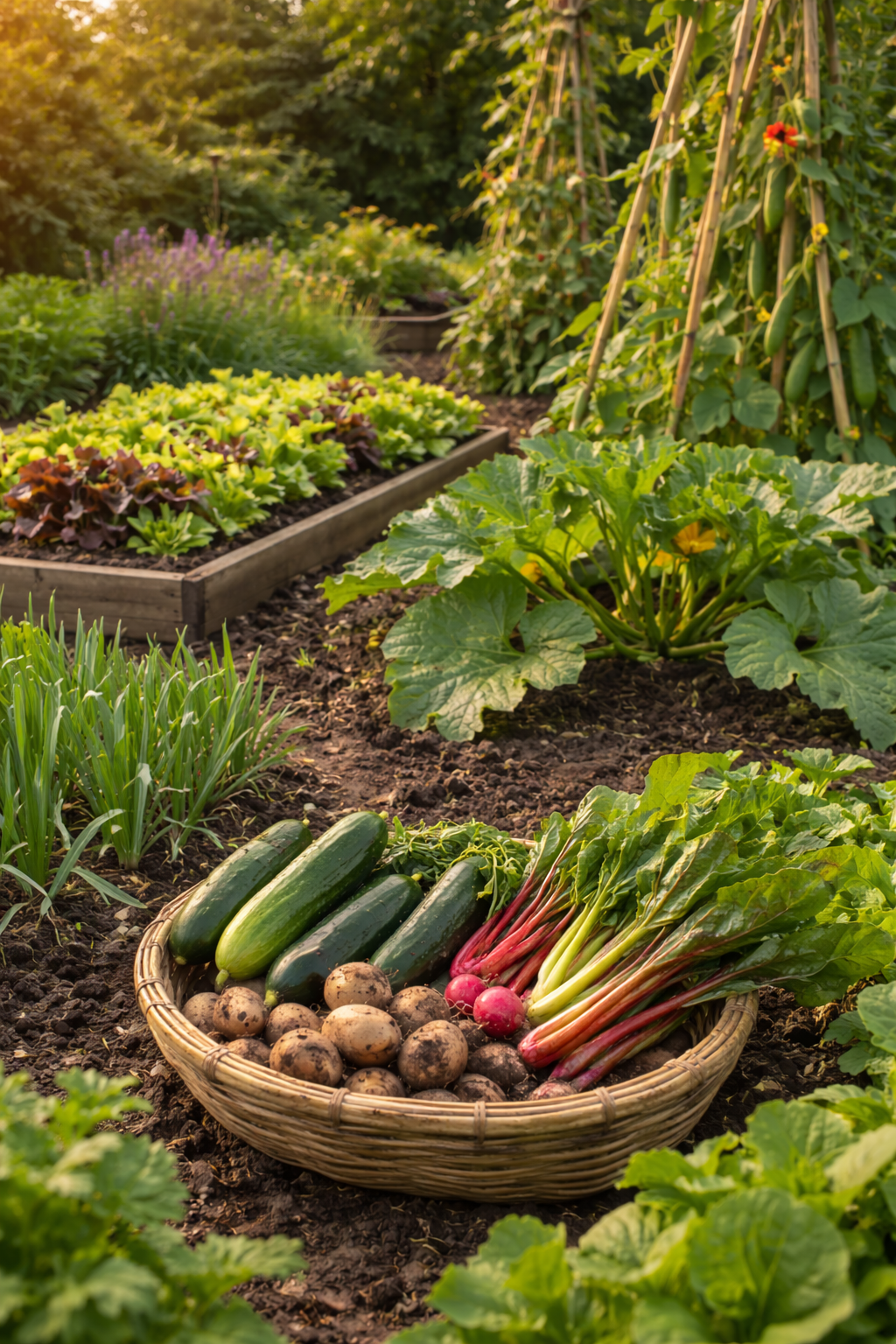
| There is a particular expression I recognise when someone tells me they are “thinking about growing a few vegetables.” It is a mixture of optimism and mild apprehension. They have read enough to know it is possible. They have perhaps seen immaculate allotments online. They are aware that slugs exist. They suspect it may not be as straightforward as it appears. And they are right. Vegetable growing is simple in principle and complex in practice. The soil is never exactly as described in books. The weather rarely behaves itself. Seeds germinate unevenly. Something eats something else. Yet despite all this, certain vegetables seem almost inclined to cooperate with beginners. They forgive minor errors. They grow at a pace that feels encouraging. They provide results before enthusiasm fades. When people ask what to grow first, they are often hoping for a list. But a list without context is unhelpful. The more useful question is this: what crops build confidence while teaching the rhythms of gardening? Building your confidence is the most important result for the first season. The Psychology of Success A beginner does not need rare heirloom varieties or complicated crop rotations. They need evidence that seeds become food. There is a myth that starting small means starting timidly. In truth, starting with the right vegetables builds competence quickly. Choose crops that germinate reliably, tolerate imperfect soil, and produce over a forgiving window rather than a single narrow harvest point. The difference between a novice who continues and one who gives up often lies in the first six weeks. Fast-growing, visible results anchor belief. Slow, temperamental crops erode it. That is why I rarely recommend carrots as a first attempt, despite their popularity. They demand fine, stone-free soil and even moisture. When they fork or fail, beginners assume they lack ability. In reality, the crop simply requires precision. Begin instead with vegetables that respond generously to average conditions. Salad Leaves: The Immediate Return If there is a crop that understands encouragement, it is salad. Loose-leaf lettuces, rocket, mizuna, mustard greens — these germinate quickly, grow visibly, and do not require perfect soil. They tolerate containers and grow well when sown in small batches and cut repeatedly. The key insight with salad is this: do not aim for perfection. Aim for continuity. Many beginners sow an entire packet at once and are overwhelmed by abundance. Then they stop. A steadier approach — small sowings every two or three weeks — builds rhythm. Salad teaches observation. You notice how leaves respond to heat, how moisture affects texture, how cutting encourages regrowth. It is forgiving enough to survive minor neglect, yet responsive enough to reward attention. It also challenges a common assumption: that vegetables must mature fully before harvest. With salad, you learn the pleasure of cutting young leaves and letting the plants continue. The garden becomes less about single endpoints and more about ongoing interaction. Courgettes: Generosity with a Caveat Courgettes are famously productive, sometimes to comic effect. They are therefore often recommended to beginners. This is broadly sound advice, but with nuance. Courgettes are not difficult, but they are hungry and thirsty. In poor soil, they sulk. In containers without adequate feeding, they exhaust themselves. When grown in well-prepared ground enriched with compost, however, they are remarkably obliging. One plant is often enough for a household. They teach the importance of consistent watering. They demonstrate how regular harvesting prolongs production. There is also a psychological benefit. Courgettes grow large leaves quickly. They fill space. They look impressive. For someone new to vegetable gardening, that visual presence builds confidence. The key takeaway is restraint: grow only what you can use. Too many courgette plants can quickly lead to an overwhelming and discouraging surplus. Potatoes: A Lesson in Trust Potatoes rarely disappoint beginners. They tolerate a range of soils. They suppress weeds once established. They produce a concealed harvest that feels almost magical when unearthed. Planting seed potatoes in spring and returning weeks later to lift them from the soil creates a visceral connection between effort and reward. They are not without challenges — blight exists, and spacing matters — but overall, they are robust. Potatoes also teach patience. You do not see the crop daily. You must wait. In an era of instant feedback, waiting builds discipline. The main lesson: even small efforts to grow potatoes can lead to a satisfying, tangible reward, reinforcing patience and trust in the process. Beans: Structure and Satisfaction Beans — particularly French and runner beans — are another excellent starting point. They germinate boldly, climb eagerly with support, flower and set pods in succession, and harvesting encourages more production. Beans also introduce structure to a plot. Poles or canes create vertical interest. They teach the gardener about spacing, airflow, and pollination. One common misconception is that beans are delicate. In reality, once warmth arrives, they are vigorous. The mistake lies in sowing too early into cold soil. The most valuable lesson beans offer is timing. Sow when it is warm, and they reward; sow in the cold, and they falter. Remember, timing learned with beans applies to every future crop—this is the critical lesson to carry forward. Radishes: Speed with Substance Radishes are often dismissed as trivial. They are, in fact, instructive. They germinate rapidly and mature within weeks. They tolerate containers and shallow beds. They demonstrate the importance of thinning and spacing — crowd them, and they swell poorly. Radishes also highlight moisture consistency. Allow them to dry severely, and the flavour intensifies unpleasantly. Their speed maintains enthusiasm and fills the gap between slow crops, showing that gardening is cyclical, not singular. Quick cycles with radishes teach resilience. The key takeaway is to try again—failure is only a pause, not an end. Chard and Spinach: The Reliable Greens Leafy greens like chard are often underappreciated for beginners. Chard is resilient, tolerates cool conditions and varied soil, and produces for months with regular cutting. Its colourful stems bring visual interest. Spinach is slightly more temperamental in heat but remains accessible in spring and autumn. These crops reinforce the principle that harvesting need not be final. Cut-and-come-again growing builds rhythm and familiarity. The lesson is to value nutrition and resilience over appearances—imperfect greens are still delicious and healthy. On Soil and Simplicity The temptation when beginning is to over-engineer. There is a belief that specialists feed, complex crop plans, and elaborate structures are required. In reality, most beginner crops succeed in well-prepared soil improved with compost. The key is adding organic matter: compost improves both drainage and moisture retention, supports microbes, and buffers mistakes. A beginner who invests time in soil preparation will find it easier to grow most crops. The main insight: preparing soil well provides lasting benefits and makes gardening much simpler. The Role of Scale Another common mistake is scale. Enthusiasm leads to sowing too much. Rows become crowded. Harvest overwhelms. Maintenance slips. It is better to grow a little well than a lot poorly. Small beds or containers can produce meaningful harvests. A patio can host salad, chard, beans, and even courgettes. Scale should match attention span and available time. The key point: a small, manageable garden fosters success more than an ambitious, overreaching one. Accepting Imperfection No beginner should expect flawless results. Slugs will appear. The weather will shift. Some seeds will not germinate. Leaves will occasionally yellow. The difference between progress and discouragement lies in interpretation. View setbacks as information rather than failure. Observe patterns. Adjust. Remember, gardening is a dialogue—setbacks offer lessons. The main takeaway is to treat each challenge as guidance, not as failure. A Gentle Correction There is an assumption that “easy” vegetables are less interesting. The serious gardener grows exotic crops and complex rotations. In truth, mastery often lies in doing simple things well. Growing excellent salad through succession. Harvesting beans at their peak. Lifting potatoes at the right moment. These are not trivial achievements. These foundational skills and crops lay the groundwork for future gardening success. That’s the main takeaway. Closing Reflections Easy vegetables are not defined by the absence of challenge. They are defined by resilience. Salad leaves teach continuity, courgettes generosity, potatoes trust, beans structure, radishes speed, and chard endurance. Together, they teach the fundamental rhythms of vegetable gardening: sowing at the right time, watering consistently, harvesting regularly, and improving the soil steadily. Begin there. Confidence grows quietly, much like the plants themselves. The biggest takeaway: as you build confidence, your garden will naturally grow and improve with you. |
| About our writing & imagery Most articles reflect our real gardening experience and reflection. Some use AI in drafting or research, but never for voice or authority. Featured images may show our photos, original AI-generated visuals, or, where stated, credited images shared by others. All content is shaped and edited by Earthly Comforts, expressing our own views. |

